

Share to
The Strauch Hypercube
By : Narduli Studio | The Mosse Foundation – Roger and Hans Strauch

GRANDS PRIX DU DESIGN 19th edition
Distinctions
Discipline : Art & Photography
Categories : Art / Site‑Specific Artwork : Gold certification
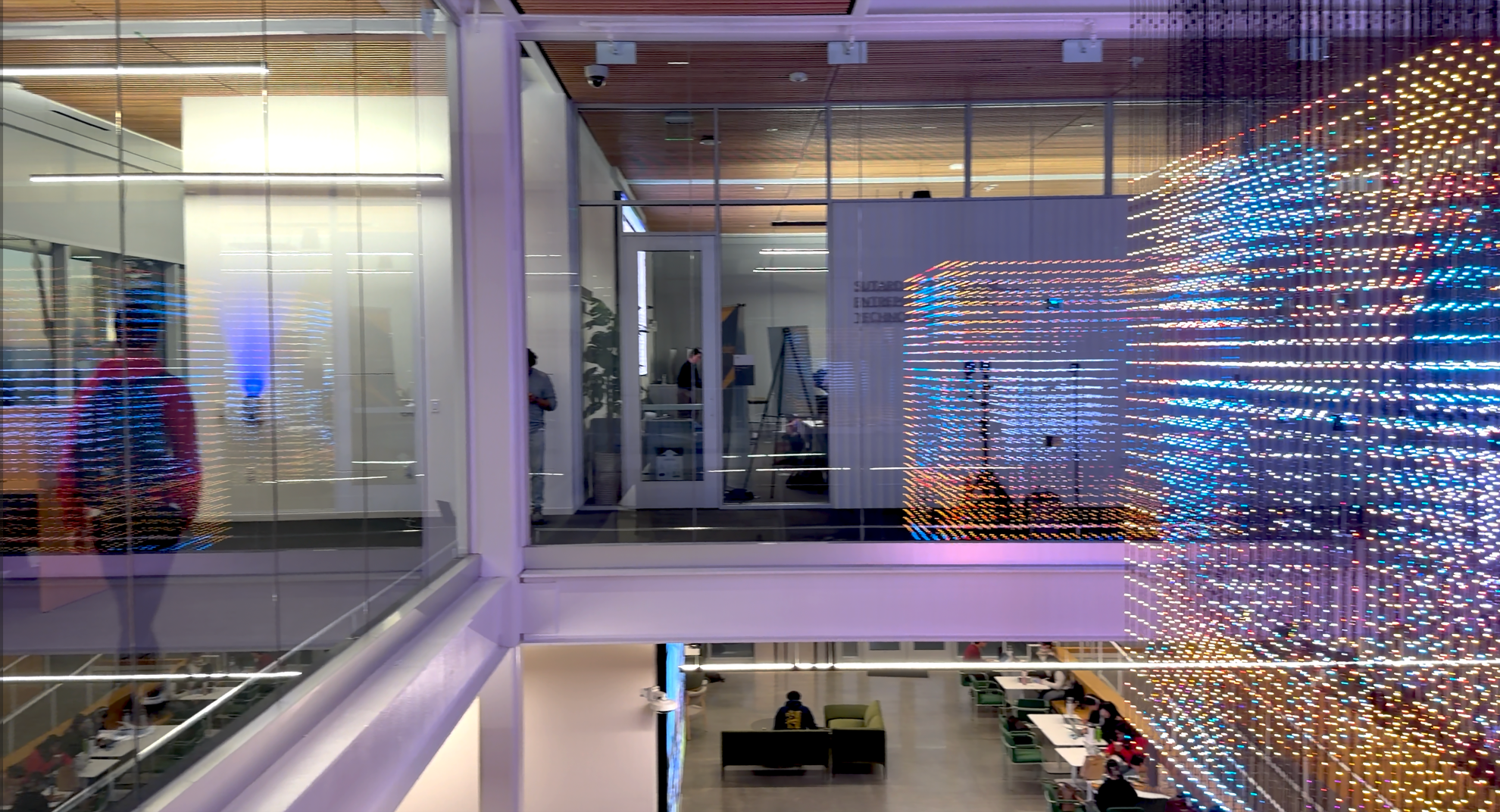
The Forum is the heart of UC Berkeley's new Grimes Engineering Center — open, transparent, engineered to an exacting standard — itself a statement of institutional intent. It was conceived as a space of collaboration, the foundation of the college’s culture of learning.
The Mosse Foundation commissioned Narduli Studio to create a permanent artwork for the Forum in honor of Karl Strauch, a UC Berkeley College of Engineering graduate and Harvard professor. The vision was to ignite innovation in a building where engineering students would learn to design and build the future. The result is the Strauch Hypercube: a spatial light sculpture at the intersection of logic and imagination.
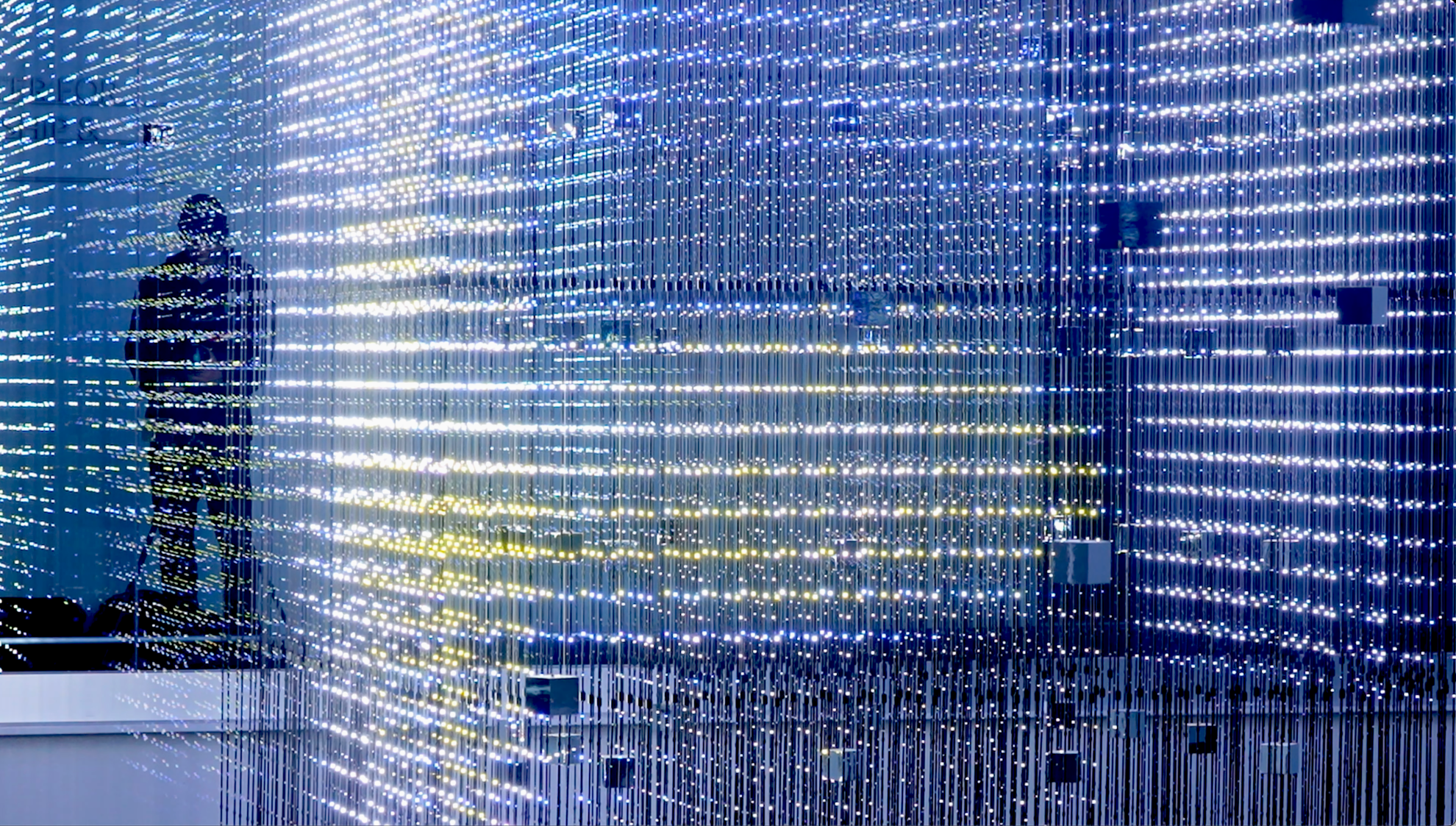
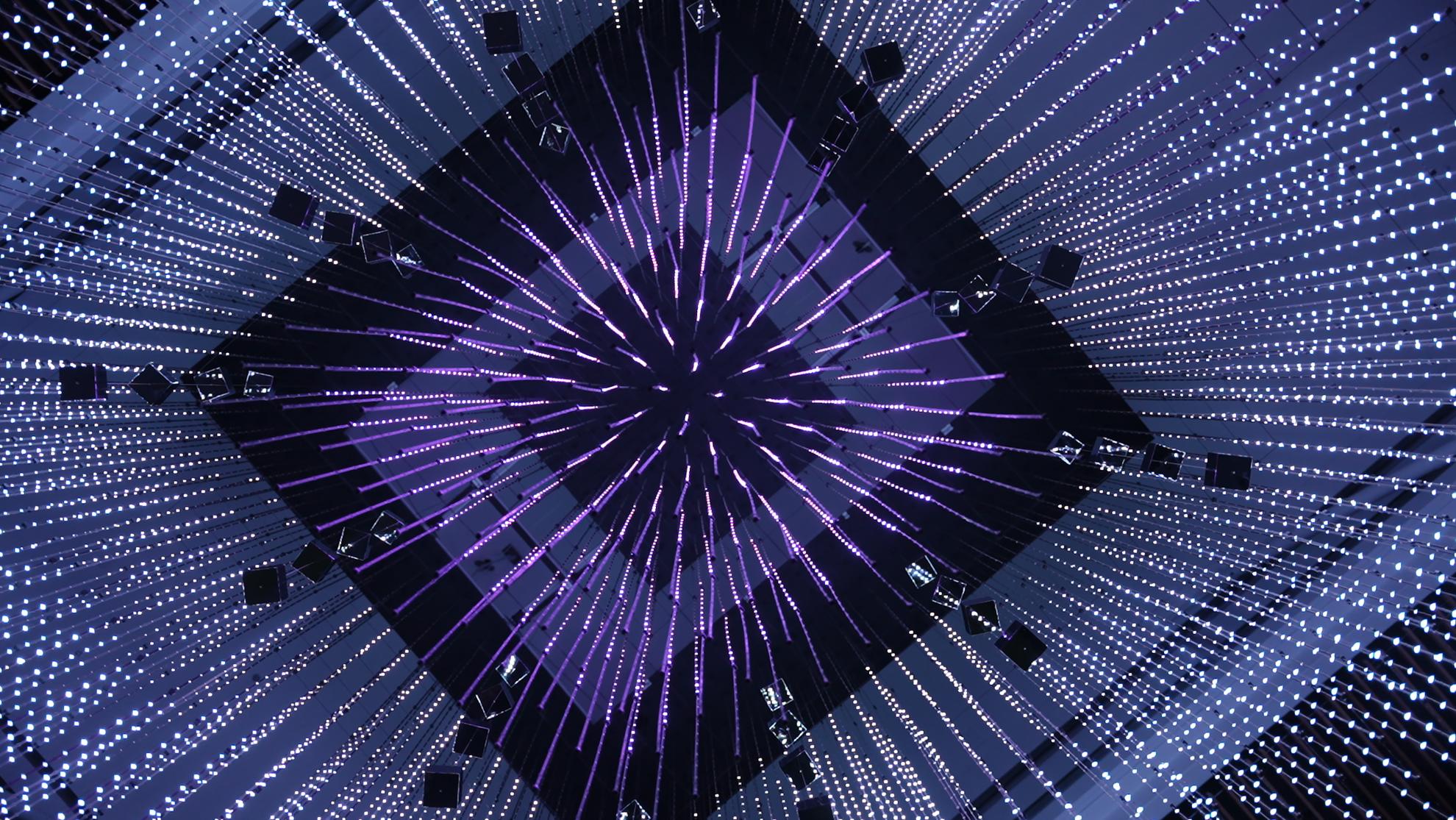
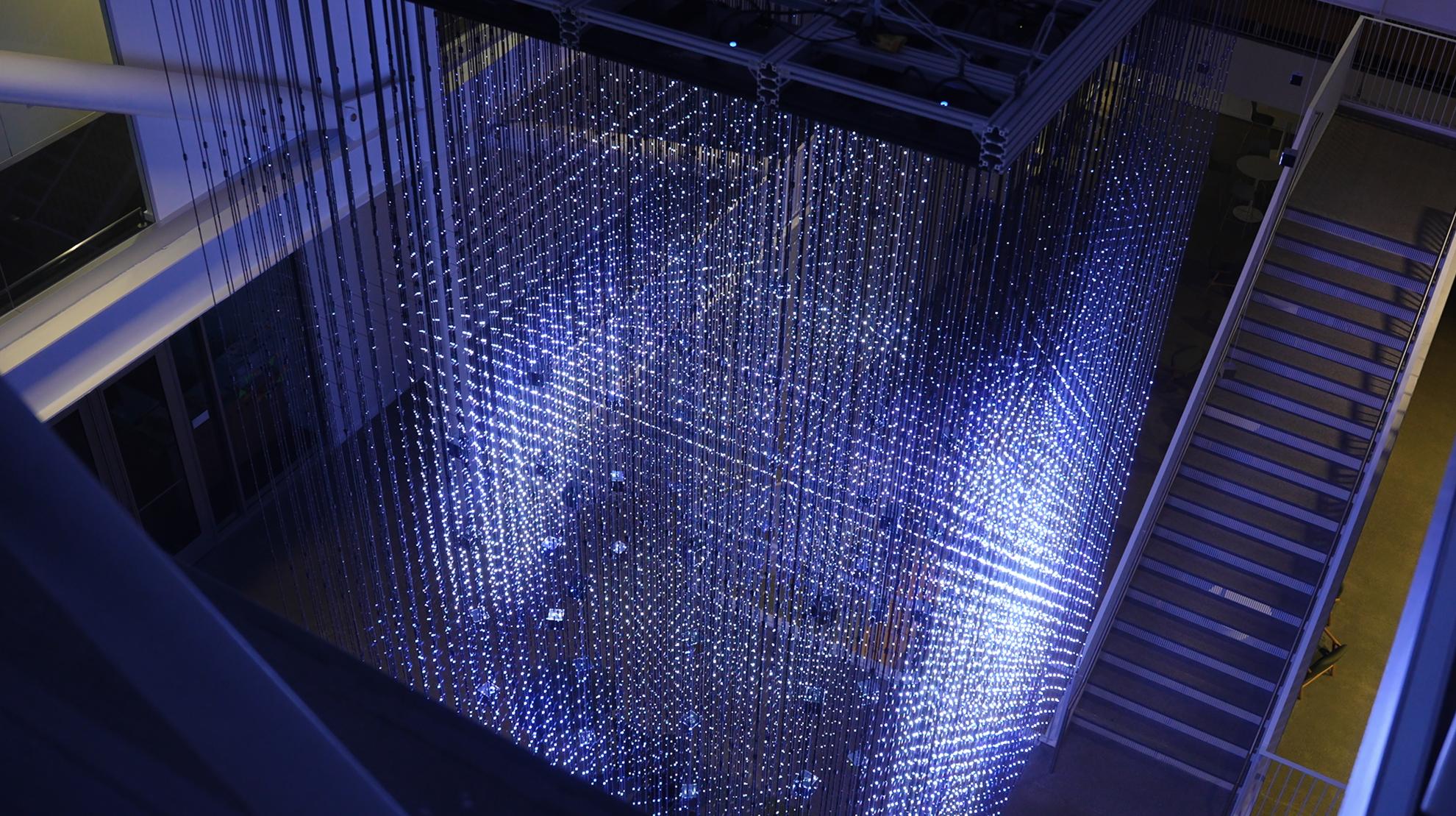
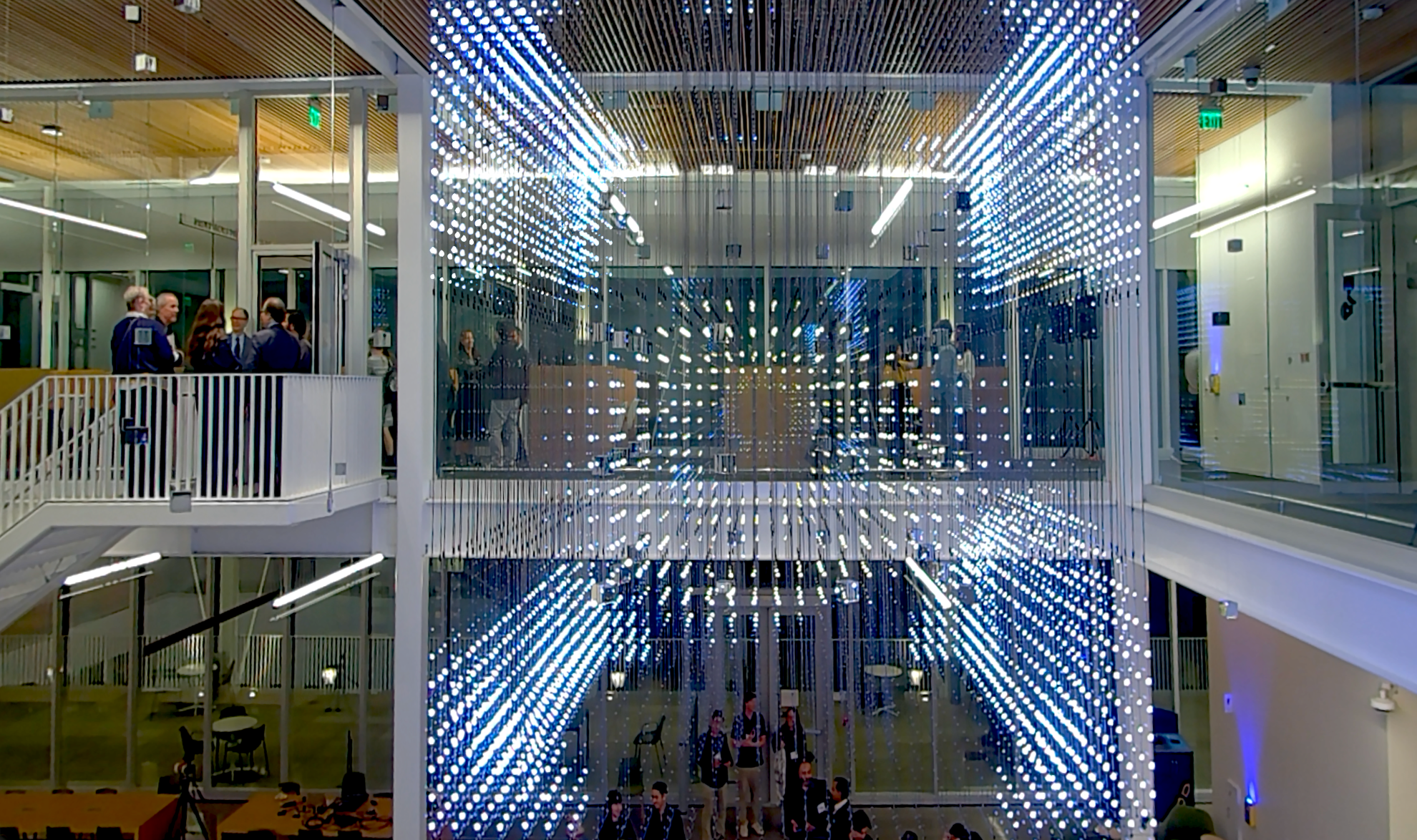
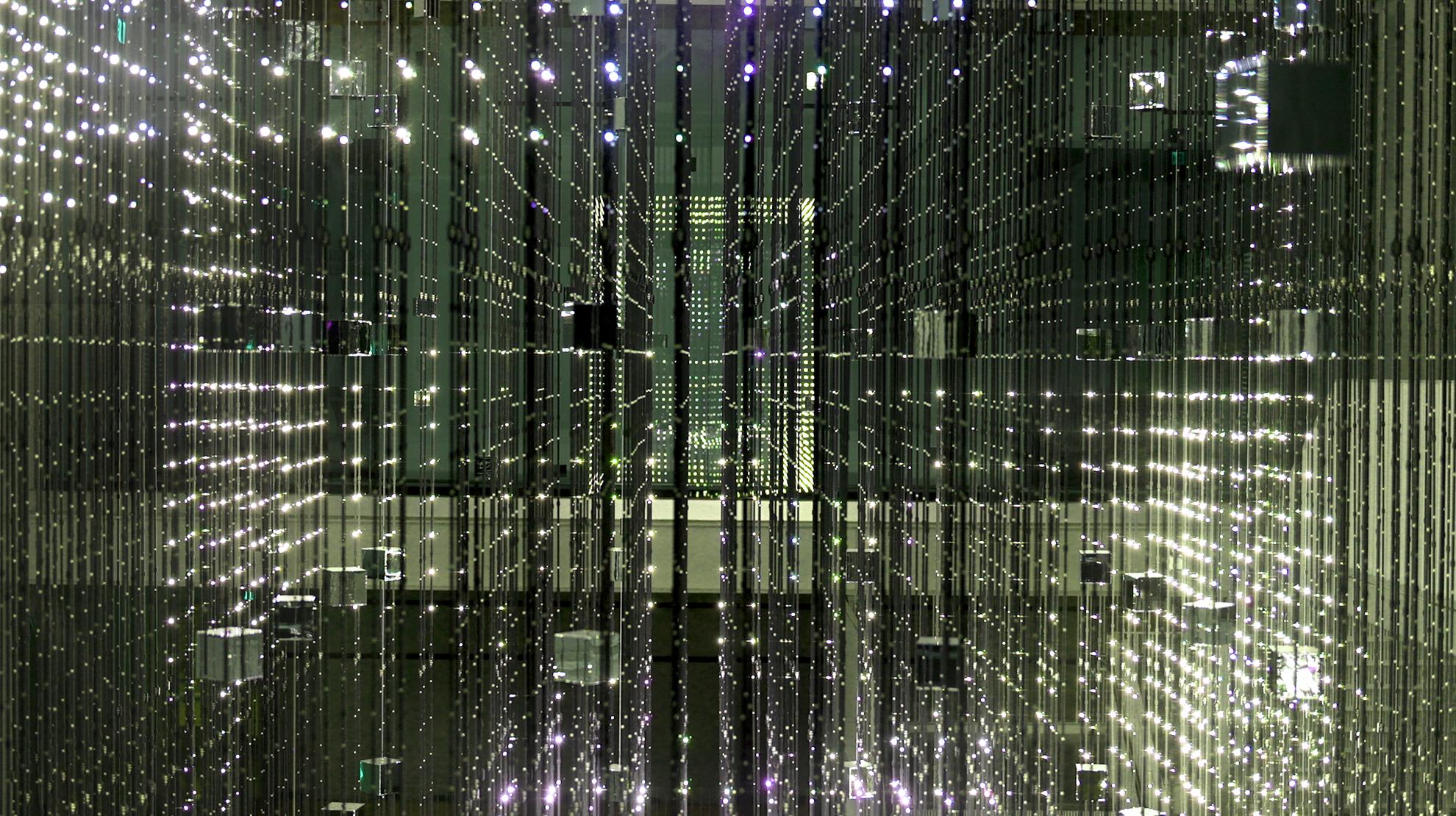
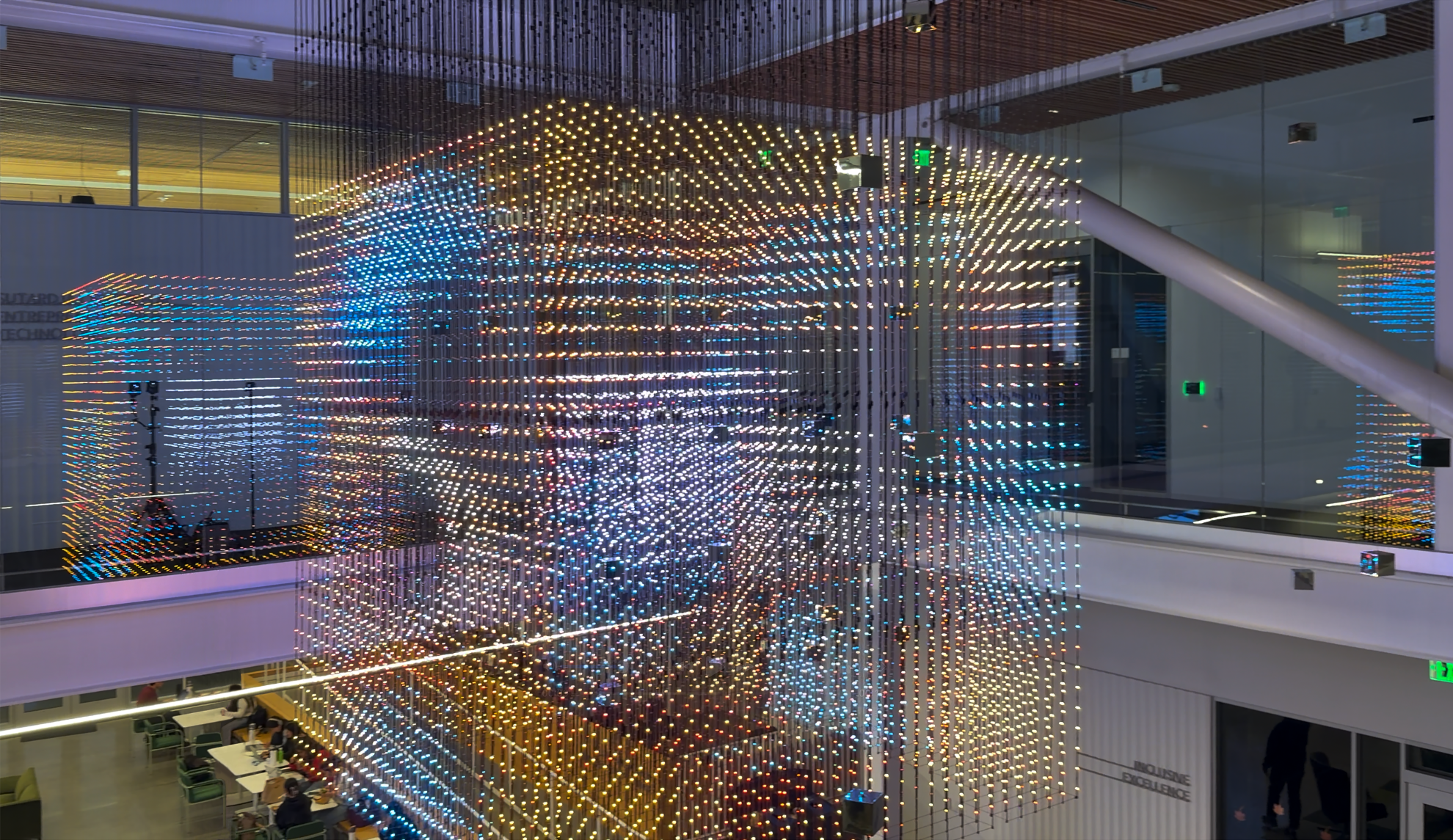
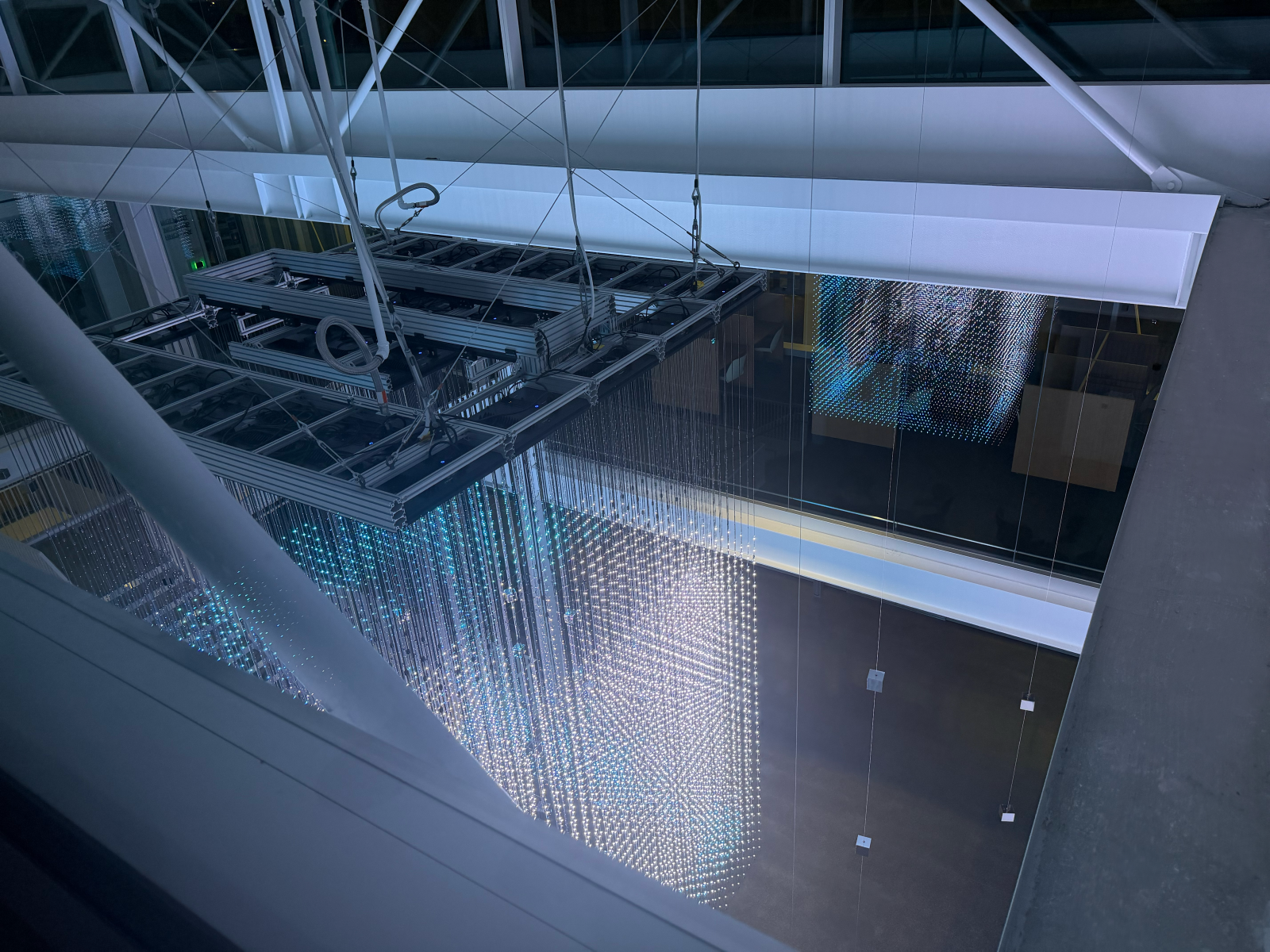
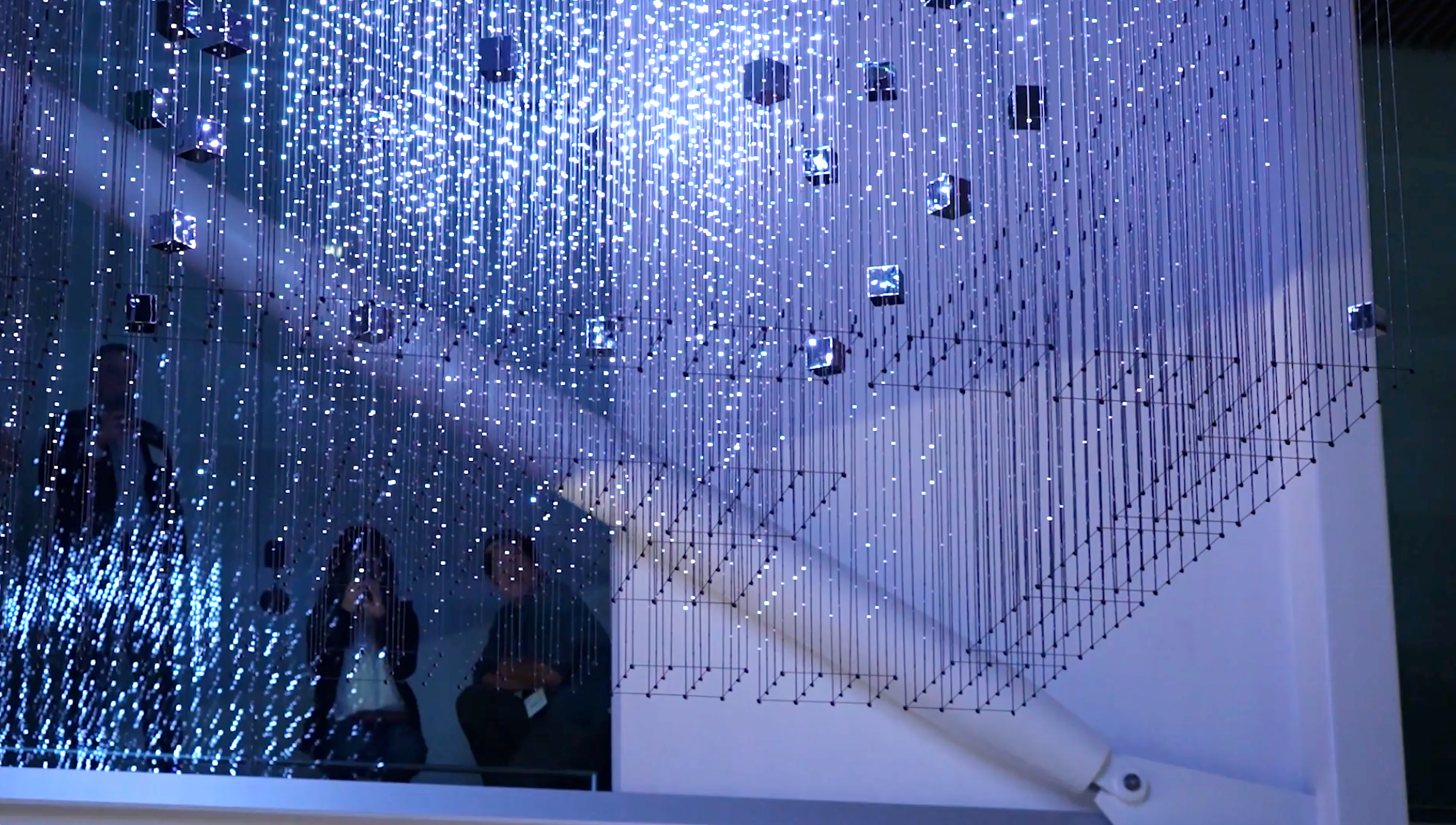
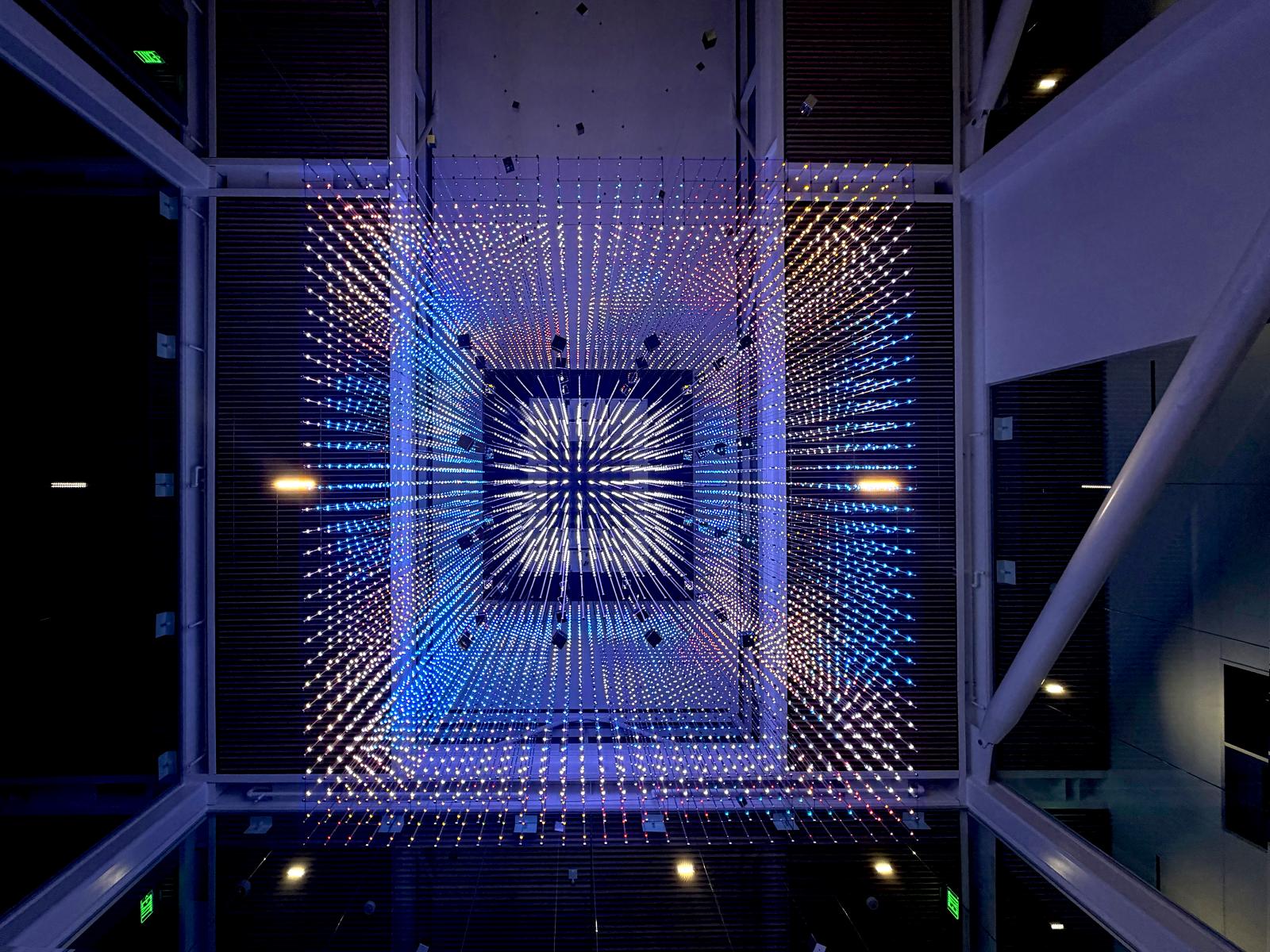
Suspended within the volume of the glass-walled atrium and visible from all levels of the building, the ephemeral structure appears to float, reinforcing the drama of the large open space. The artwork is composed of two nested cubes, defined by 46,000 points of light arranged in a three dimensional cartesian grid. The precision of this framework makes the mathematical underpinning of the piece legible.
The work takes its name and its formal logic from the hypercube - a four dimensional analogue of the cube - a theoretical object that cannot be directly visualized but can be understood through mathematics.
Conceptually, it is a generative construct, driven by algorithms. The Hypercube pulls from mathematical principles, engineering dynamics and systems in nature to continuously reshape the visual narrative. No two moments are identical. The artwork is, in Narduli's framing, “always being created”. This is data given physical form, a visualization of the kind of abstract spatial reasoning that engineering depends on. The three dimensional display environment is capable of rendering generative animations across the nested cube geometry. The outer cube and the inner cube operate in dynamic counterpoint, occasionally allowing one to override or transform the entire perception.
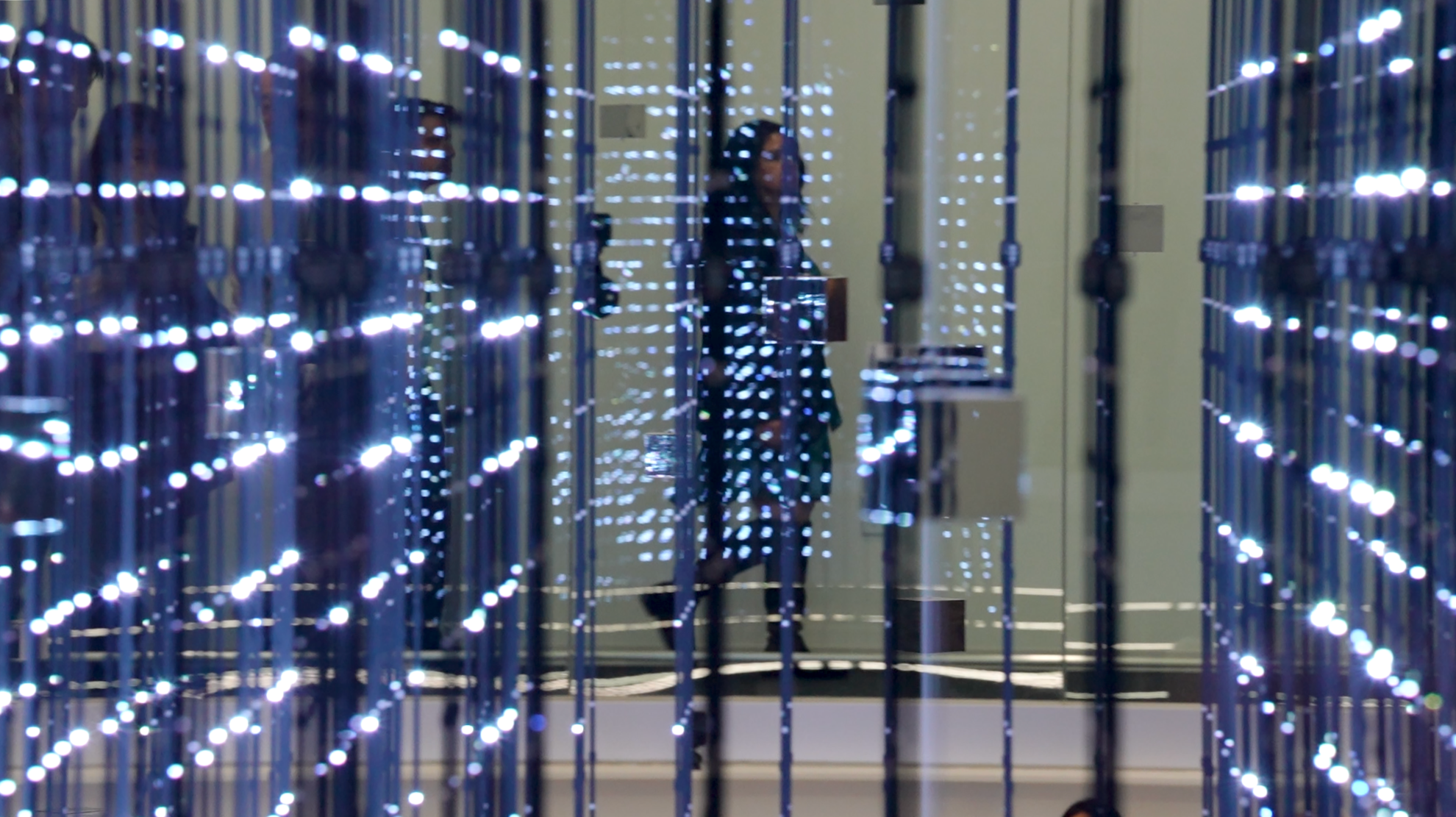
Fleeting reflections of the Hypercube captured in the atrium glass walls appear and disappear as one moves through the space. This interplay extends the artwork beyond its precise physical form, reinforcing the underlying concept that the physical object is fixed, its appearance is not. An explosion of reflective pixel-like particles emanate from its core to catch bits of the light across a wider field. As the boundary between artwork and architecture dissolves, their scattered placement extends the artwork into a field of animated surfaces throughout the atrium that the artwork itself never physically touches.
The Strauch Hypercube was conceived as a collaborative piece, with an explicit invitation for the Berkeley community to engage with it directly. Developed with an open software architecture, students and faculty are able to introduce new algorithmic inputs, treating the installation as a live research environment as much as a finished artwork.
Collaboration
Artist : Narduli Studio
Lighting : 5TEN Visuals
Other : Immerse Studio
Architect : SOM
Project manager : Alchemy Station
Photographer : Adam Lau/UC Berkeley Engineering
Photo credit