

Share to
Lantern House
By : Leckie Studio Architecture + Design Inc

GRANDS PRIX DU DESIGN 18th edition
Discipline : Architecture
Categories : Residential Building / Private House > 2 000 pi2 (> 185 m2) : Gold certification
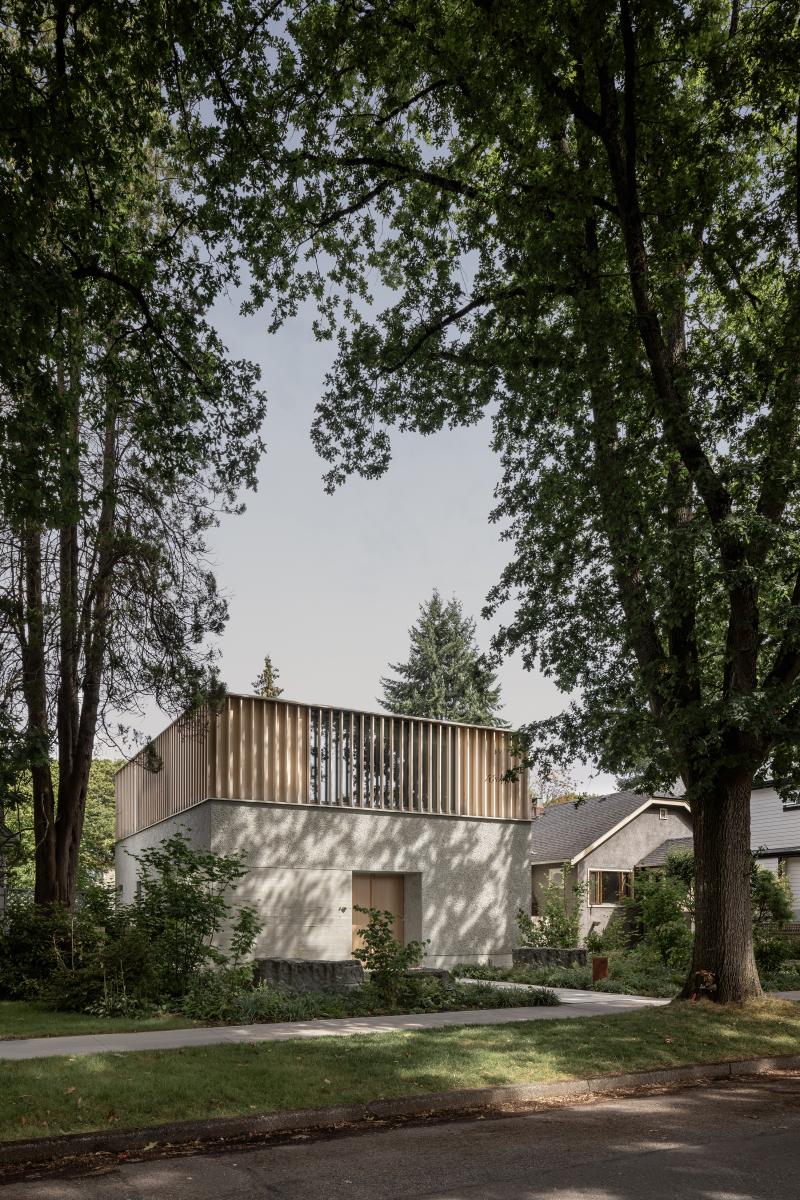
Lantern House stands in quiet conversation with its surroundings — a measured presence beneath a canopy of mature oaks. It is an architecture of restraint, one that listens rather than imposes: to the rhythm of filtered light, to the play of shadow on stucco walls, to air drifting between volumes. Set on a generous urban lot in Vancouver’s west side, the home is a sanctuary for a young family, a place designed to hold silence, shadow, and stillness in balance.
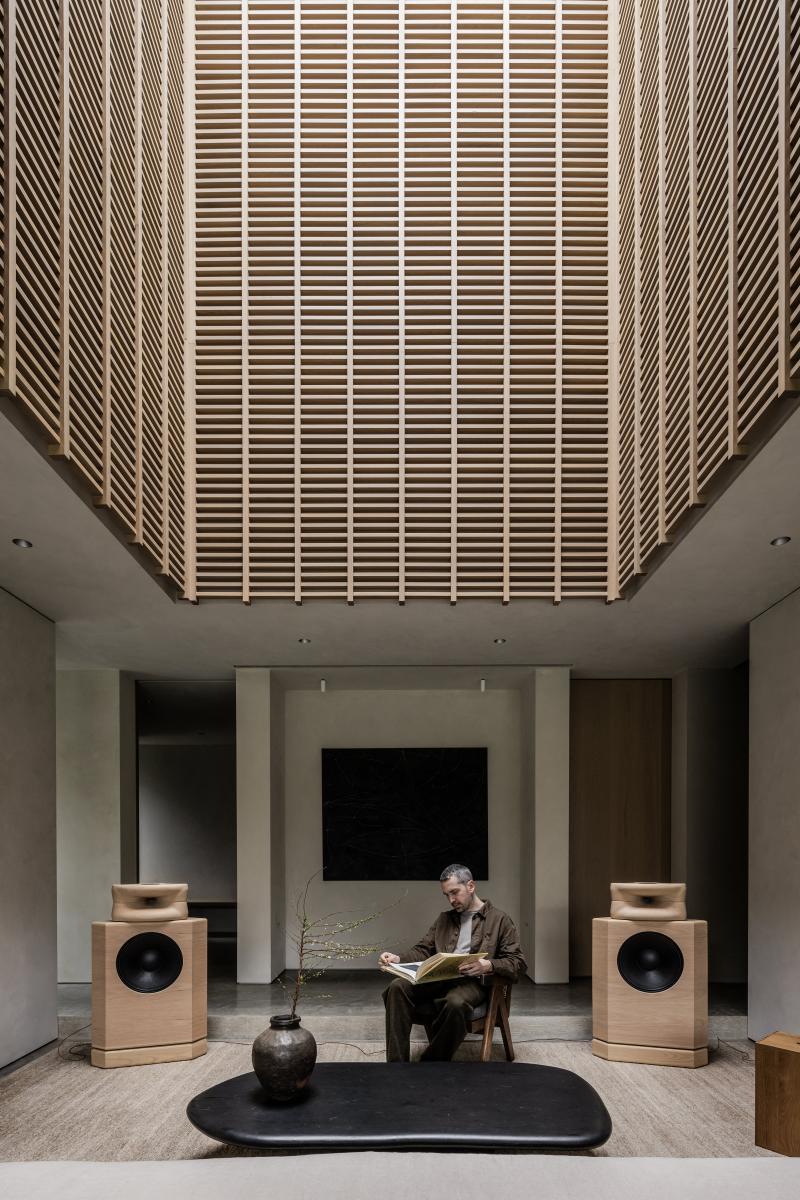
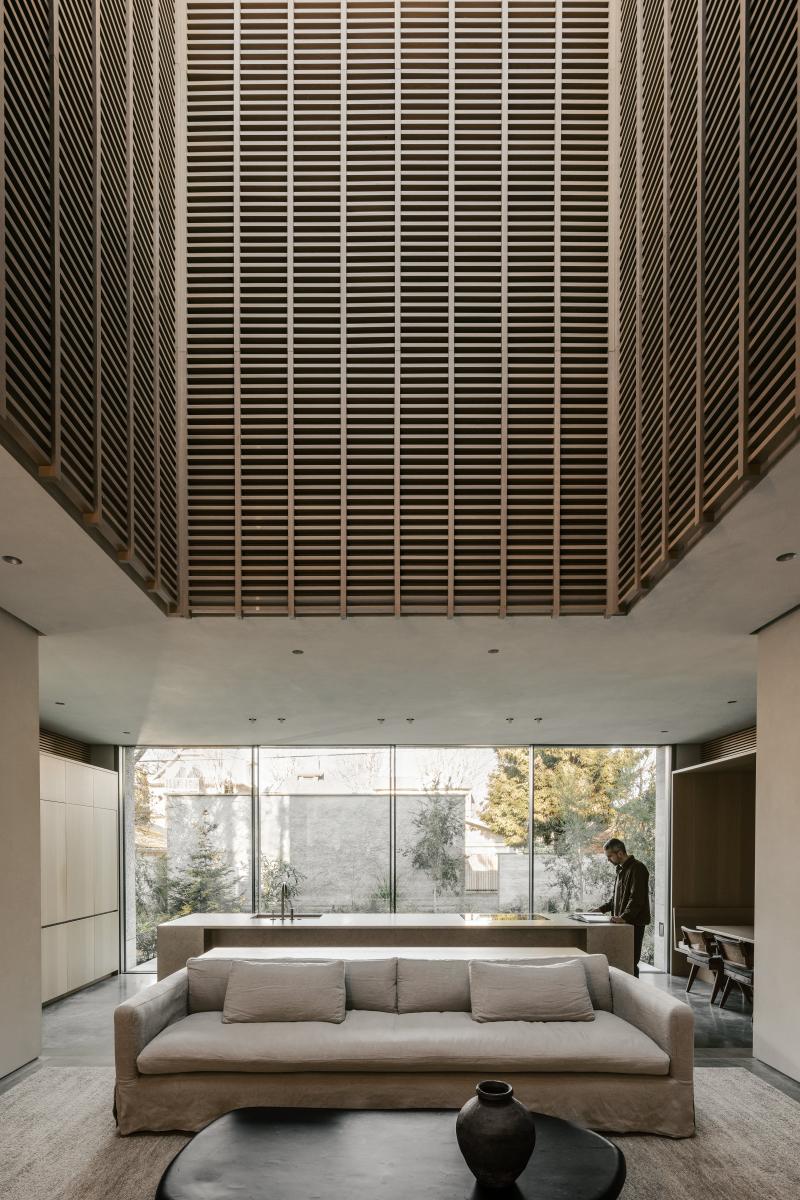
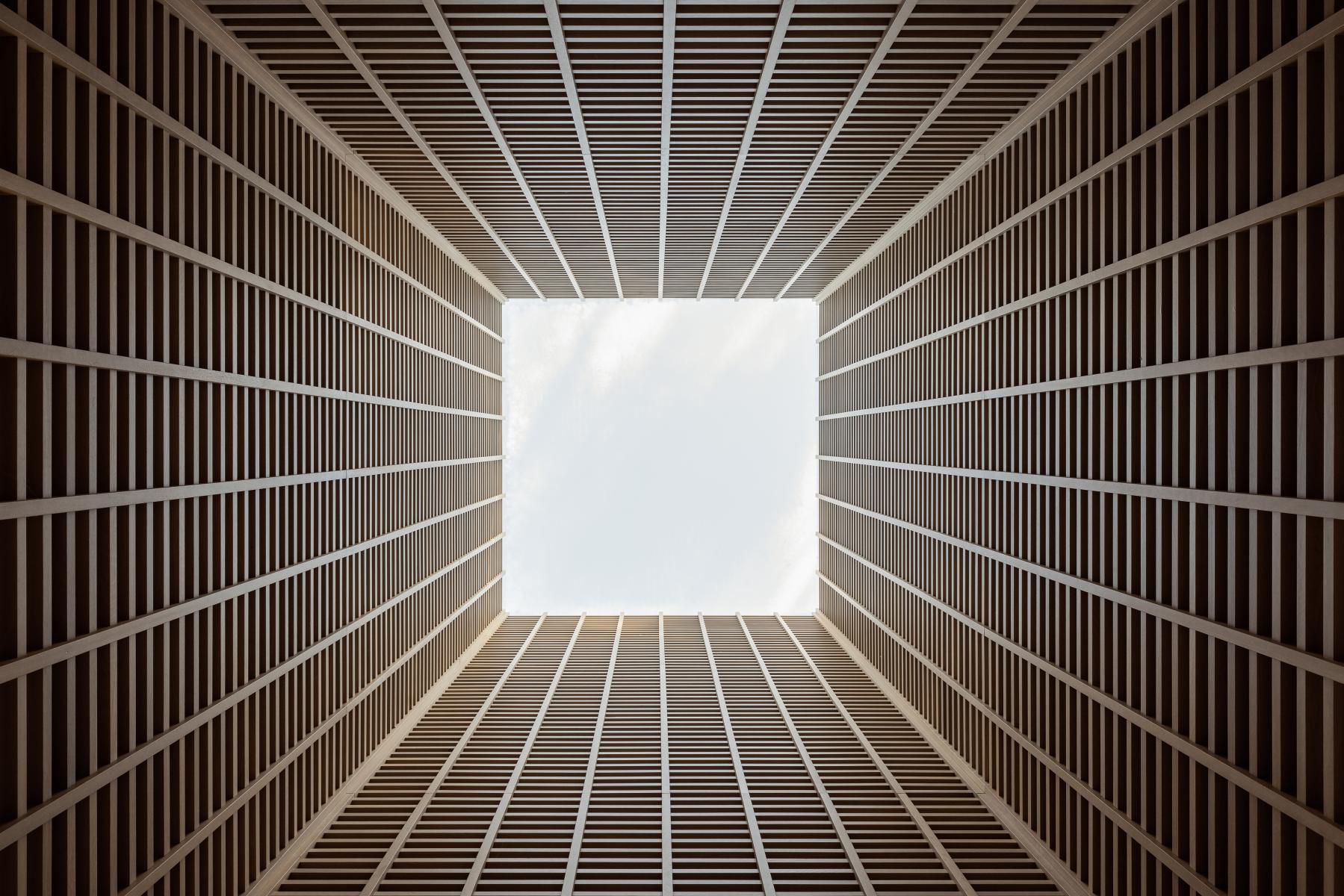
At its core is a central void — a clearing in the mass, like a break in the forest canopy — where light pools and filters into the surrounding rooms. This space serves as both an organizing principle and an atmospheric anchor. Around it, rooms arrange themselves with apparent informality, gradually revealing an underlying nine-square grid: a quiet structure felt more than seen.
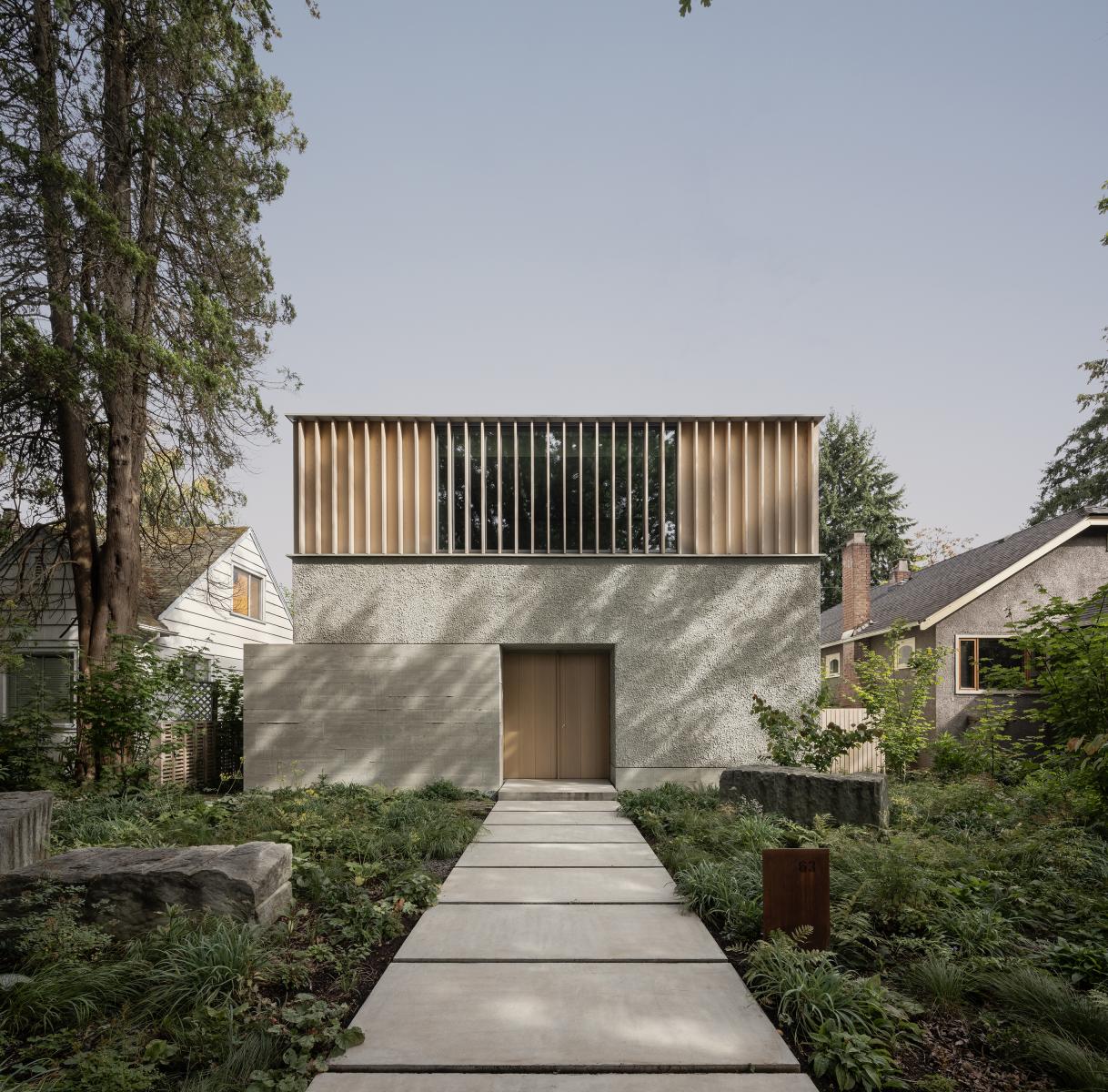
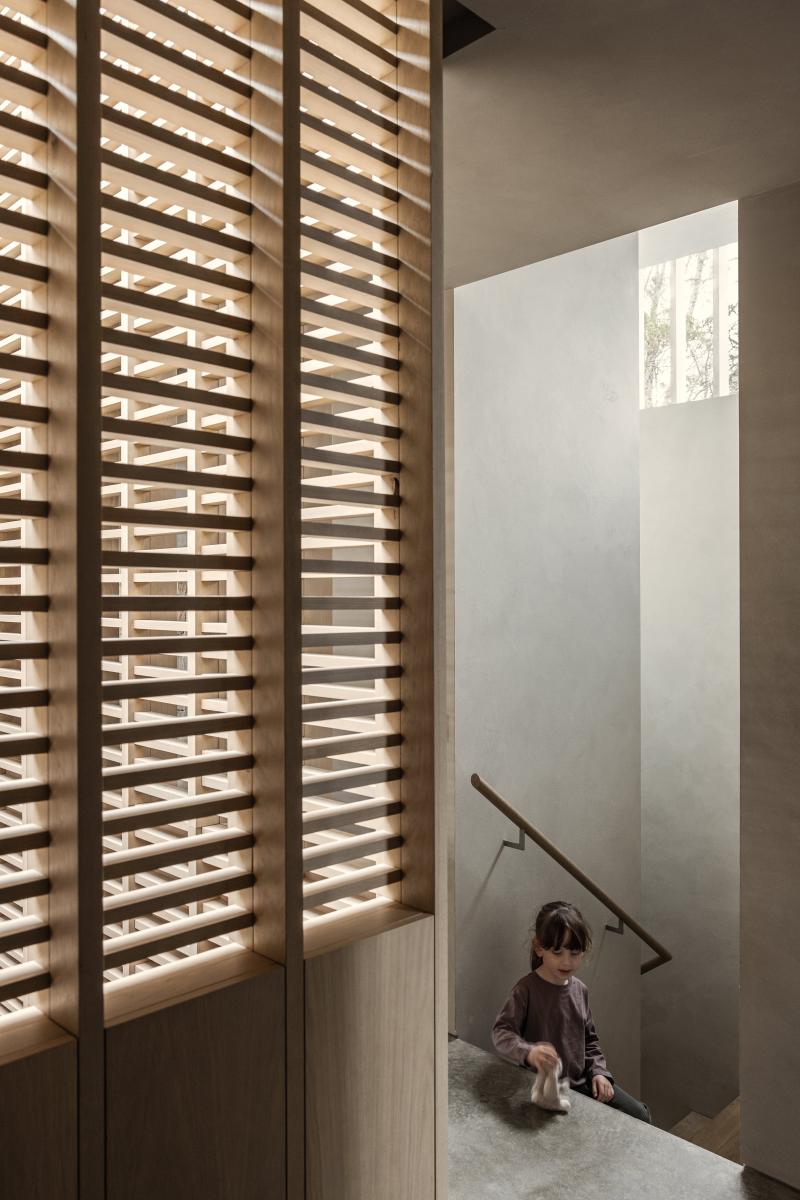
The material palette is limited but expressive. The lower volume is grounded with rough stucco, catching the light in shifting textures. Above, a filigree of cedar slats forms a lantern-like screen that mediates views, enclosure, and illumination. Board-formed concrete elements lodge into the massing, asserting a tactile presence. These monolithic forms slip past the envelope to frame views, define thresholds, and quietly disrupt symmetry.
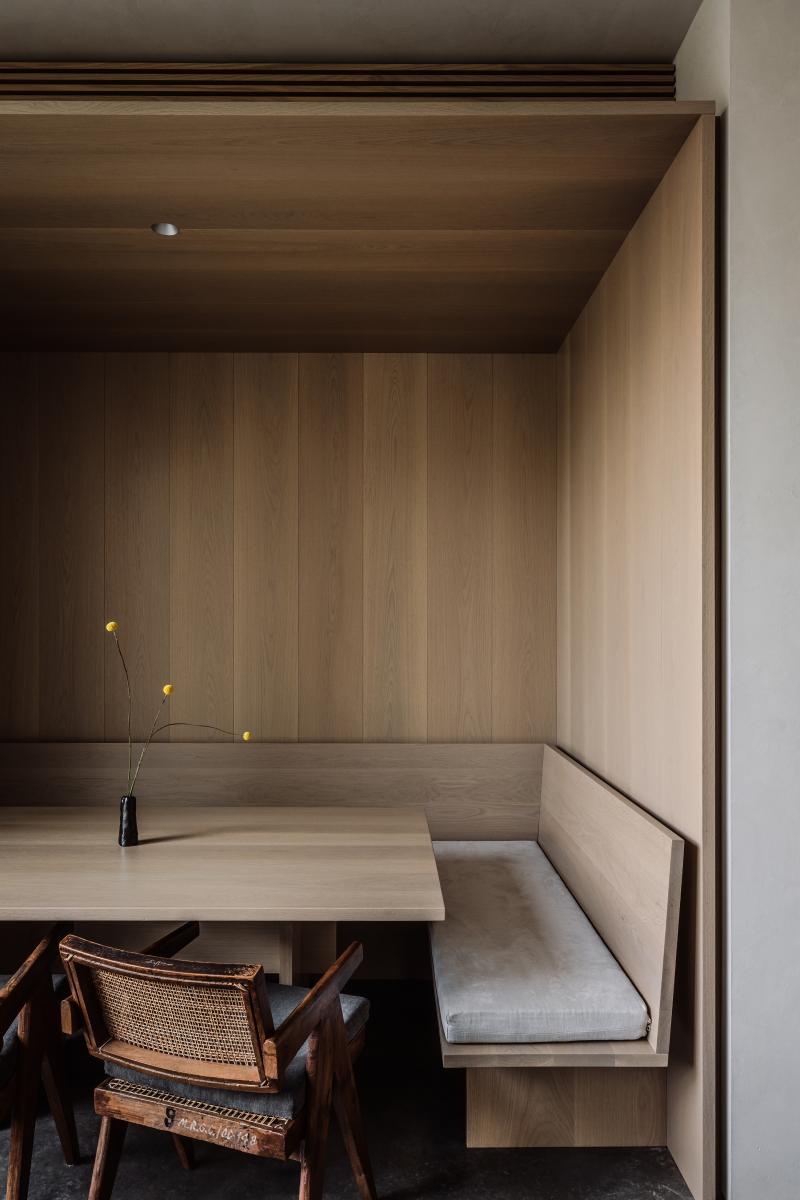
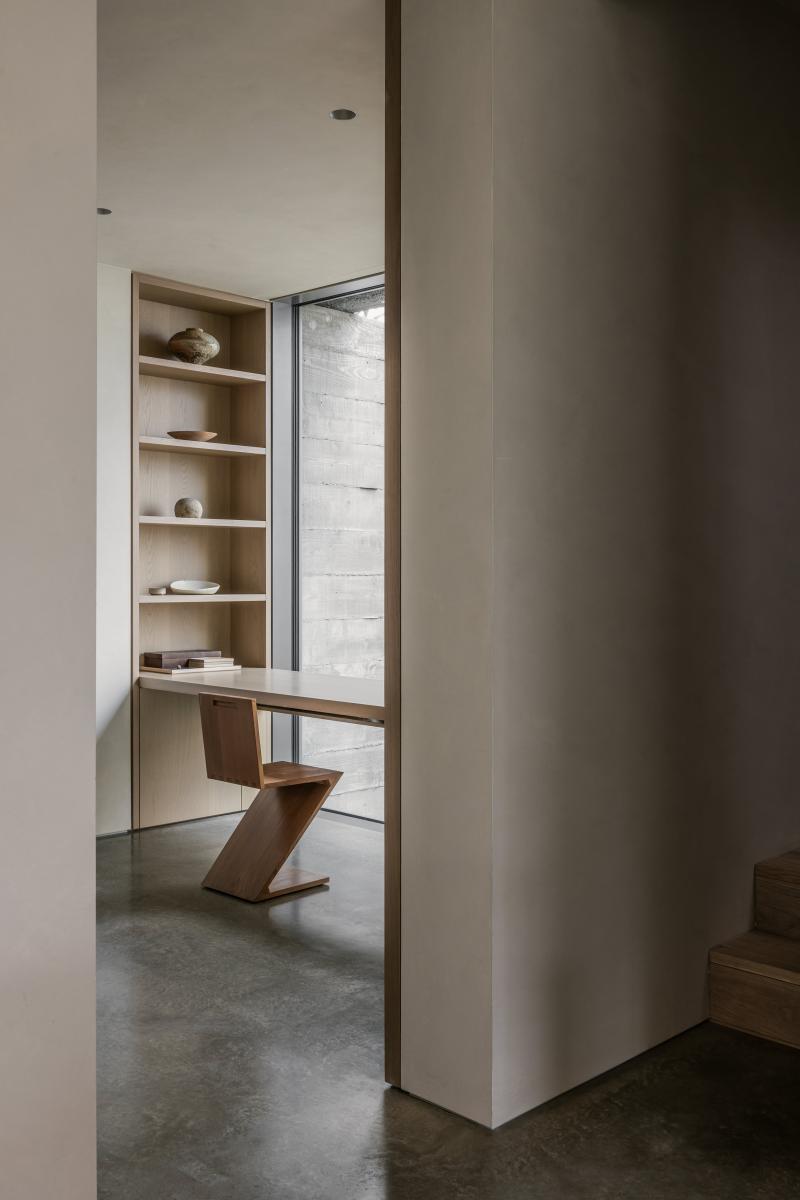
From the street, the house is enigmatic. The landscape is loose, informal — a wild garden of native wildflowers, grasses, and large quarried stone monoliths. A recessed wooden entry offers no view inward. A single band of glass, veiled by the cedar screen, hints at the life within. The concrete wall to the west protects the office and side garden; to the rear, a second volume defines the secluded alcove of the dining nook.
Inside, movement unfolds in deliberate sequence. A windowless vestibule yields to a softly lit foyer. Then, the main space opens — light cascading from the central void, with apertures modulating brightness through the day. The living room contains a concealed hi-fi station and record collection, hidden behind limewashed sliding panels that allow the space to shift between listening room and quiet gallery.
Materials were selected for their ability to age gracefully. Polished concrete floors contrast the warmth of white oak; cream colored limewashed walls shift subtly in light. A sandstone kitchen island anchors the space, bridging concrete and wood. Custom stainless-steel details remain quietly integrated.
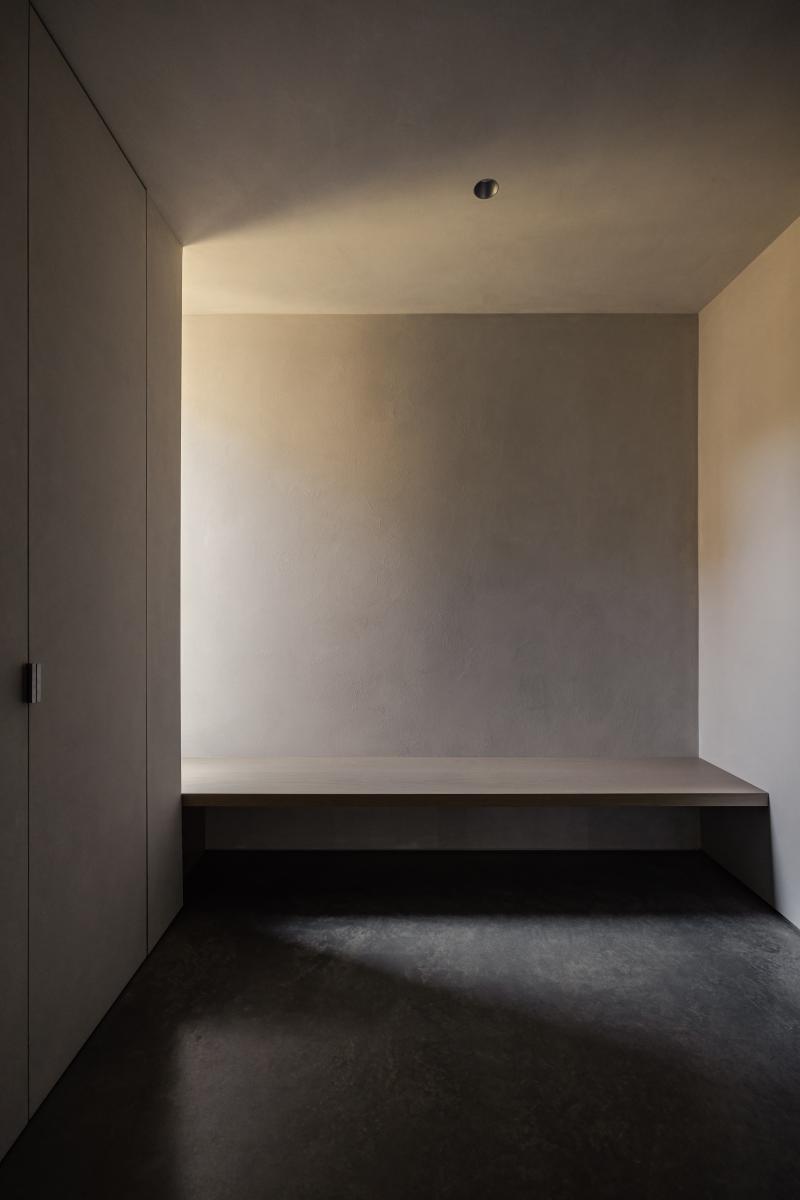
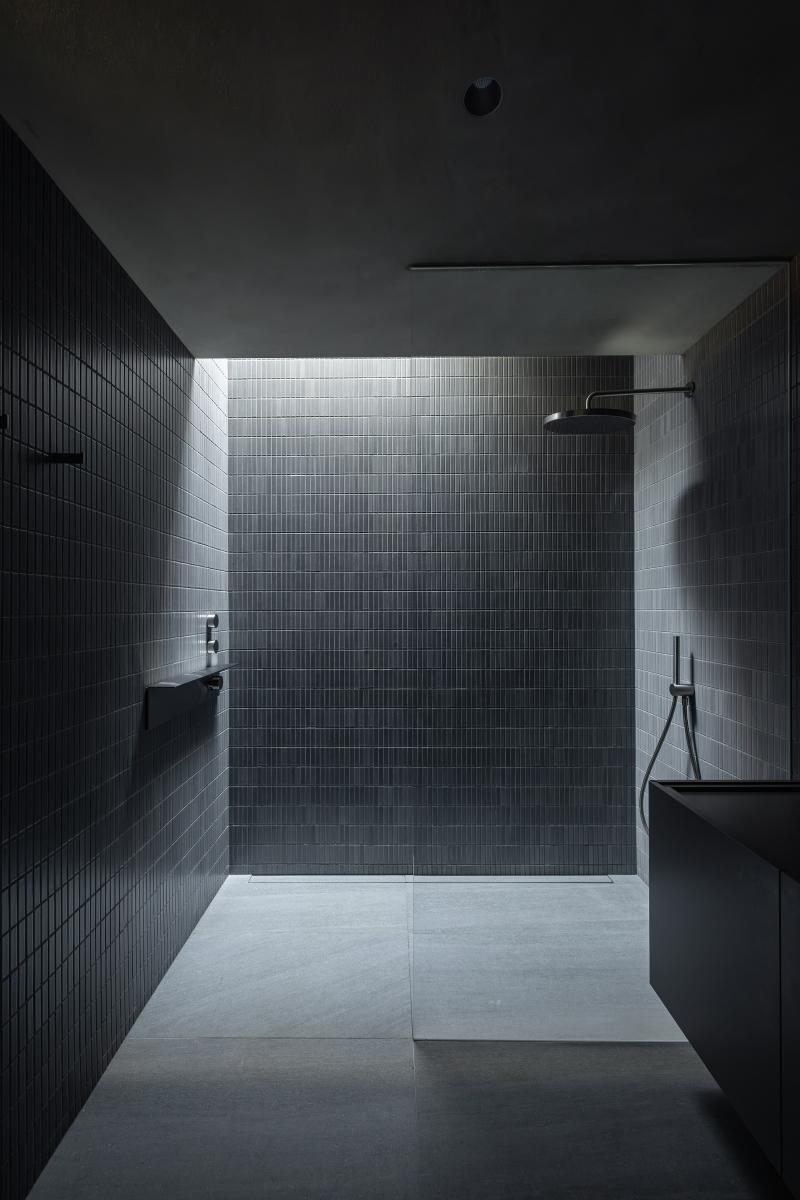
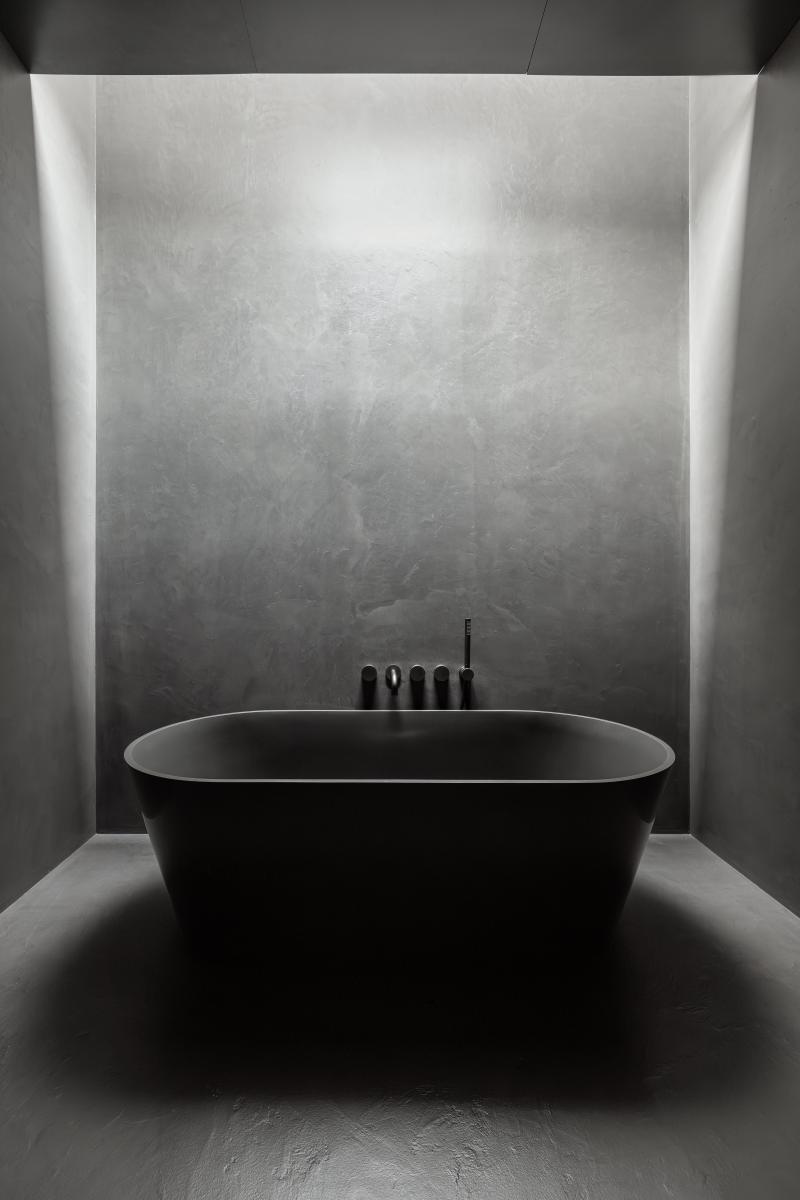
The stair marks a transition: light dims, lime wash deepens. Upstairs, light filters through the screen, casting softened shadows. The bedrooms are calm and veiled, attuned to the slow rhythm of the day. This slow progression towards darkness culminates in a hidden tub room — windowless, lined in deep grey plaster, lit only from above.
Ultimately, the house is not about form but atmosphere. It is an architecture of presence and withdrawal, of stillness and light. A monument of sorts—quiet, generous, and attuned to the rituals of daily life.
Collaboration
Architect : Leckie Studio Architecture + Design Inc
Photo credit