

Share to
EchoBlue
By : Célia Granjeaud

GRANDS PRIX DU DESIGN 18th edition
Discipline : Student
Categories : Students work / Student - Industrial Design / Product / Furniture : Silver certification
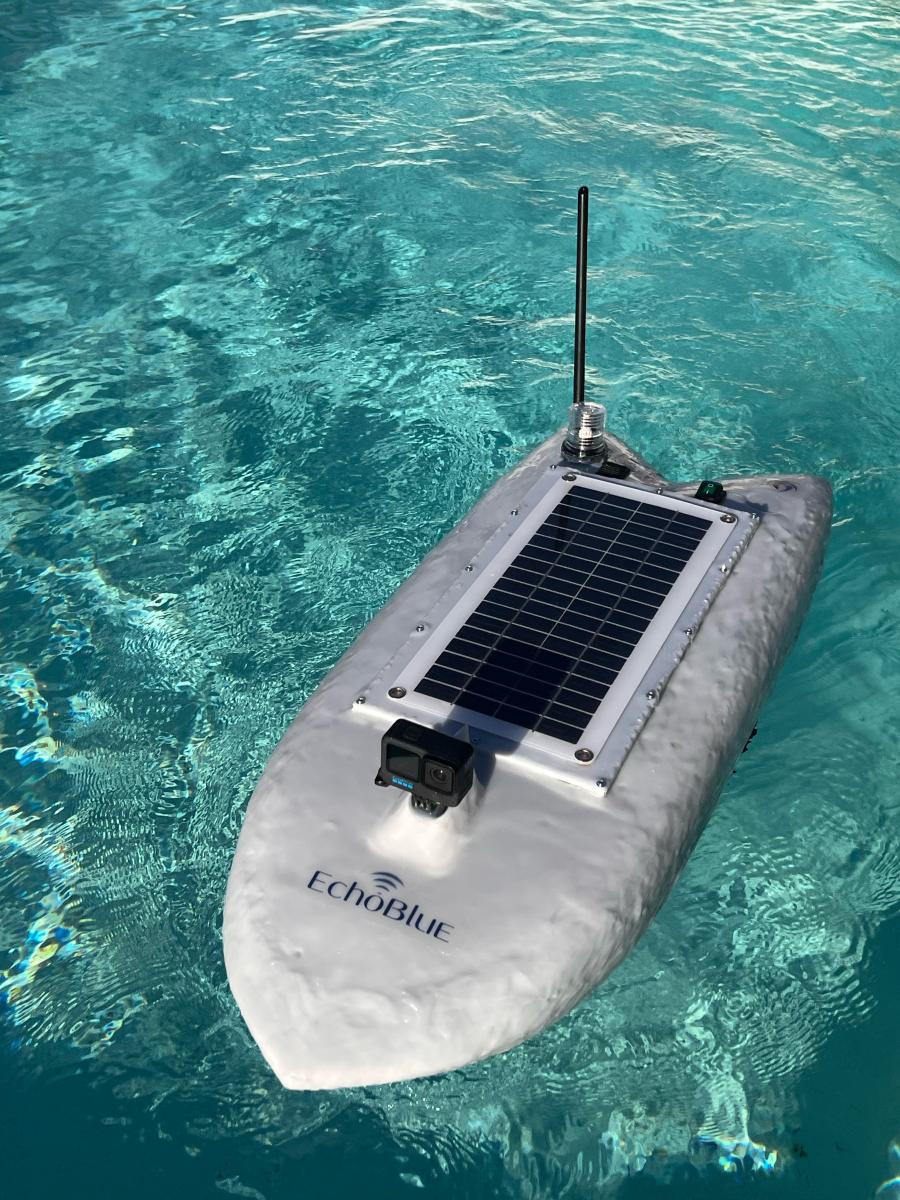
Here is EchoBlue, an autonomous floating drone, specially designed to collect data on the presence of dolphins in fishing areas, without disrupting their natural behavior. It is a product that meets a concrete need: to make visible and measurable a reality often ignored, that of the interactions between cetaceans and industrial fishing.
This project arose from a dual observation: the lack of reliable data on the presence of dolphins in fishing zones, and the numerous undocumented accidental catches.
As a designer, I wanted to create a gentle solution, respectful of living beings, inspired directly by the animal itself in its form as well as its material to design a discreet, sensitive, and useful product for research.
I chose to name my project EchoBlue, a name that alone sums up the spirit and function of this object. "Echo" refers to the echo of the dolphins, to their mode of communication by ultrasound, but also to the idea of listening, of paying attention to the often imperceptible marine sounds to us.
"Blue" evokes the ocean, its depth, its fragile beauty, but also the urgent need to protect it.
EchoBlue is thus a discreet bridge between the human world and that of cetaceans, an object that captures what we do not hear, to help us better understand, respect, and coexist with marine life.
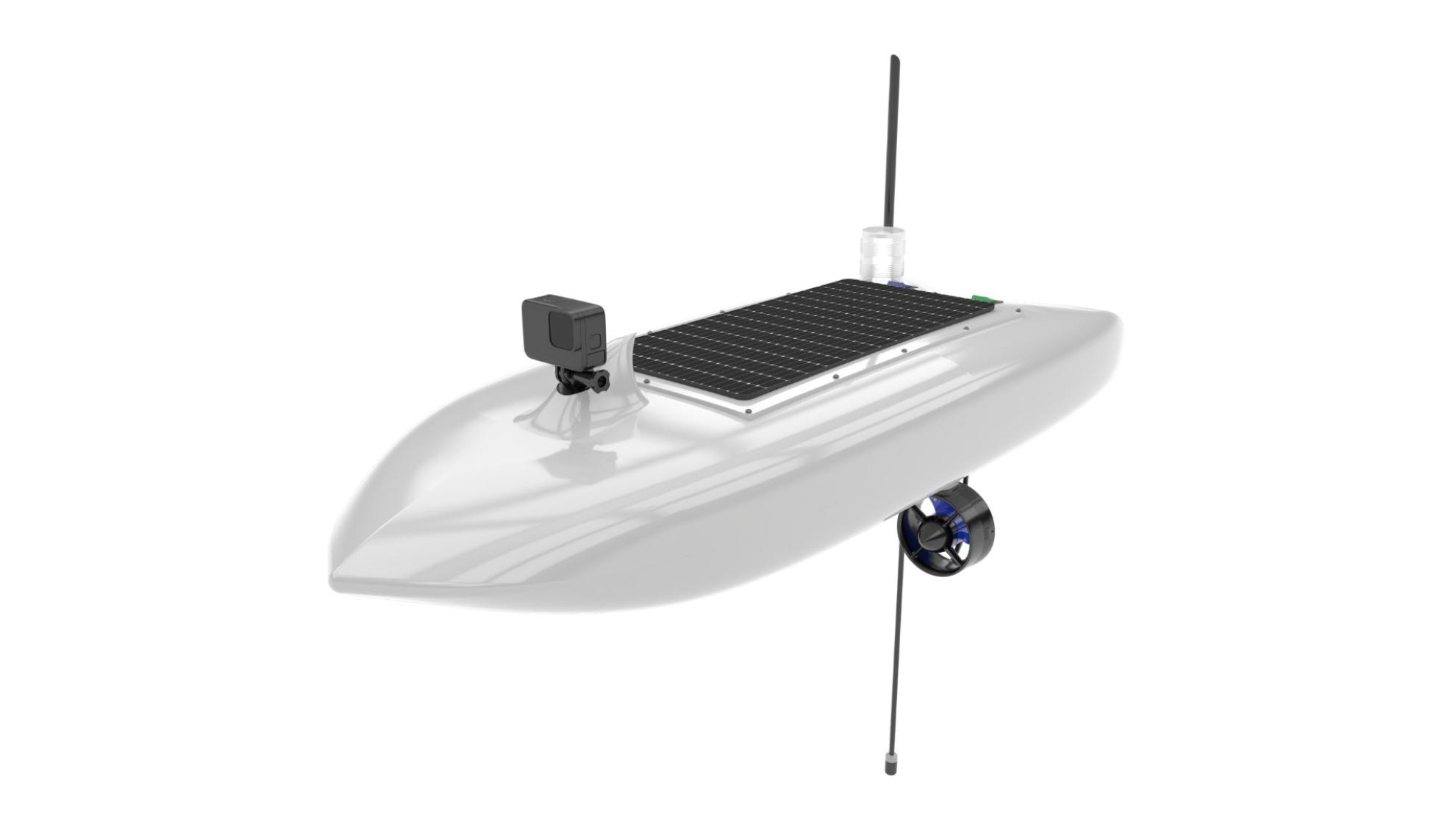
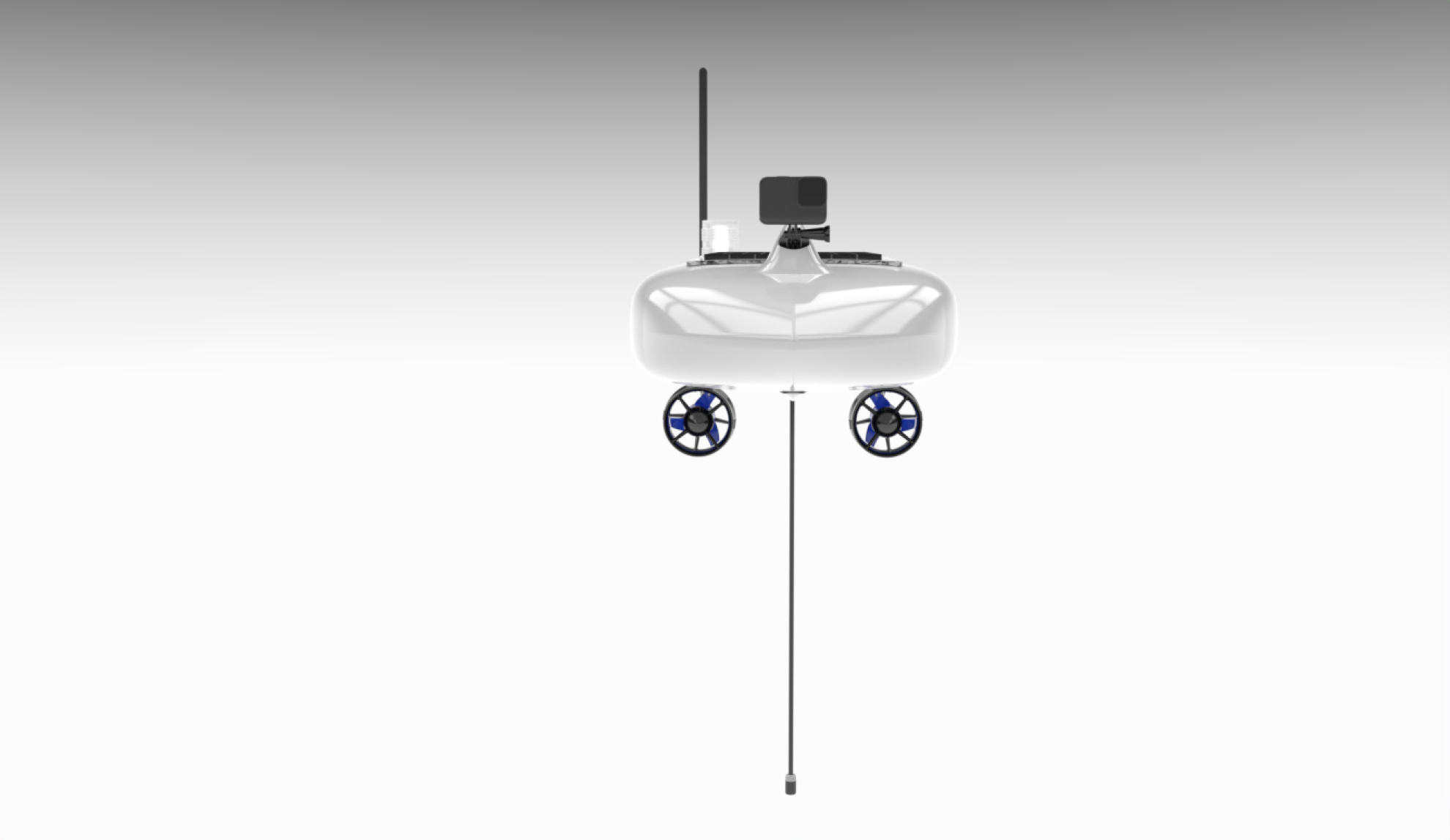
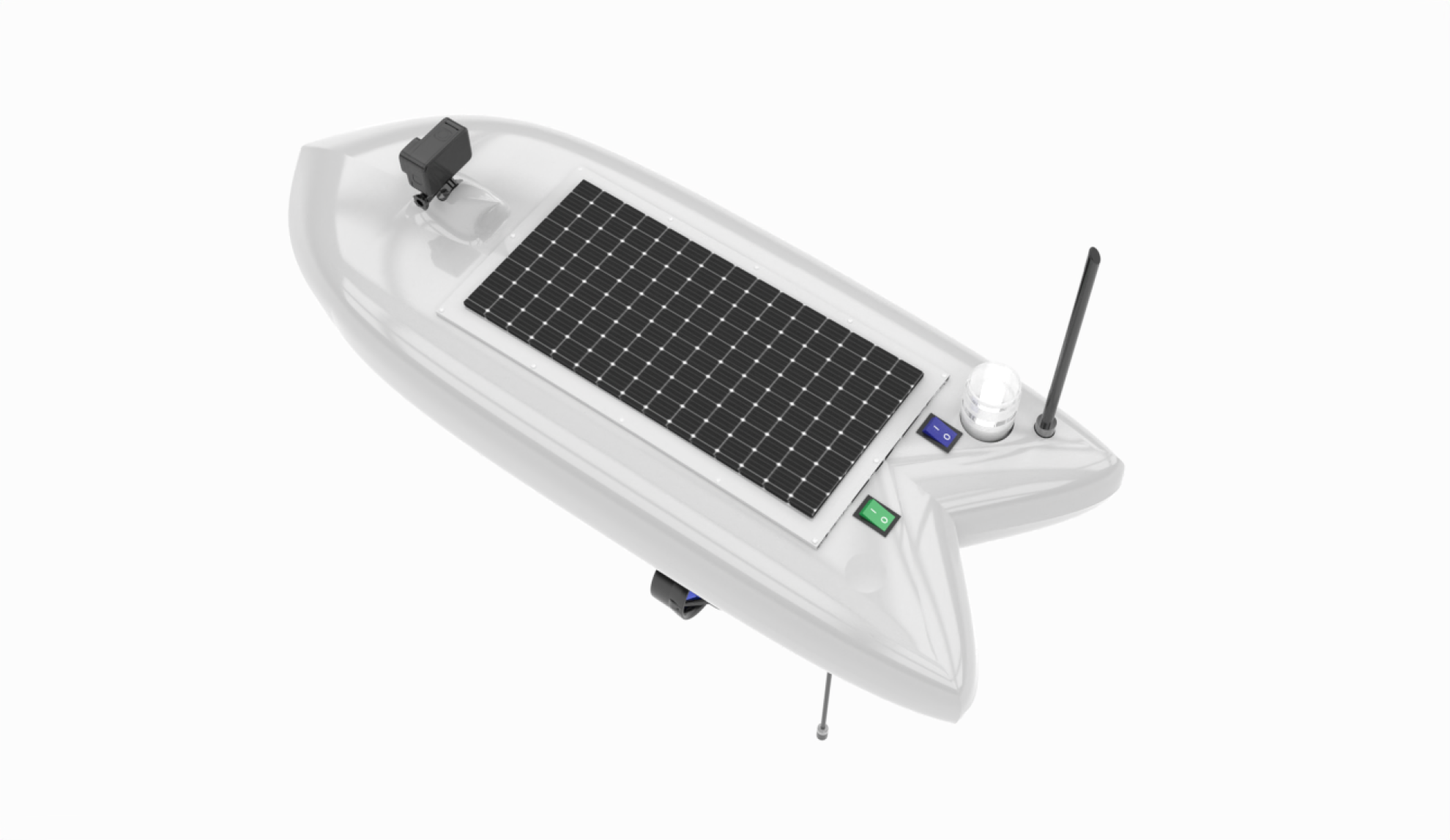
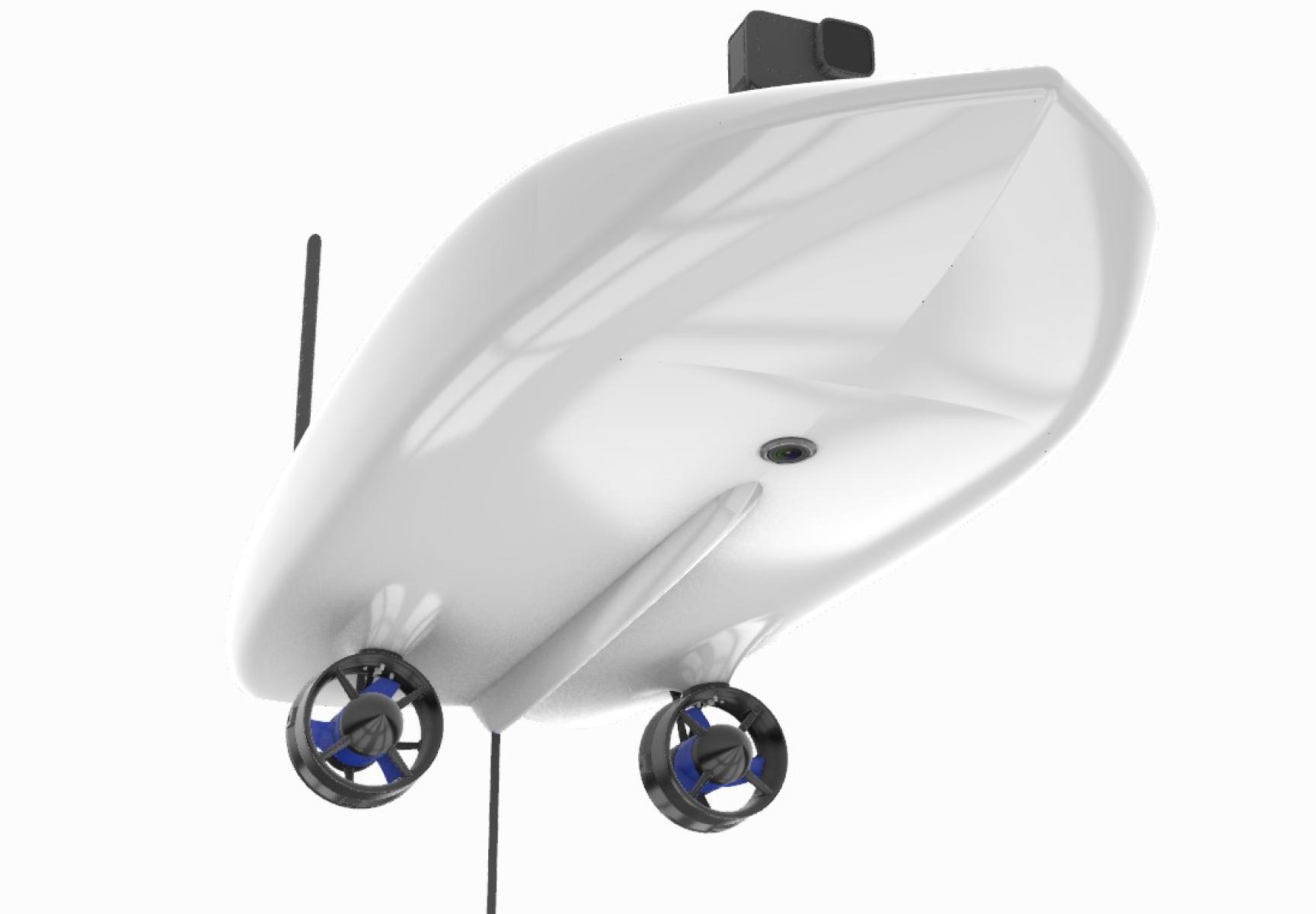
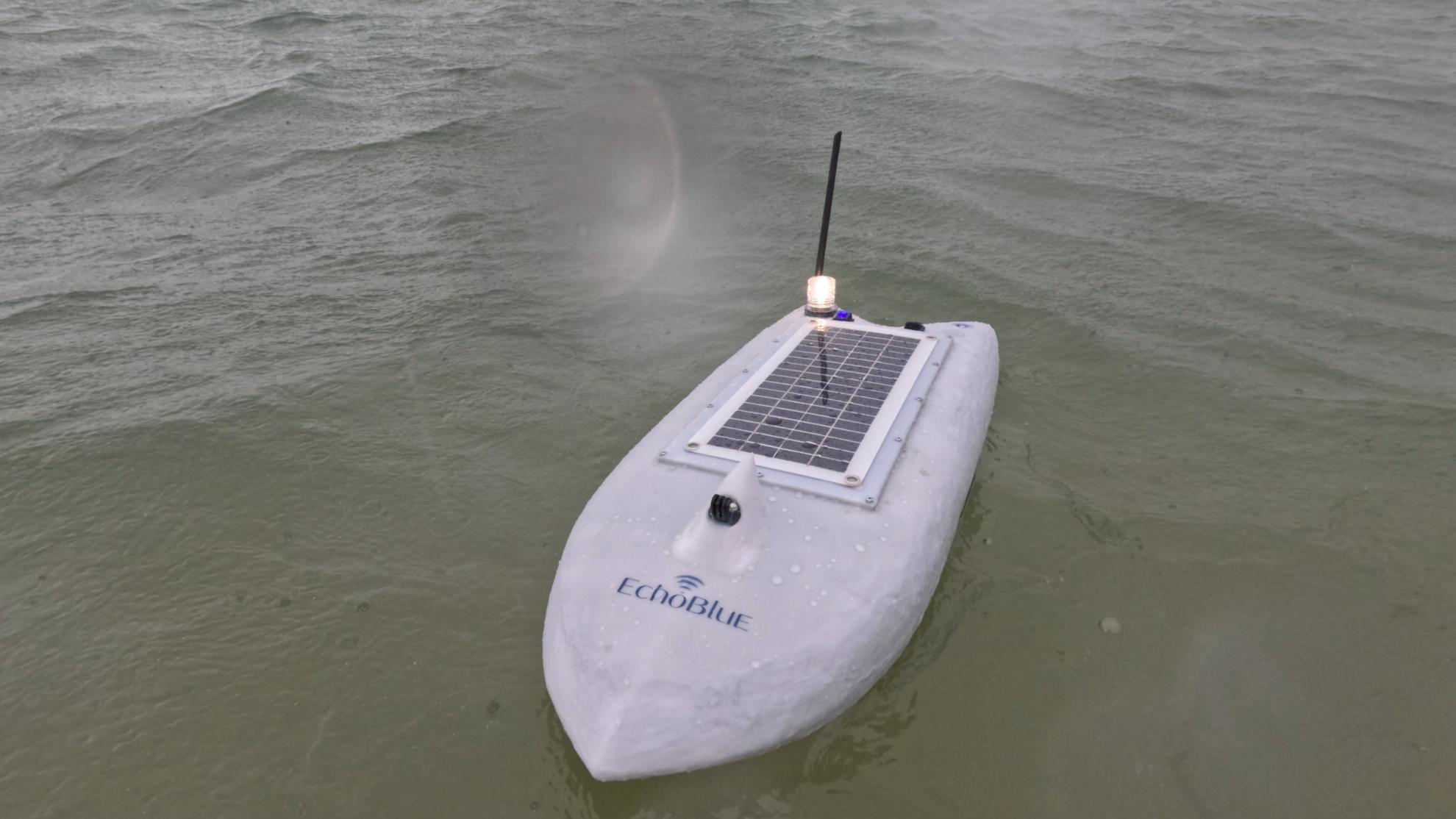
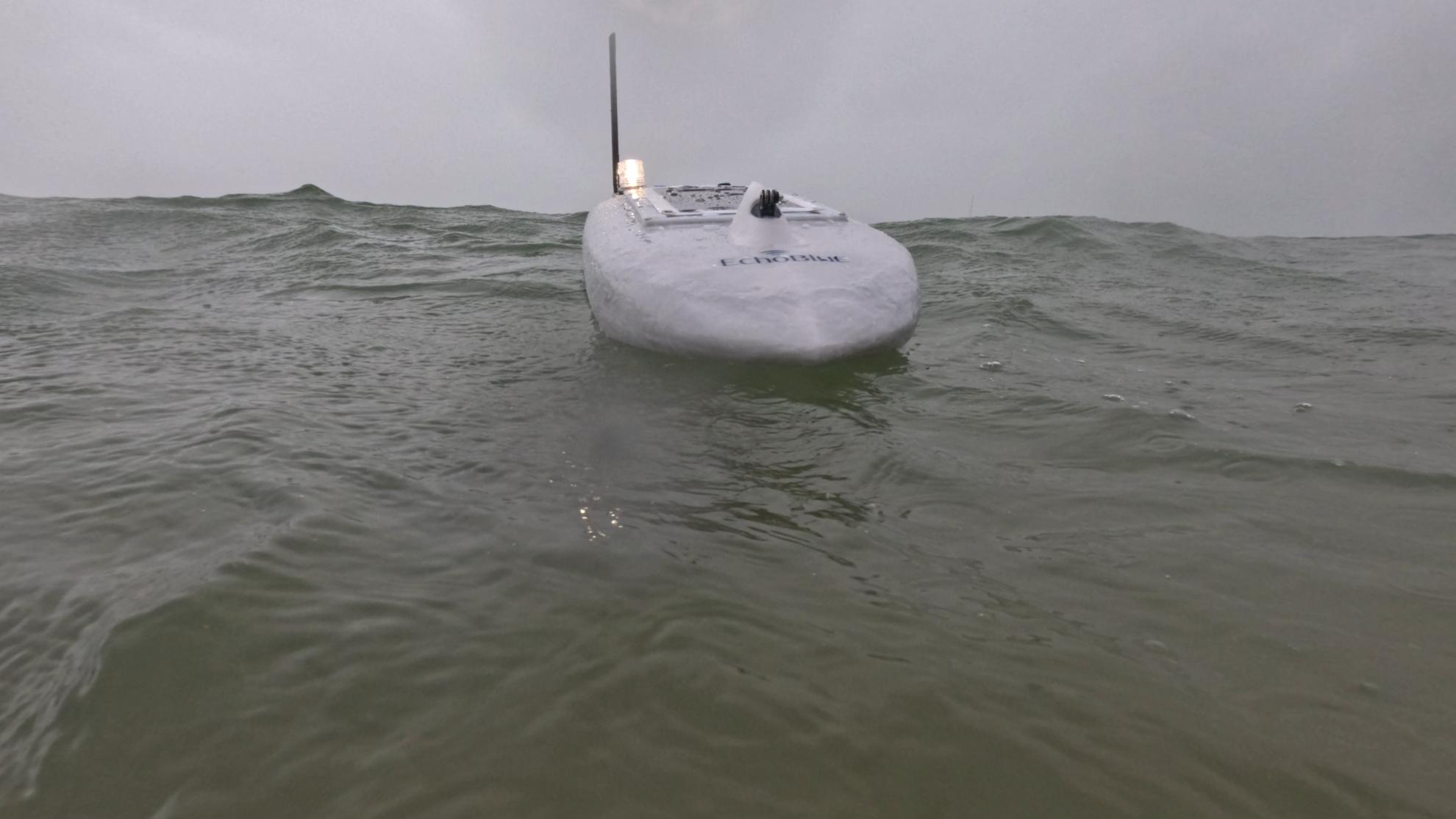
The shape of the drone is in a biomorphic approach: its fluid lines, its compact dimensions, and its dorsal fin evoke the silhouette of a dolphin, thus facilitating its integration into the marine environment while optimizing its hydrodynamics.
Its surface is covered with a layer of flexible silicone reproducing the texture of dolphin skin based on a principle of biomimicry allowing better hydrodynamic thrust. This discreet and respectful coating helps to reduce visual and sound disturbances in the marine ecosystem.
The drone moves on the surface of the water along a pre-programmed route. At certain points, it stops to record the underwater sounds received by a hydrophone that can be submerged up to 15 meters deep. A submersible camera and another on the surface complement the visual data collection. The system operates on batteries, whose power is supported by solar panels, without noise emission or direct interaction with the fauna.
The sounds captured and the images from the cameras are recorded on SD cards for later analysis by scientists. This passive and non-intrusive operation is a respectful response to the limitations of current devices which are often too heavy, too noisy, or too costly.
A first manually functional prototype was manufactured using a structure in 3D printed rPETG, assembled with reinforced resin and covered with silicone. It includes a Raspberry Pi with a touchscreen for ease of use, a professional hydrophone with a recorder, a submersible camera (as well as an optional surface camera), batteries, and solar panels.
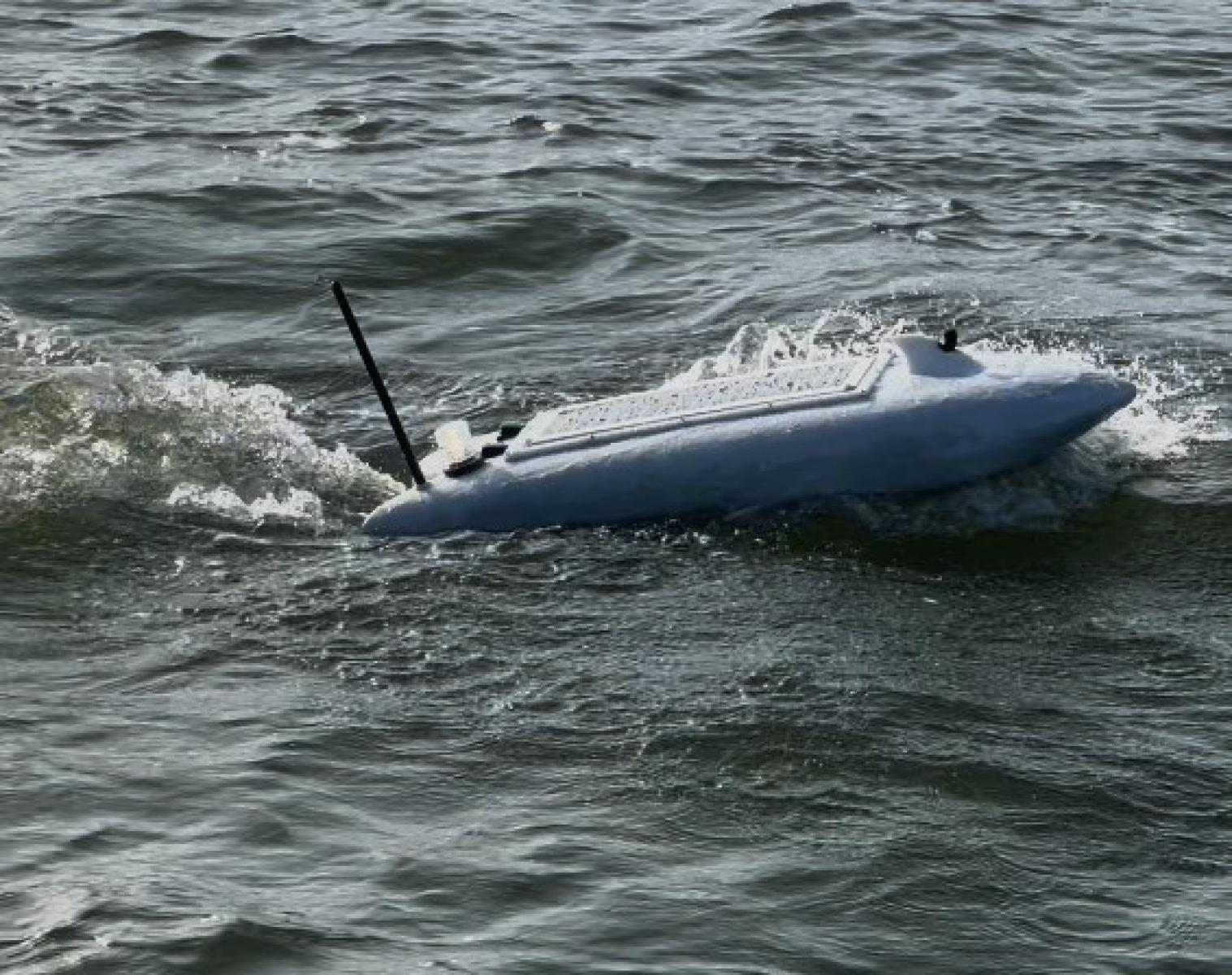
The project is already tested in real conditions and benefits from the support of the ROV Expert company, technical and material sponsor, as well as scientists specialized in the study of cetaceans, who wish to use it for their research.
Features:
Dimensions: L. 99.6cm x W. 39cm x H. 34 cm
Weight: 9.837 Kg
Flight case (made in France): L. 110cm x W. 59cm x H.43cm
Total weight with Flight case: 24.737 Kg
Collaboration
Student : Granjeaud Célia
Photo credit