

Share to
Belvédère Manikuakanishtikᵘ
By : Studio Overall

GRANDS PRIX DU DESIGN 19th edition
Distinctions
Discipline : Landscape & Territories
Categories : Landscape Architecture / Campus, cultural & institutional : Gold certification
Categories : Special Awards / Accessibility & community engagement : Gold certification
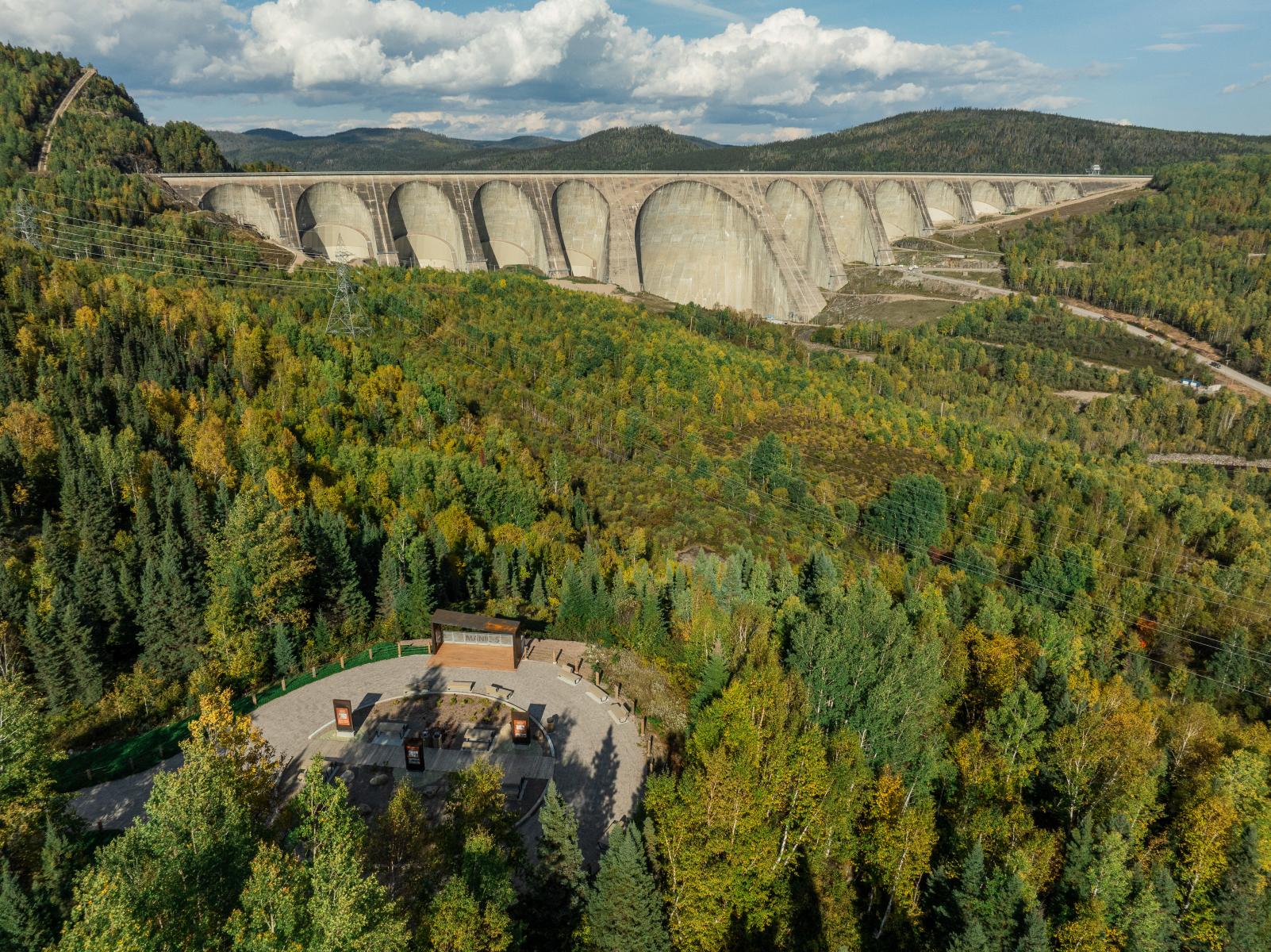
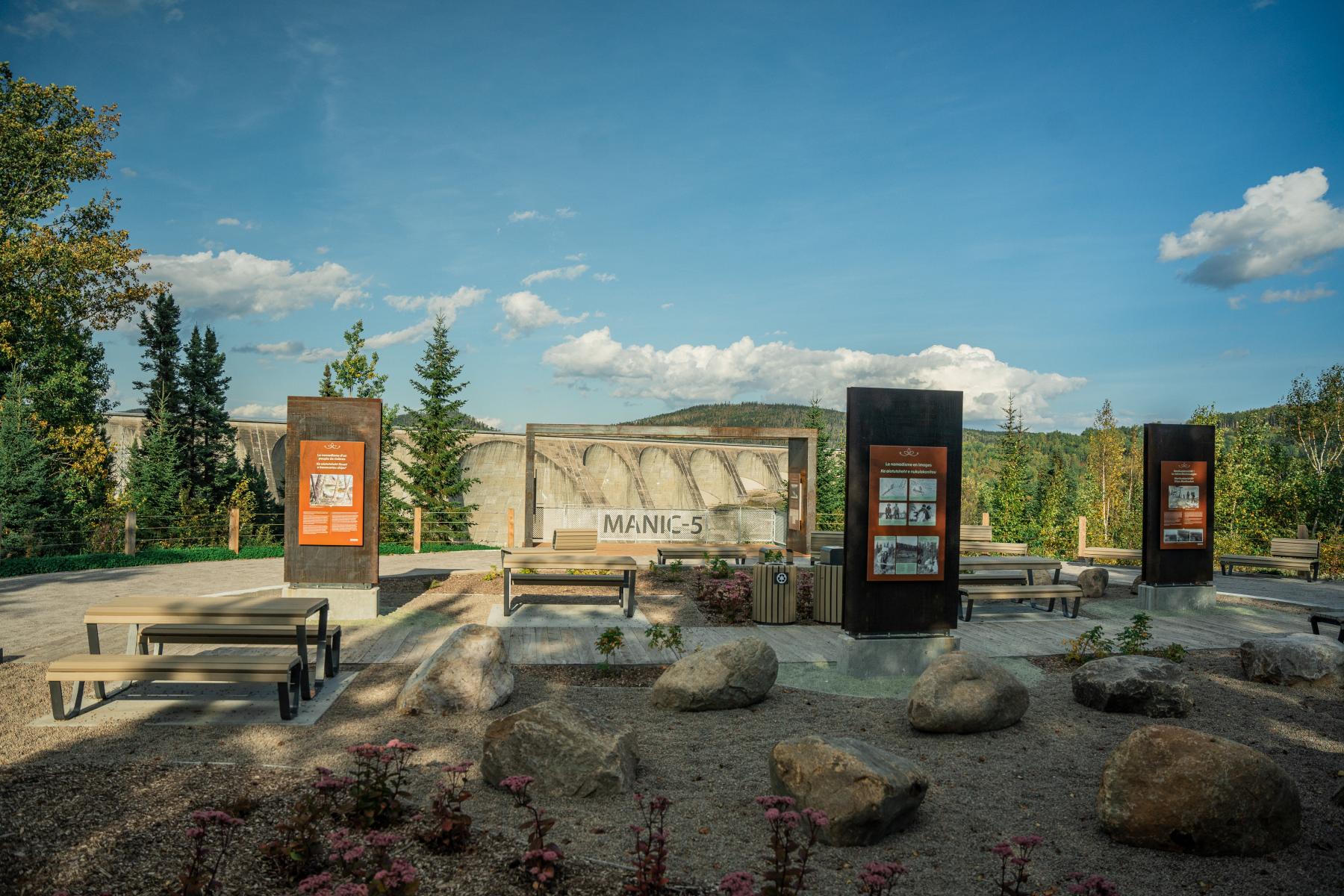
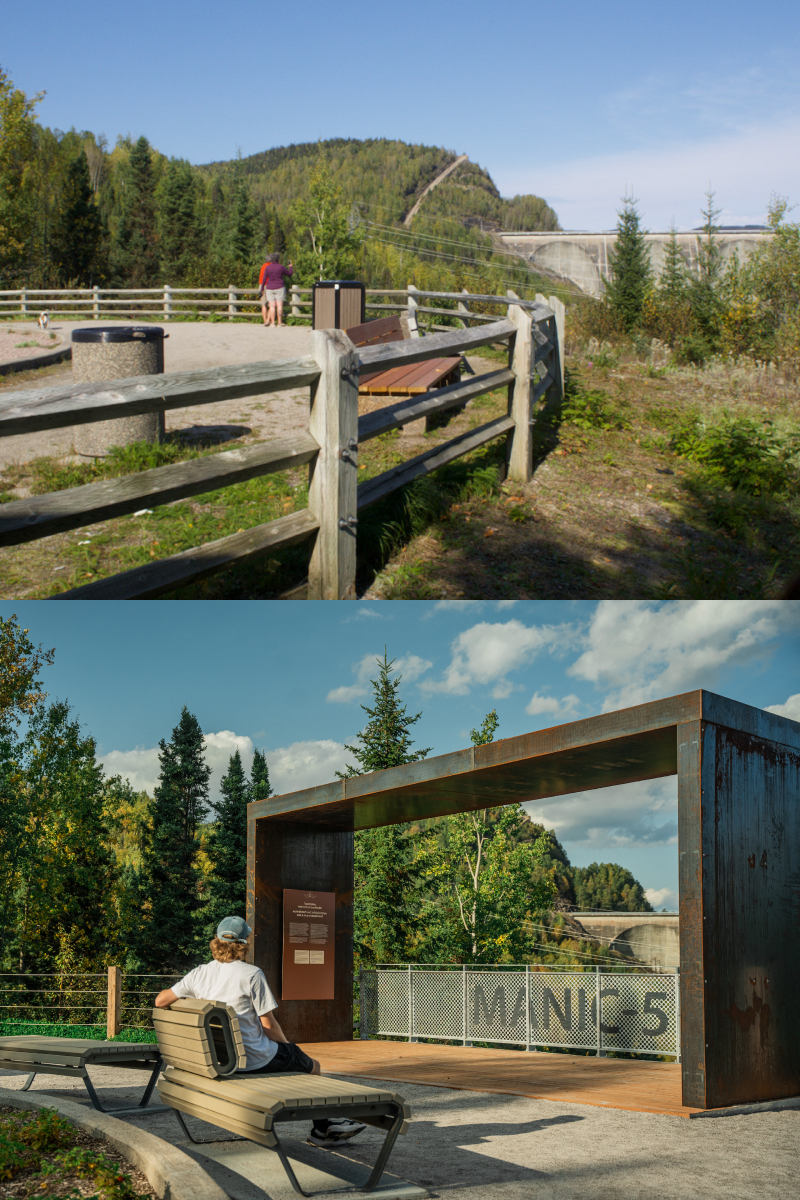
Every year, 9,000 visitors travel hundreds of kilometers to admire the largest multiple-arch and buttress dam in the world. However, the original lookout suffered from obsolescence and significant soil degradation. The mandate of the state-owned company Hydro-Québec was to transform it into an educational institutional welcoming infrastructure, accessible and worthy of the site's international reputation.
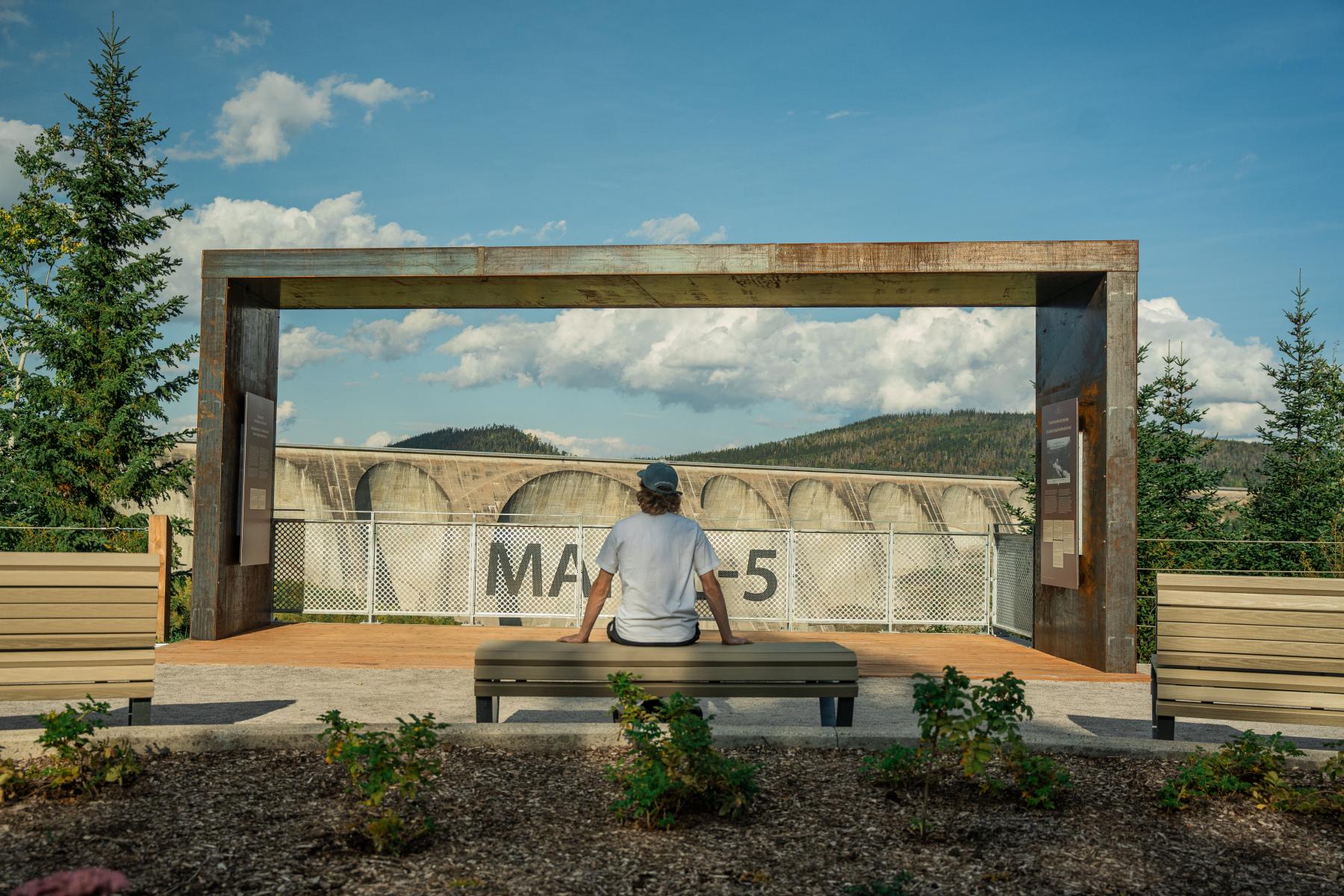
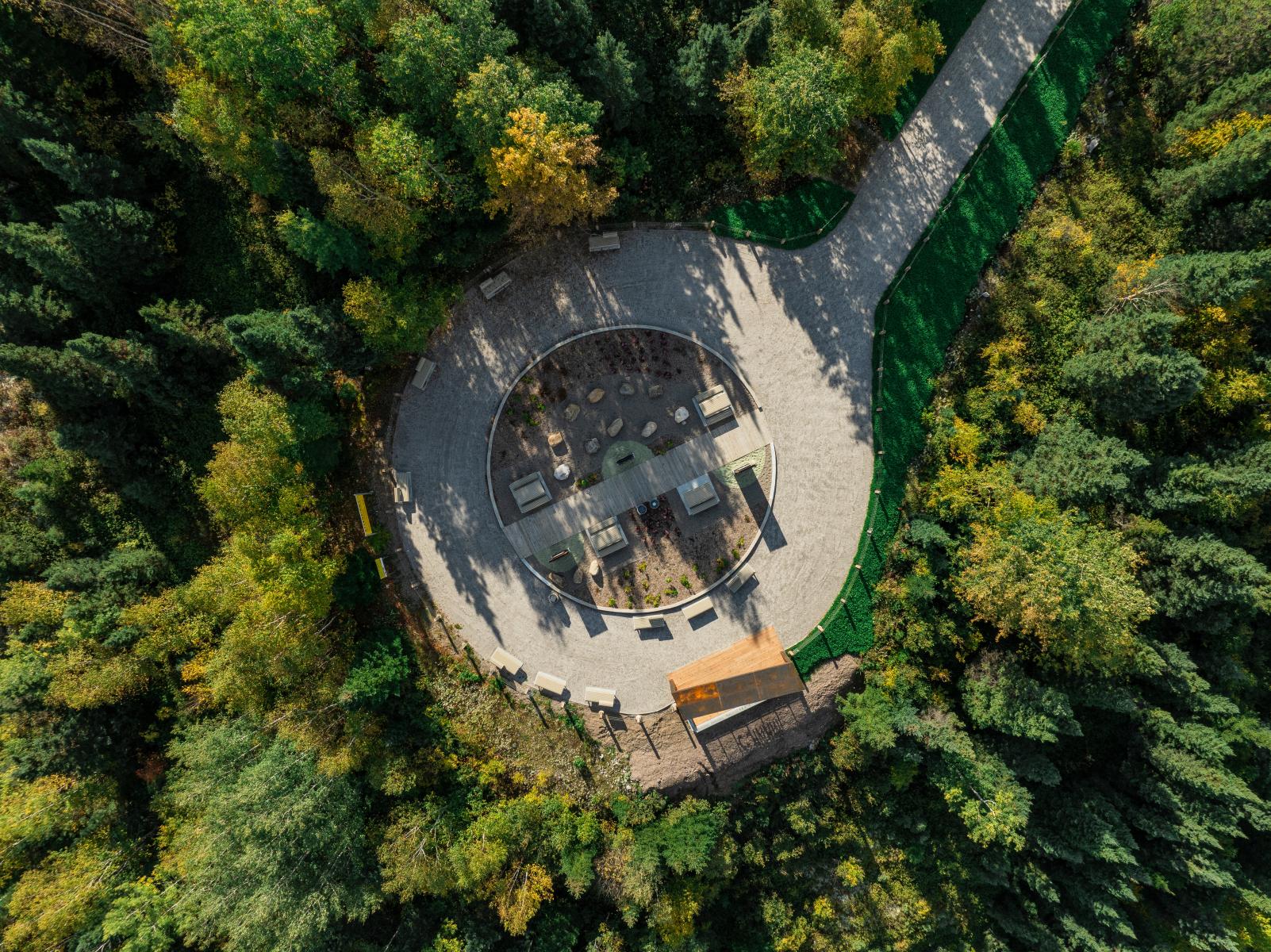
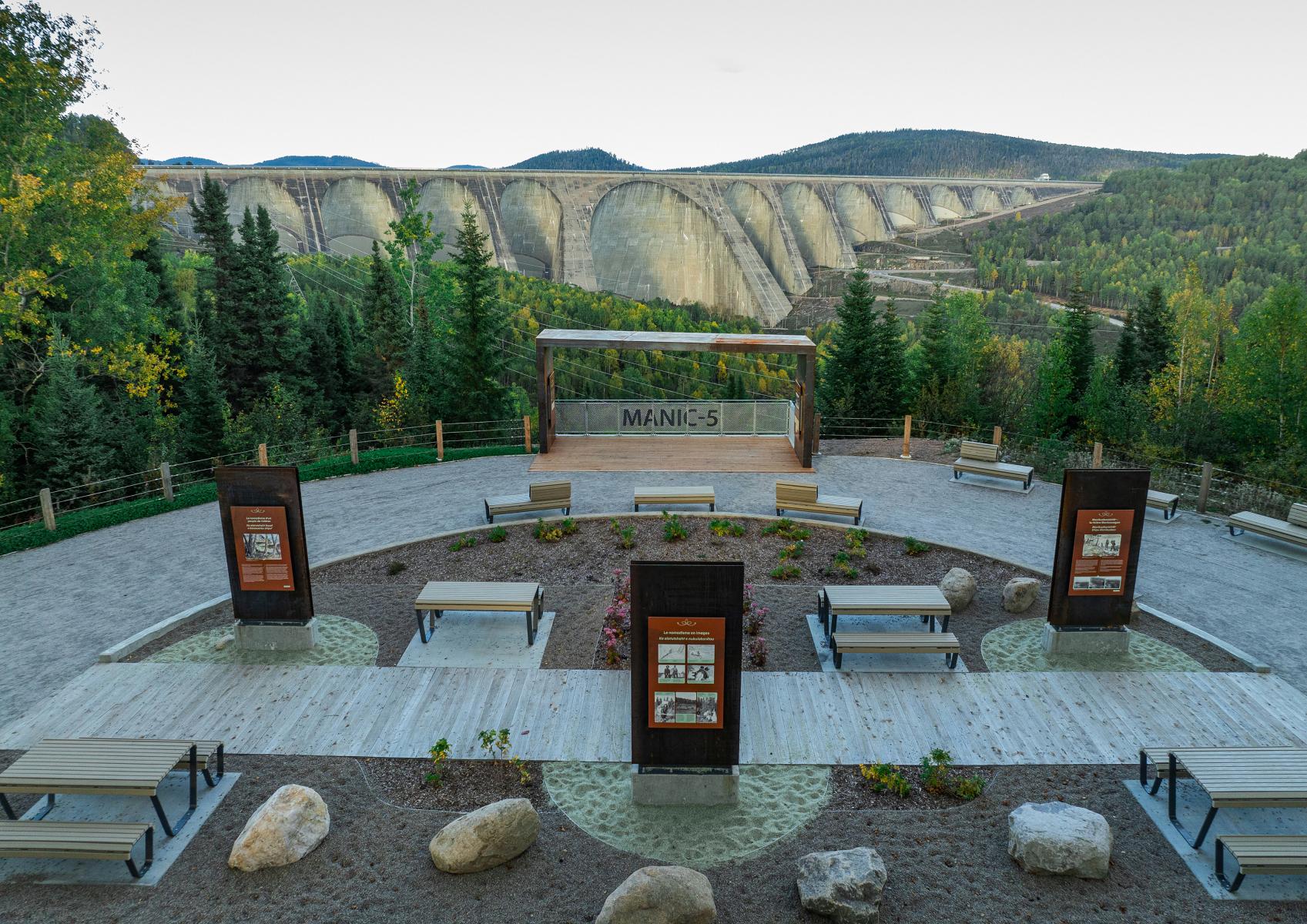
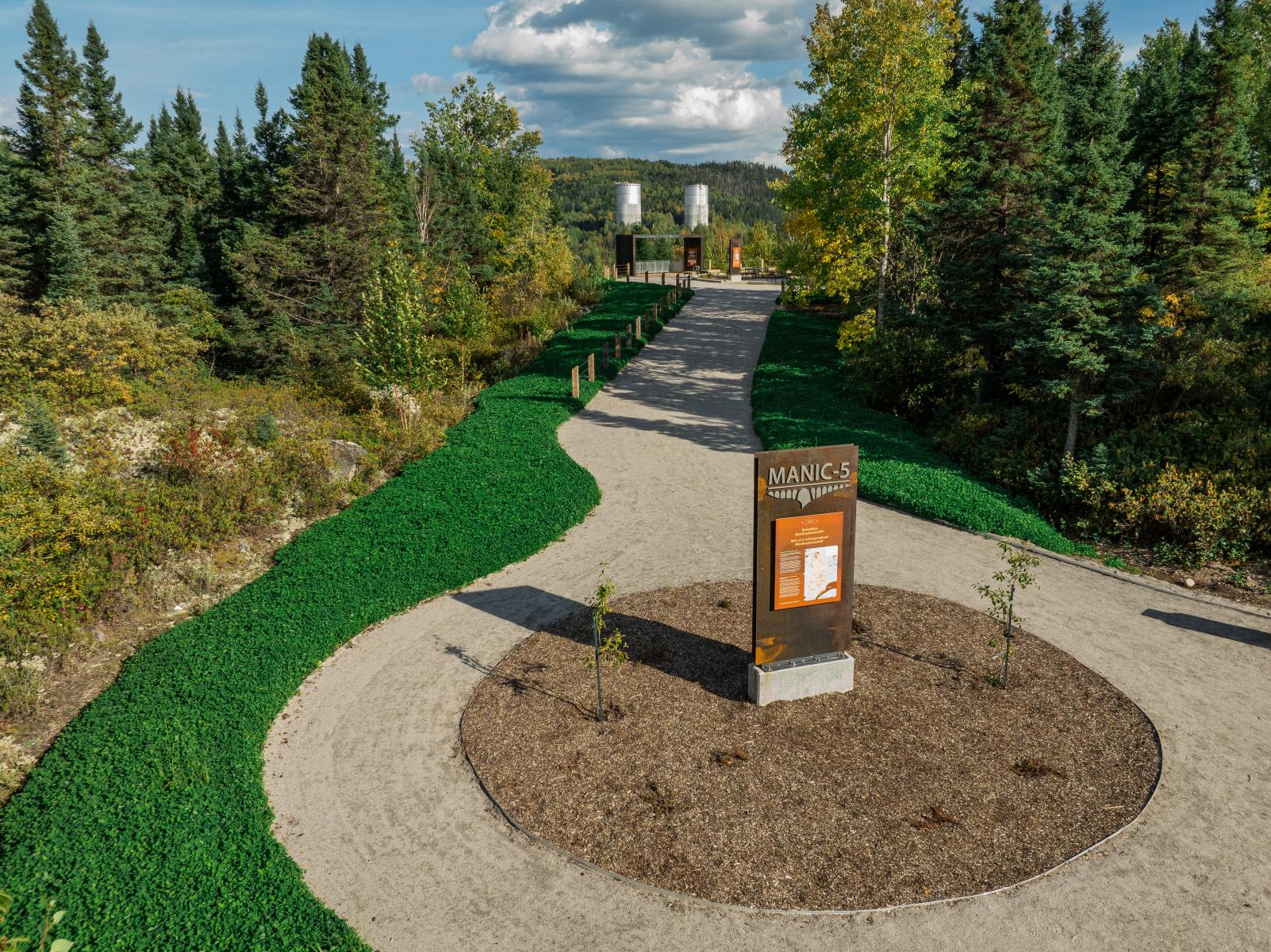
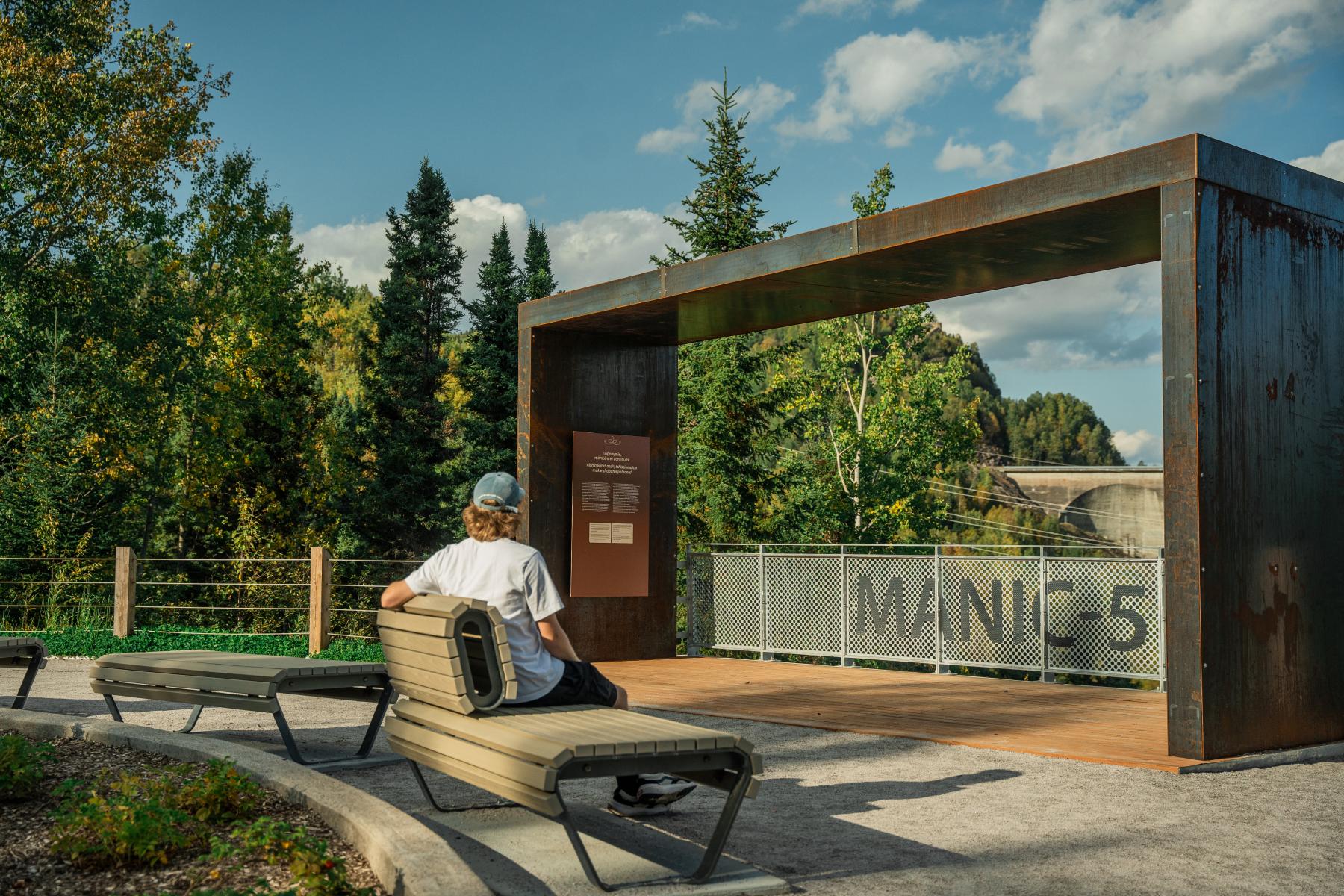
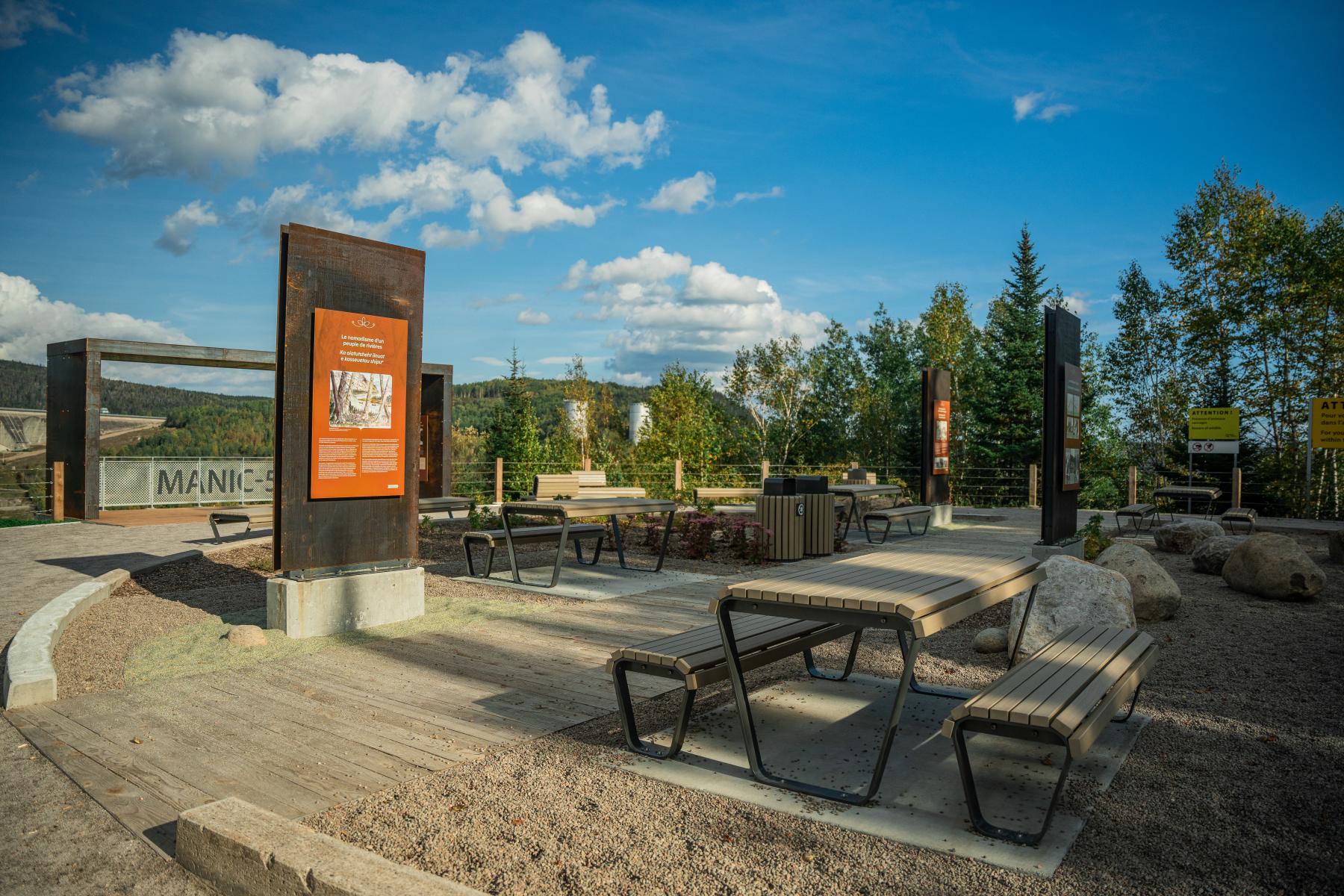
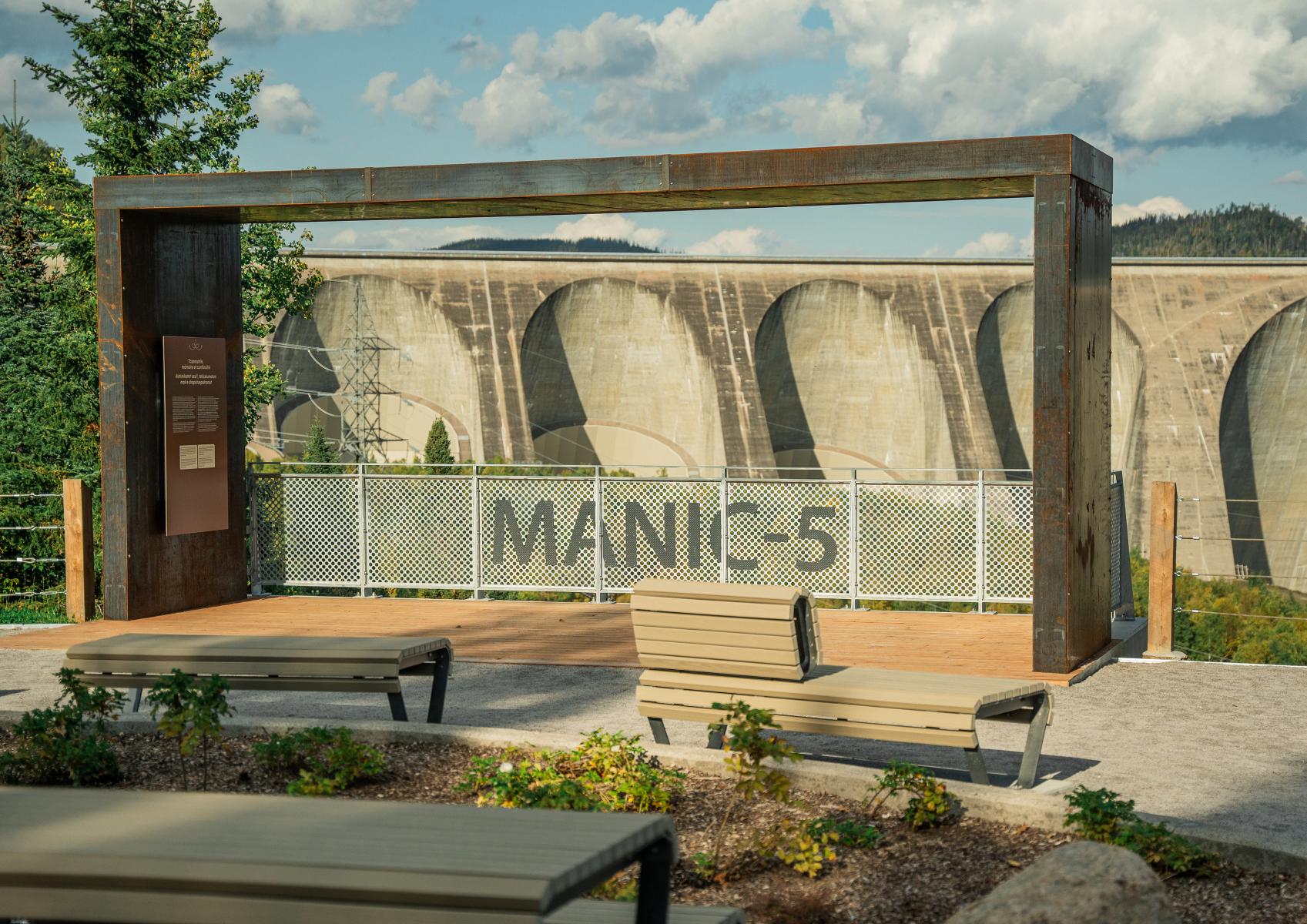
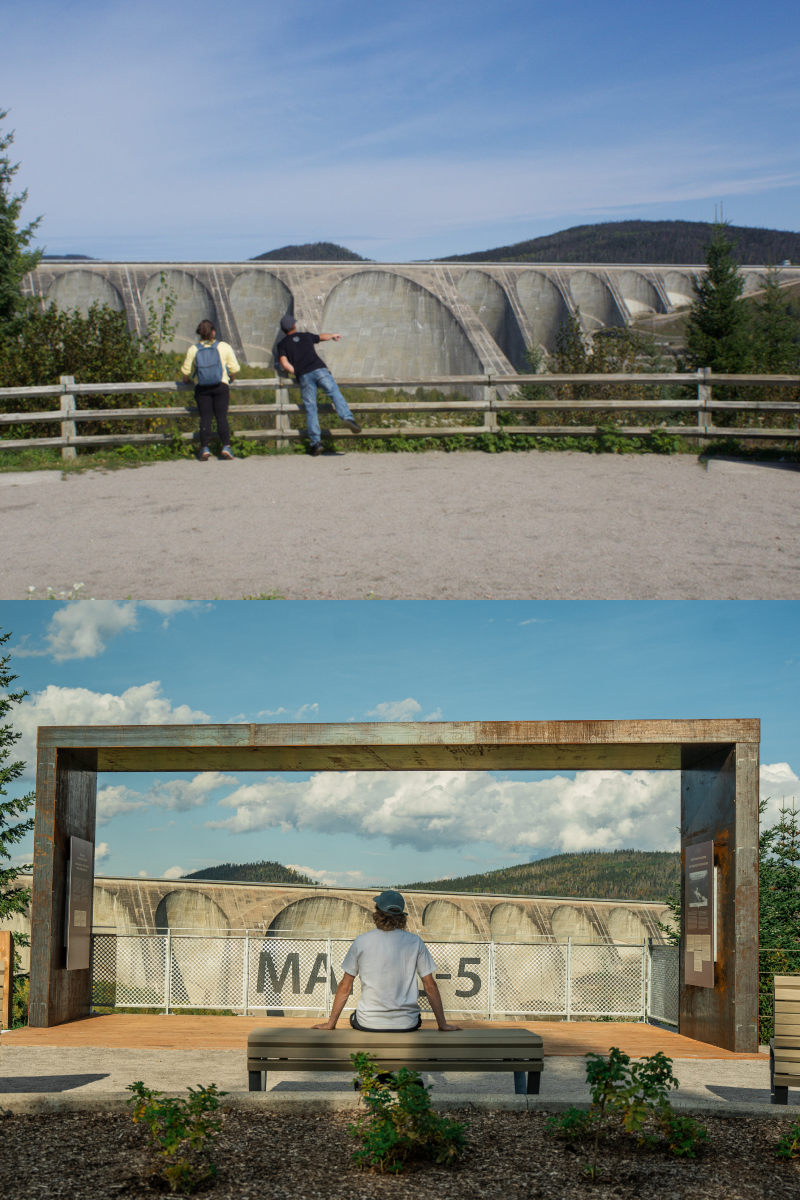
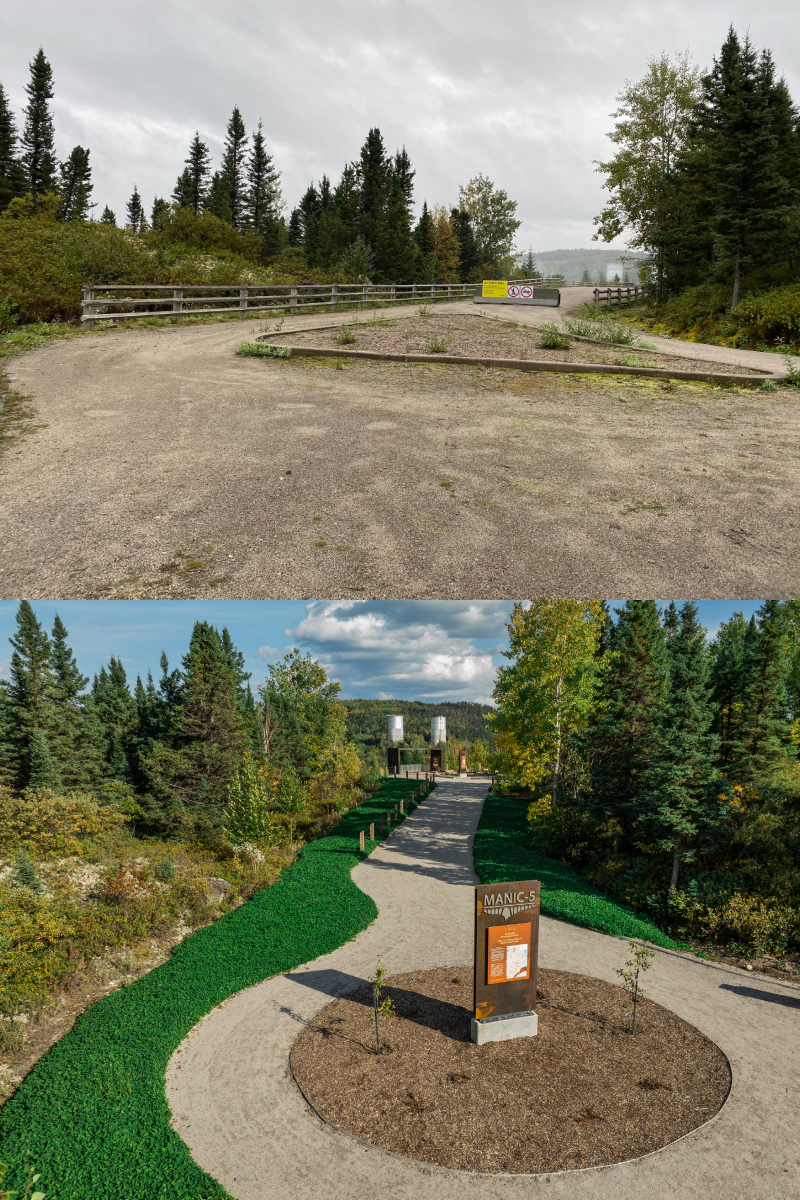
The concept is based on a visitor's journey pedestrian route, that takes the user from their vehicle to active contemplation on foot, in nature. The highlight is an iconic Corten steel structure that frames the Daniel-Johnson Dam, a masterpiece of civil engineering, creating a "photo moment" while providing protection against the weather, thus creating a strong visual and symbolic landmark.
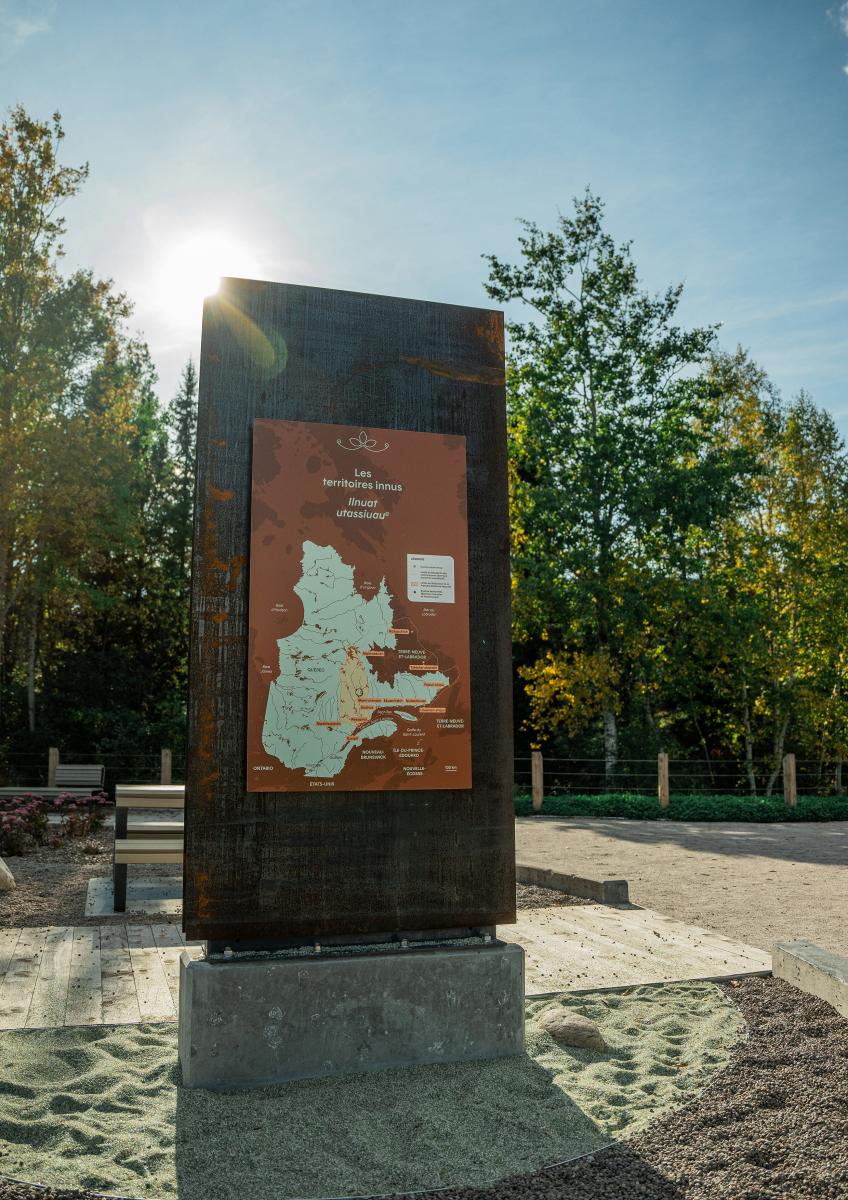
Designed in collaboration with the Pessamit community and the Canada Research Chair on Indigenous Heritage and Tourism, conducting the project under the name of Manikuakanishtikᵘ is Hudro-Quebec's deliberate choice, to refocus the millennial history of the territory.
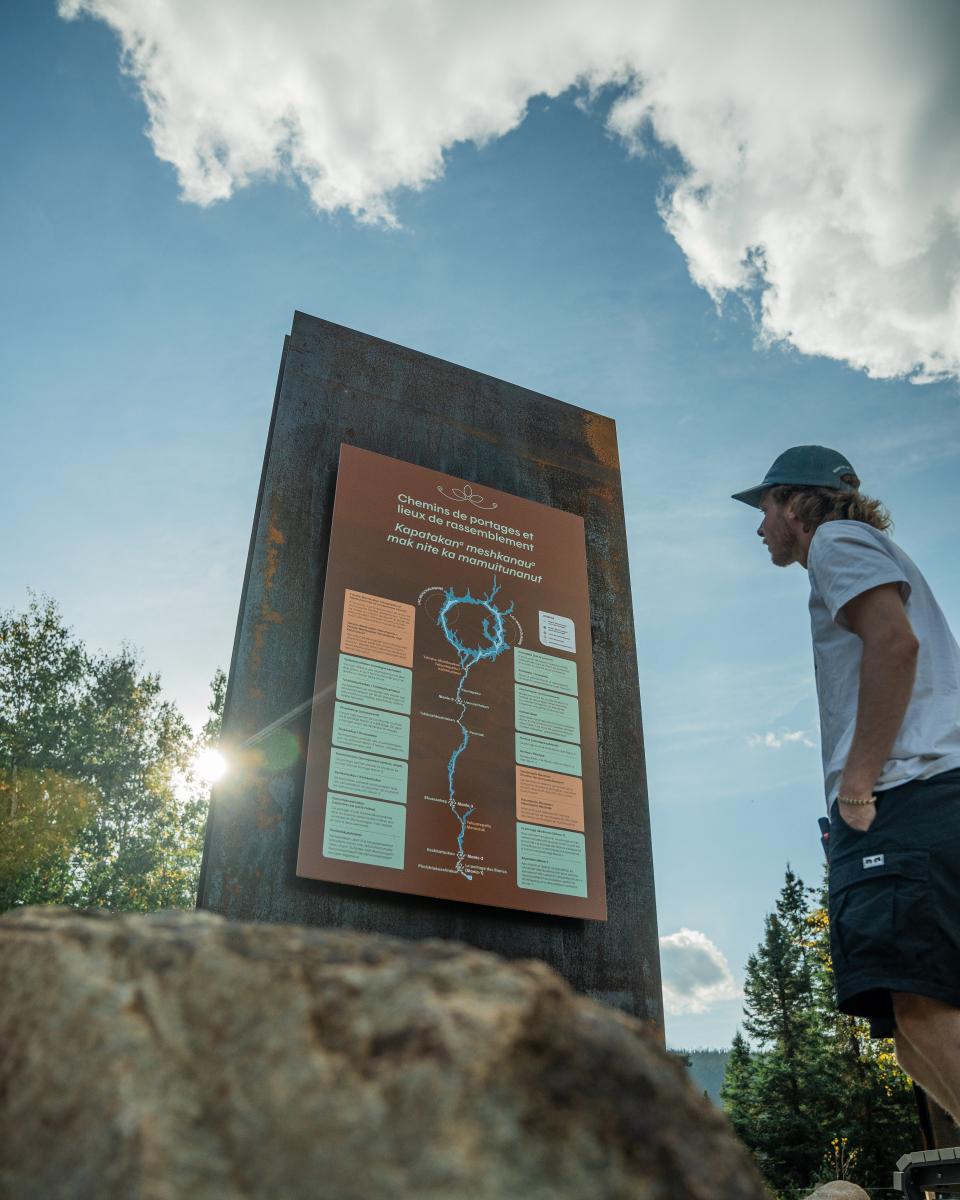
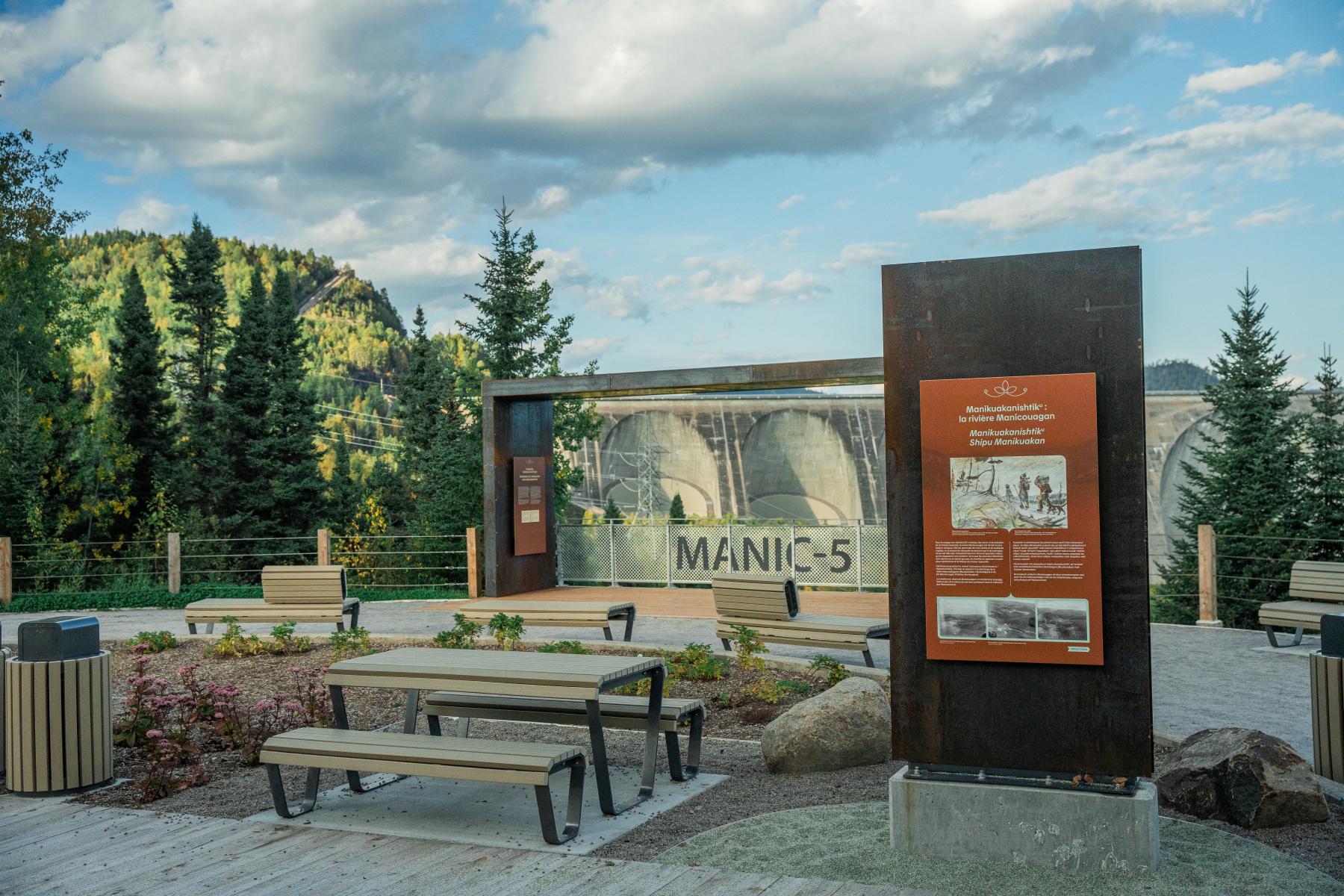
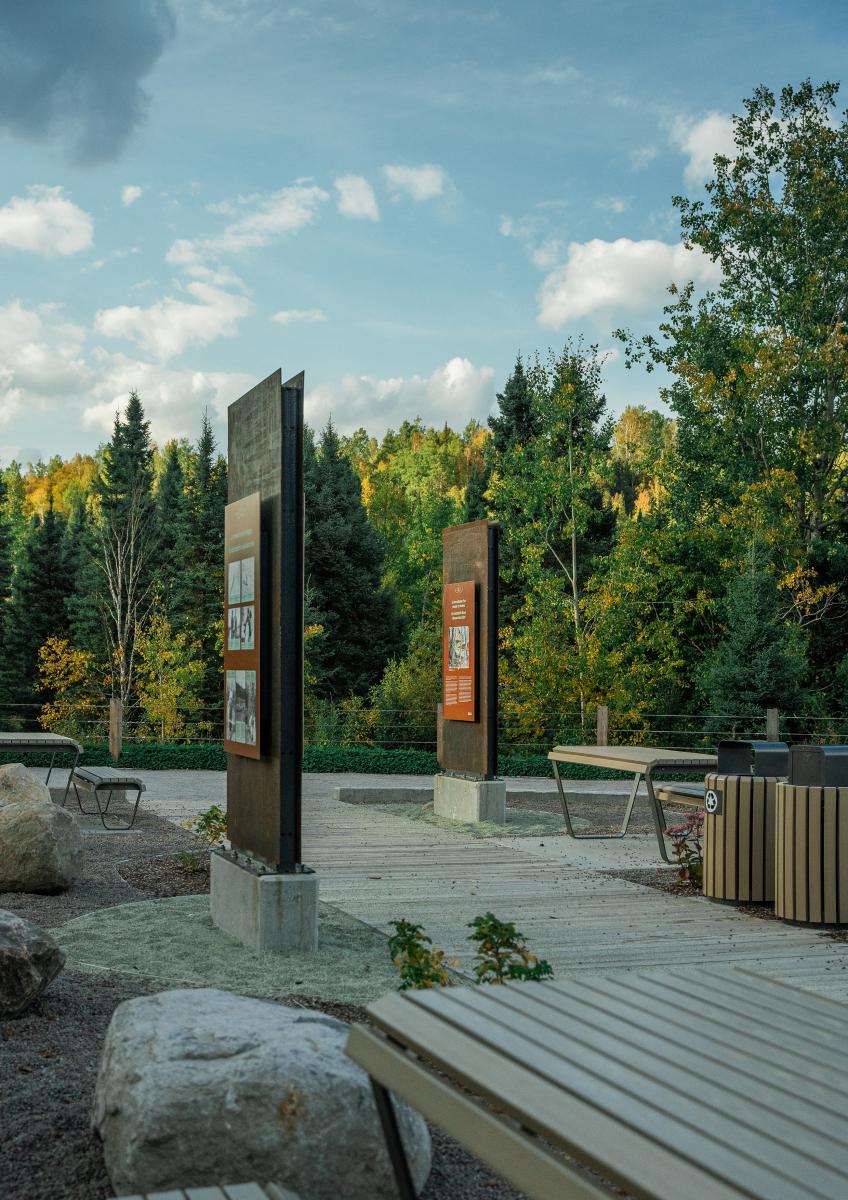
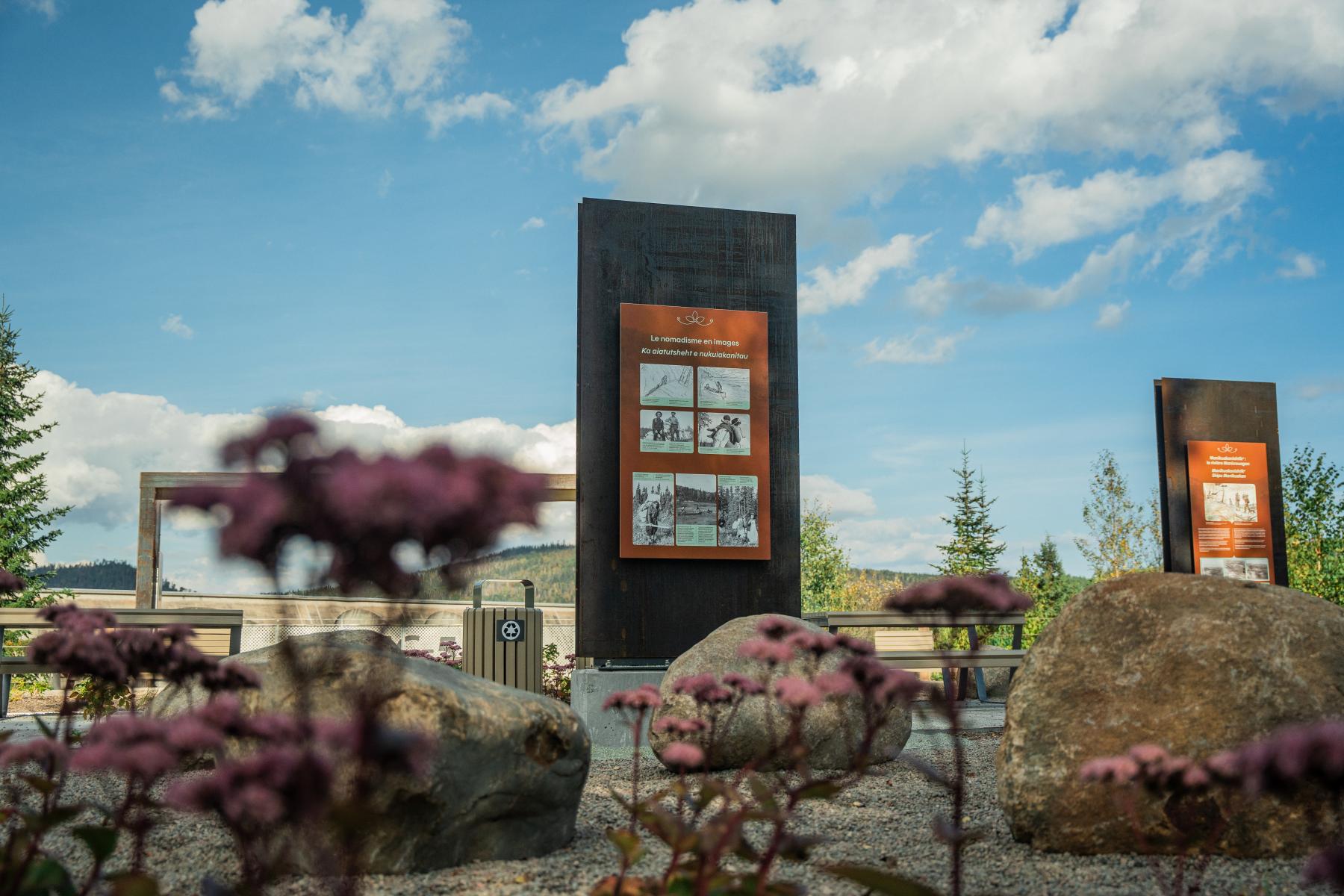
The interpretation program is supported by bilingual signage where French and Innu-aimun have equal visual weight. Integrating this language formally acknowledges the ancestral roots of the site and promotes respectful citizen participation.
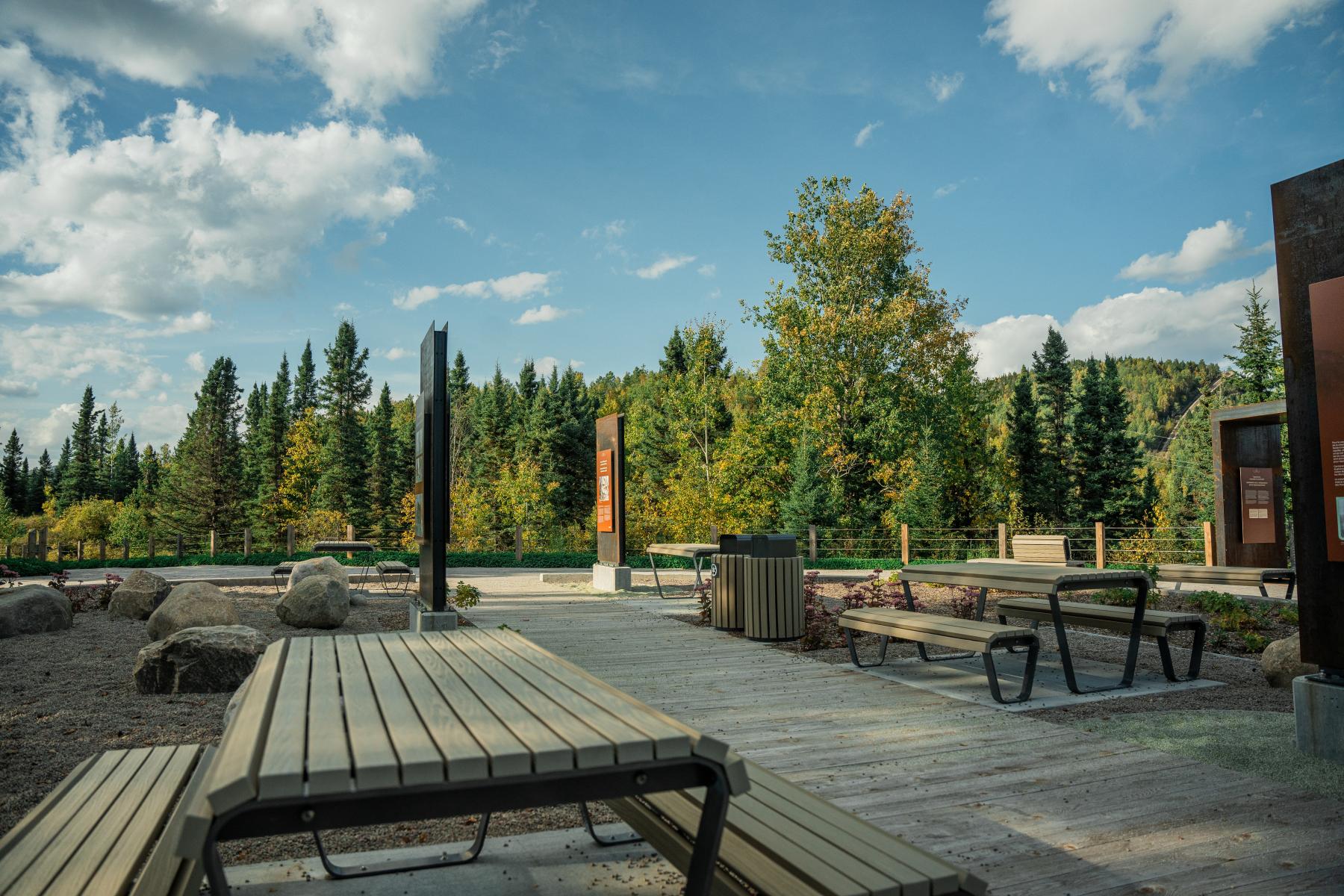
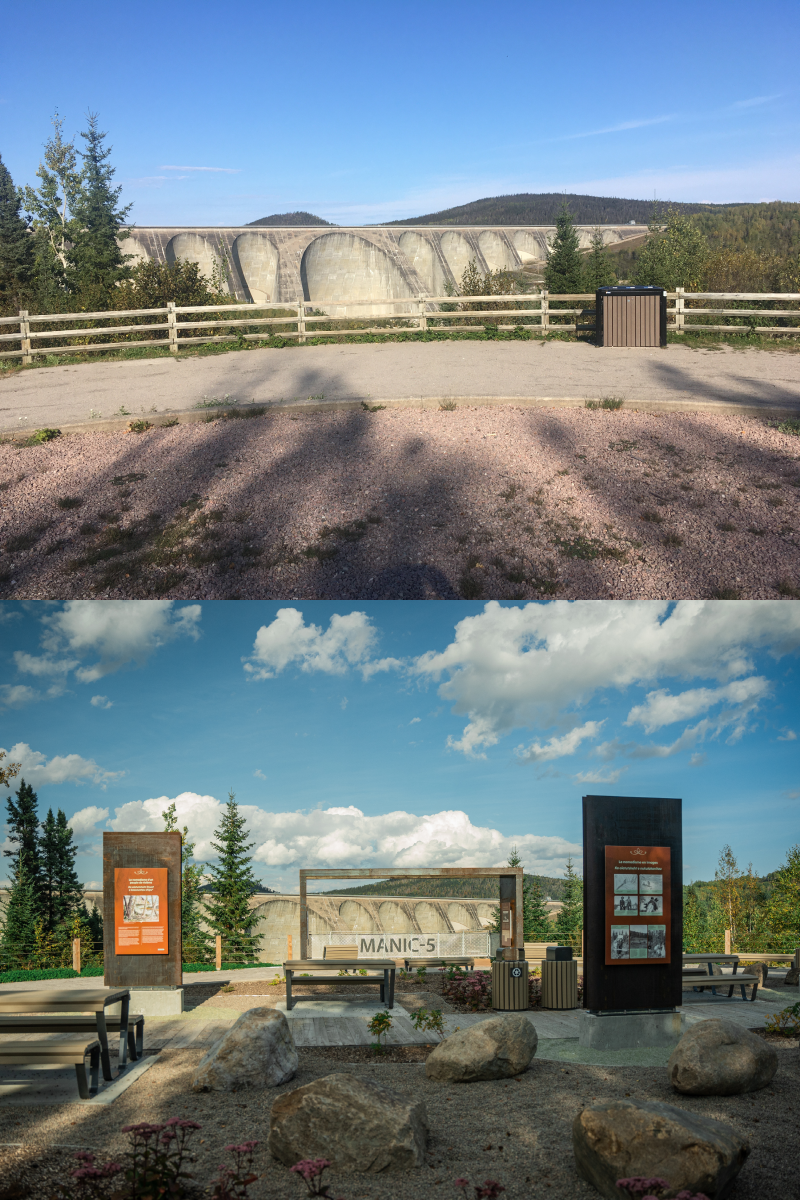
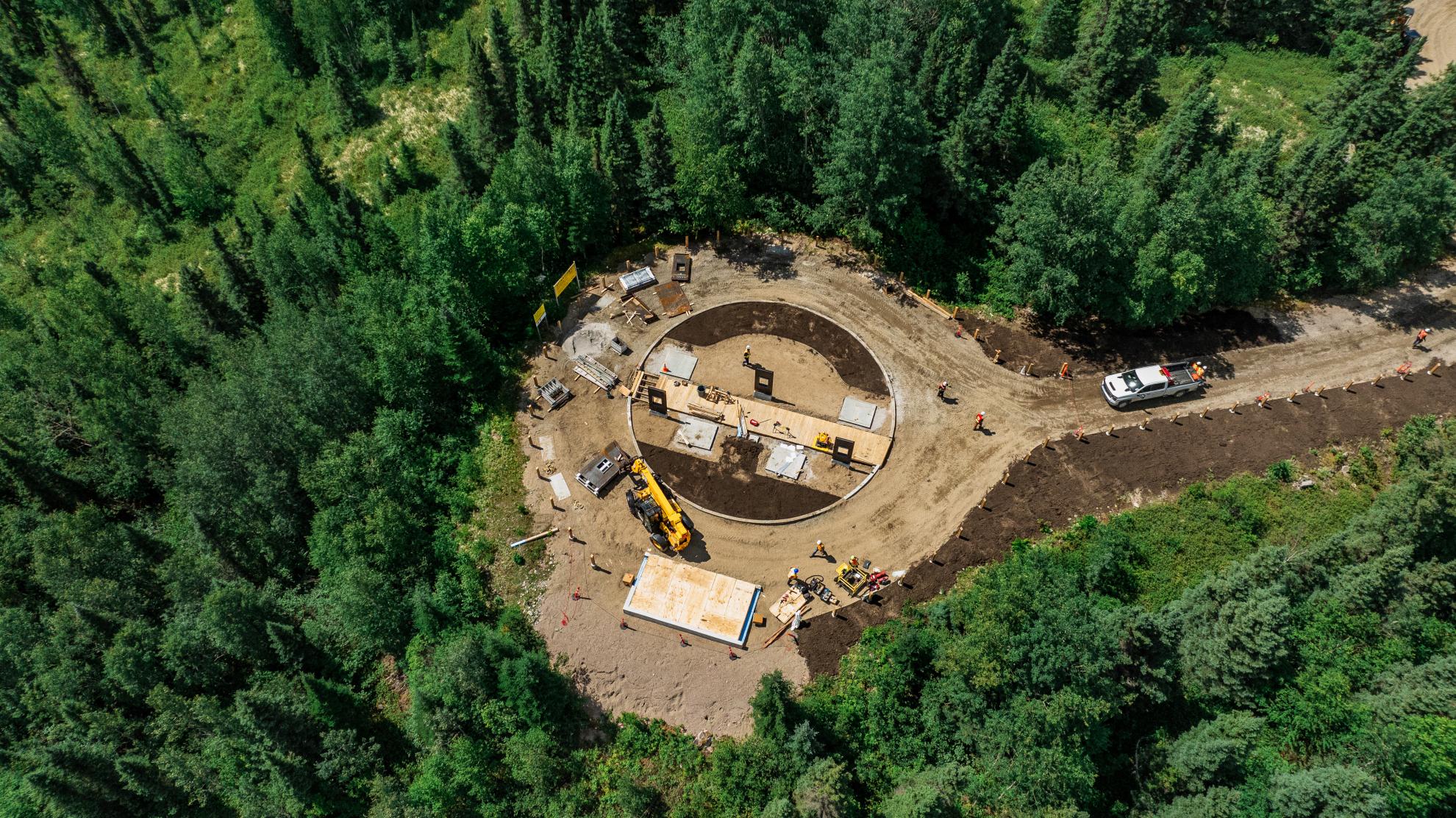
The low environmental impact intervention rehabilitated 4,000 ft² of hostile asphalt and concrete surfaces into a resilient infrastructure designed for the extreme conditions of the Côte-Nord. Operating in a subarctic zone, the project innovates with fine management of freeze-thaw cycles: the topography optimizes drainage and ice evacuation, and the structure supports exceptional snow loads without winter maintenance. Corten is chosen for its extreme resistance and its living patina that harmonizes with the forest. Anti-graffiti surfaces, ultra-robust urban furniture (benches and picnic tables), and the use of raw materials (Corten steel, rock dust, forest mulch) thus guarantee minimal maintenance and a 100-year legacy. The project advocates rewilding by replacing invasive species with native flora. As an off-grid site, autonomous solar lighting secures the site while protecting the dark sky, preserving the nightly integrity of the boreal forest.
The site is now fully accessible to people with reduced mobility thanks to leveled trails and adapted picnic tables. Unattractive "Jersey" concrete blocks have been replaced by a landscaped buffer zone, a vehicle-filtering welcome module, and a safe 600-foot guardrail.
More than just a viewpoint, the Manikuakanishtikᵘ lookout is a scenographic rest stop that enhances the Manic-5 power plant dam, a pillar of Quebec's energy identity, paying tribute to the territory and those who visit it.
Collaboration
Industrial designer : Studio Overall
Landscape architecture : Catalyse Urbaine
Project manager : Hydro-Quebec
General contractor : JackWorld
Photographer : North Shore
Other : Communauté autochtone
Photo credit