

Share to
Community Development Plan Inspired by the Eco-District Concept in the Kauatshinakanashkasht Sector
By : Atelier Urbain | EVOQ | 2Architectures | O'yenhra'

GRANDS PRIX DU DESIGN 19th edition
Discipline : Landscape & Territories
Categories : Urban Design / General Urban Masterplan : Gold certification
Urban Workshop has been commissioned by Innu Takuaikan Uashat mak Mani-utenam (ITUM) to develop a community sector plan inspired by the concept of an eco-district in the Kauatshinakanashkasht area, in Uashat. This project involved a multidisciplinary team combining architecture (EVOQ), landscape architecture (2Architectures), and Indigenous-non-Indigenous collaboration (Consultations O'yenhra'). It is part of an effort to reintegrate Innu values, knowledge, and cultural identity into the very design of its living environments. In a context where colonial models have long imposed an urbanization foreign to the community's lifestyles, this project represents a gesture of transition between traditions and contemporary realities.
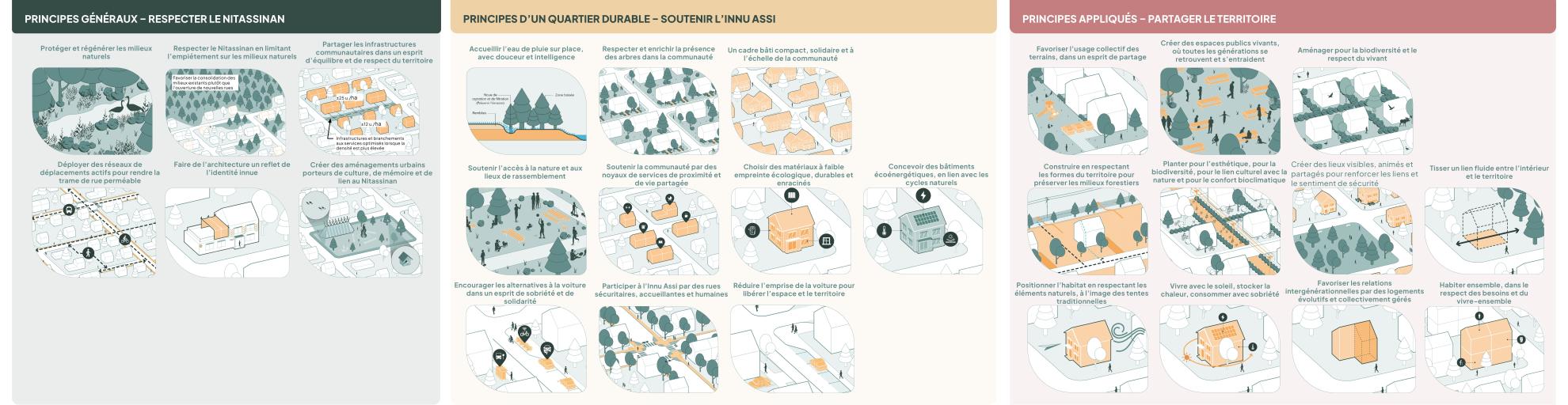
The concept of an eco-district was adapted to go beyond its three classic pillars, complete living environments, environmental health, and carbon footprint, by adding cultural and community practices. The rooted district of Kauatshinakanashkasht differs from an eco-district in the non-Indigenous sense of the term, being a living environment shaped by and for the Innu community and guided by the values of sharing, respect, and mutual assistance.
The approach was immersive, participatory, and interdisciplinary. A field visit allowed meetings with elders, artisans, and members, whose stories enhanced the understanding of the territory and community issues. A co-creation workshop engaged the community in a collective reflection on new planning options, with the aim of Innuizing urban design based on the values, knowledge, and lifestyles of the community.
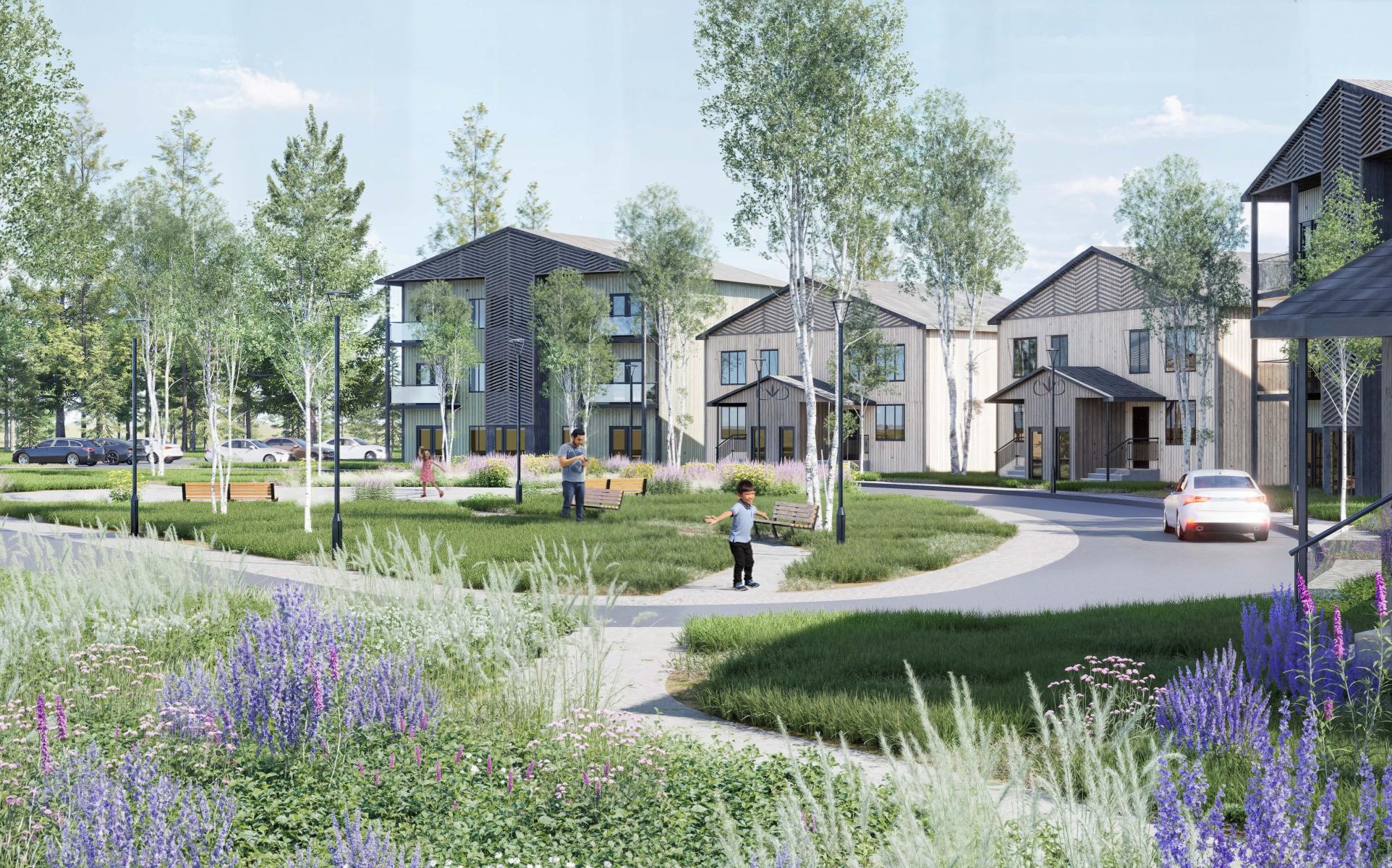
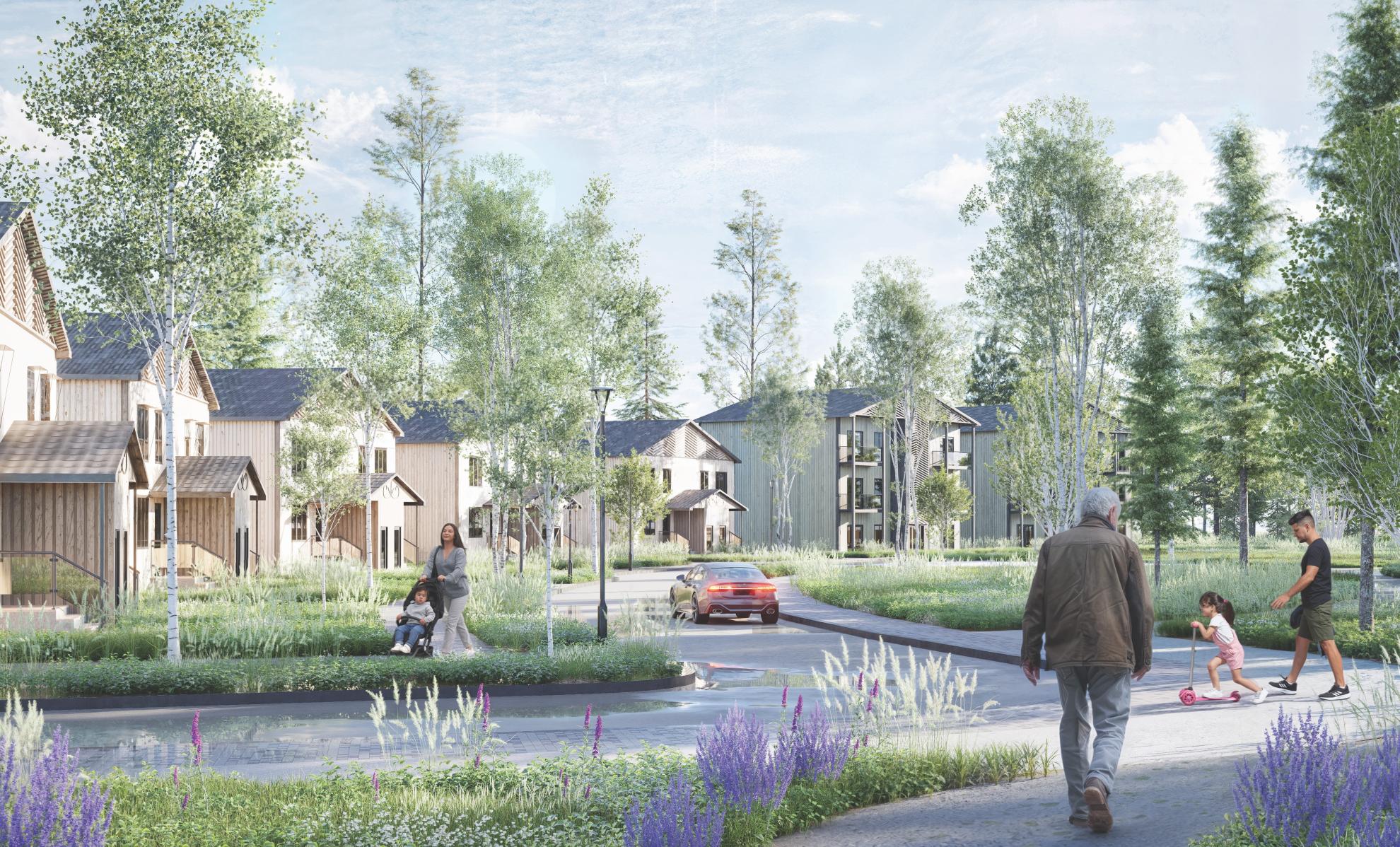
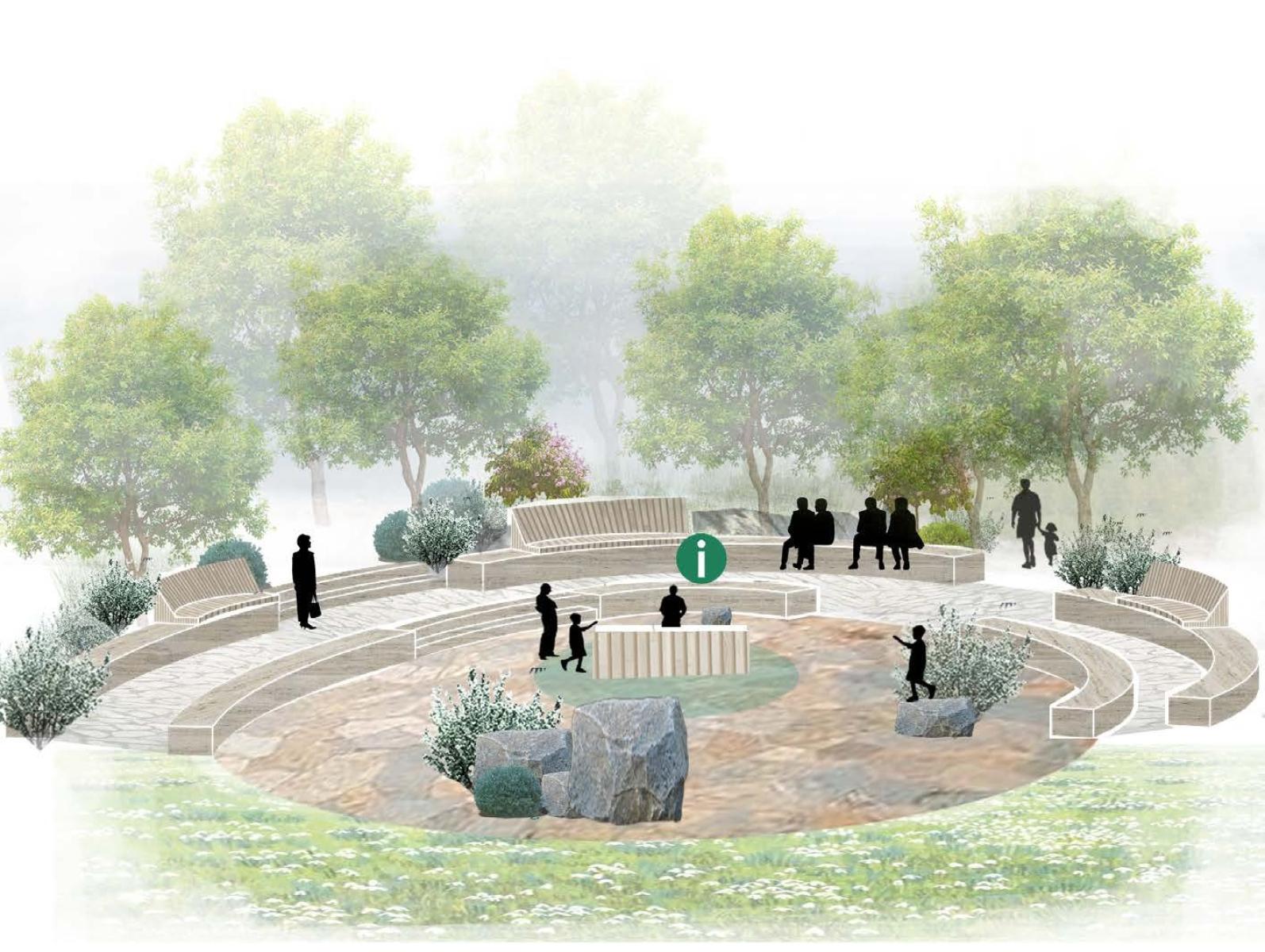
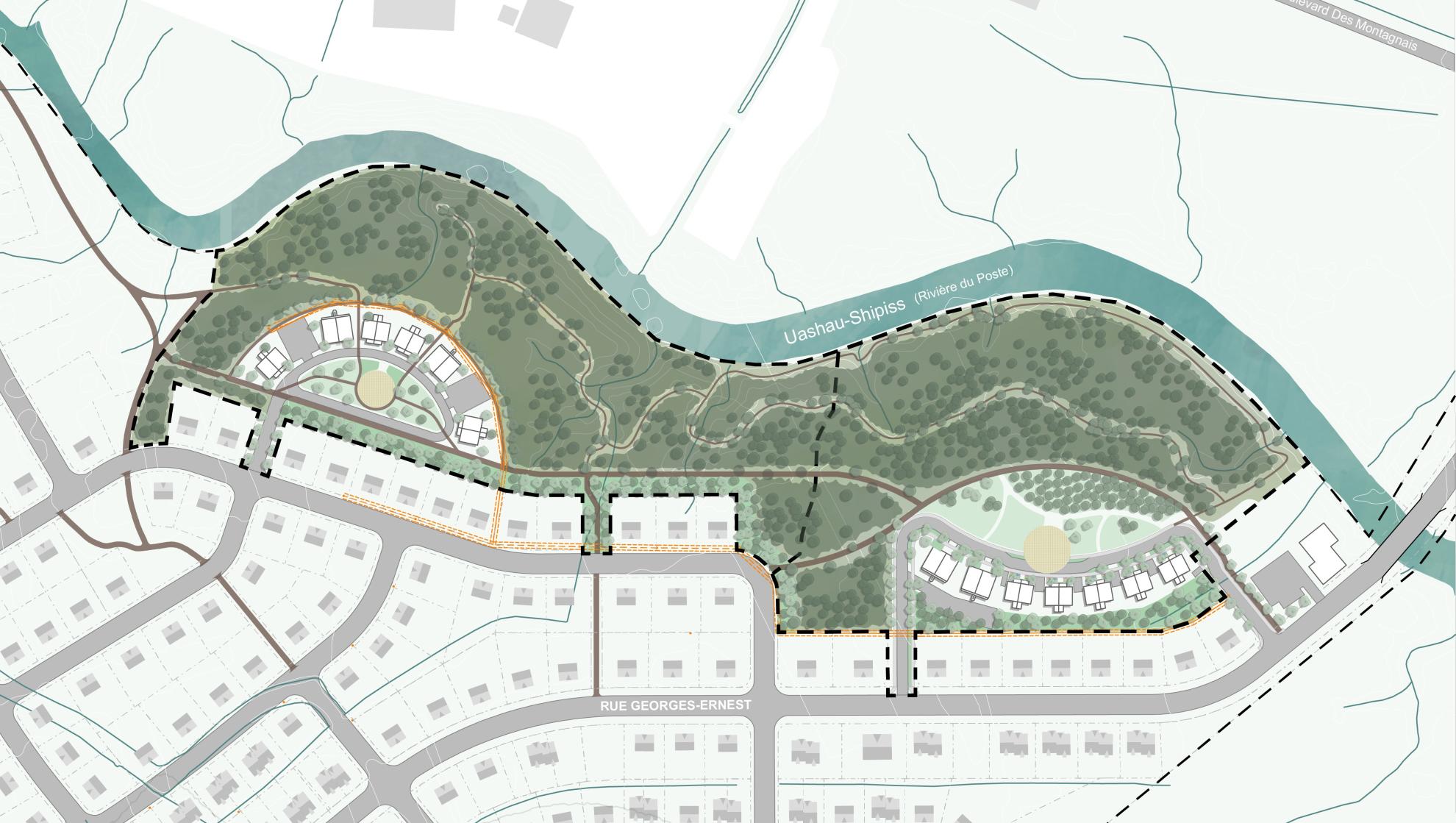
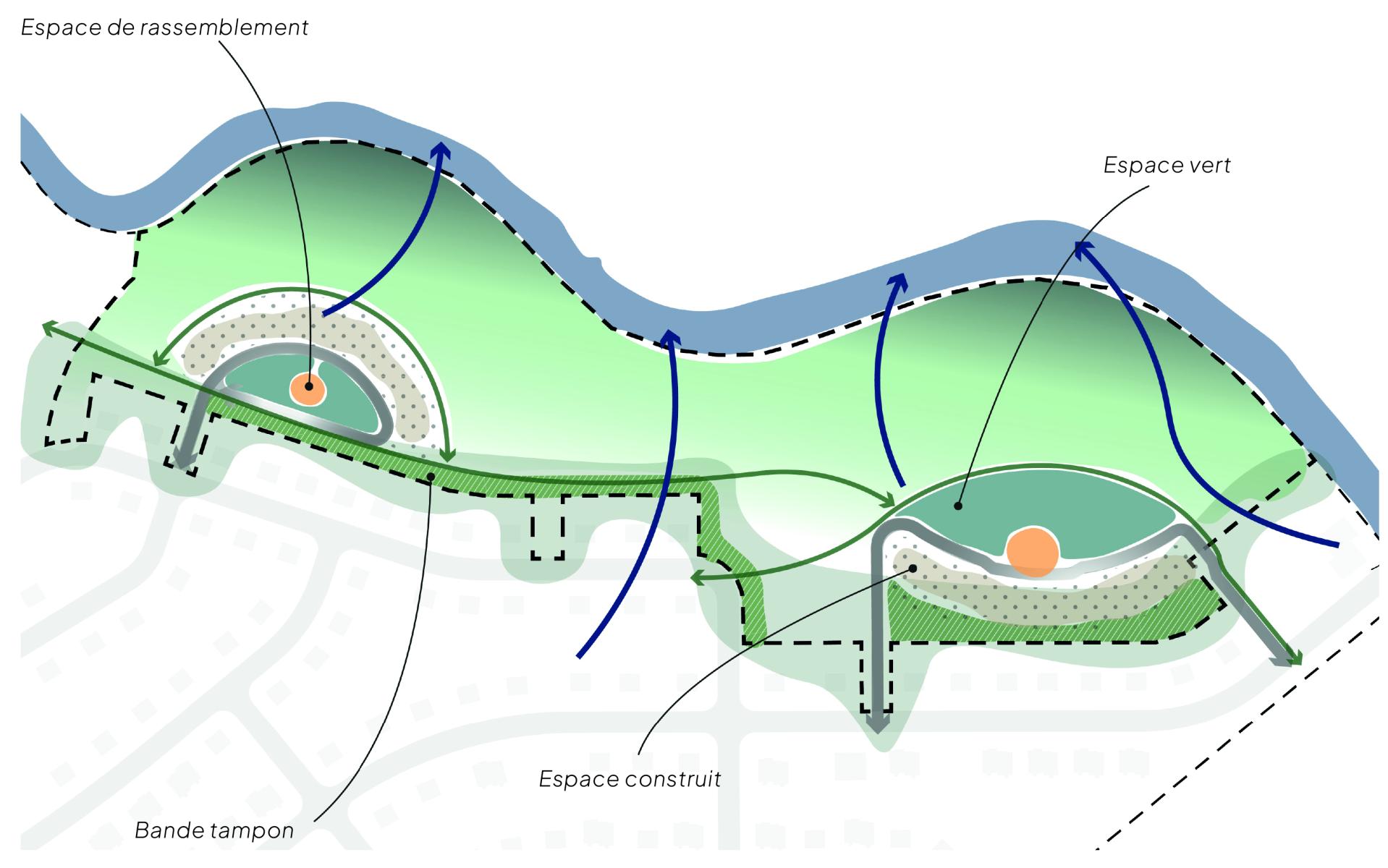
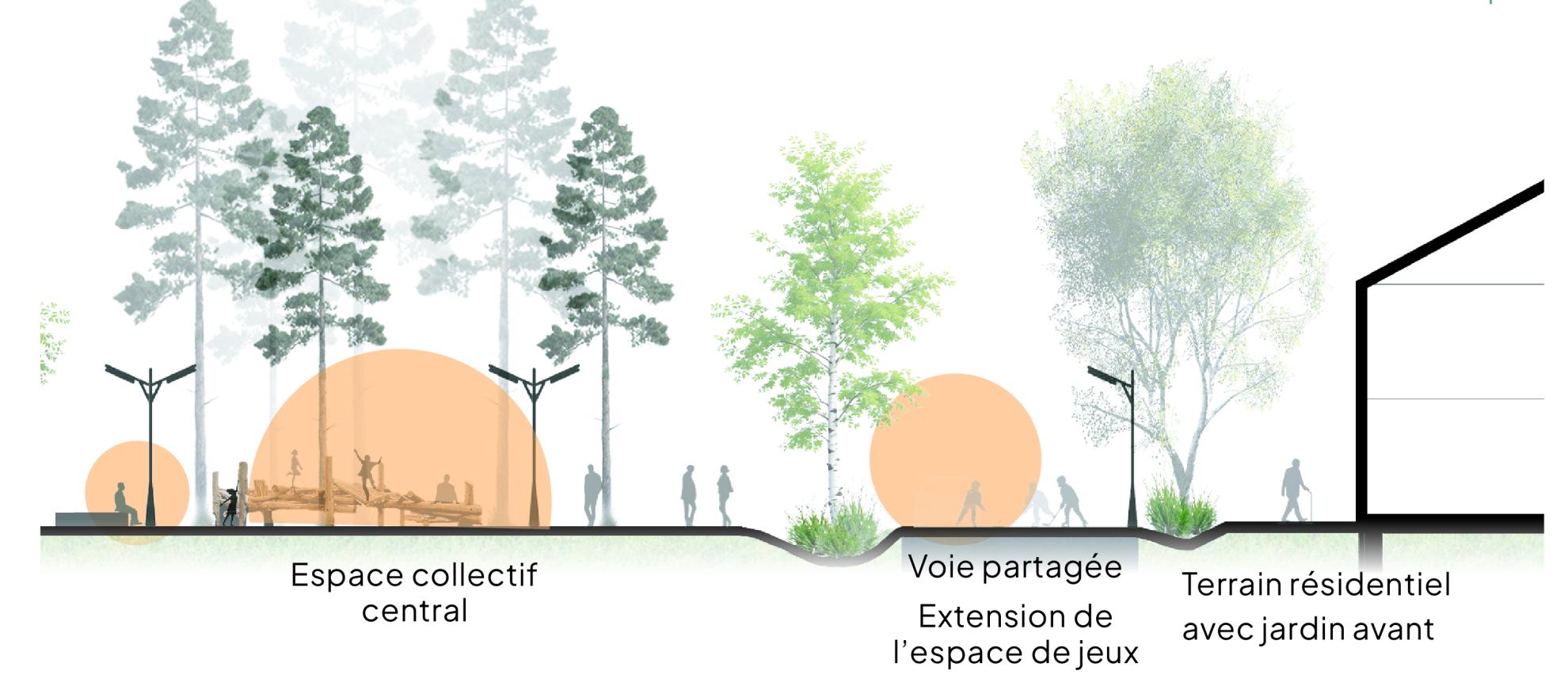
The neighborhood acts as a transition space between the urban environment and the Nitassinan. A conservation strip of 50 to more than 100 m protects the shores, and the existing topography is preserved to maintain mature trees and limit fill. Rain gardens, biofiltration basins, and a network of trails weave the district into its natural environment. The neighborhood's two sectors are organized around central multigenerational communal spaces, one semi-private designed as a shared courtyard between neighbors, the other public and connected to the forest. Streets are thought of as extensions of collective life. The concept of "inhabited street" blurs the boundaries between private space and the public domain: raised crosswalks, planted projections, and residential plazas invite pedestrians to appropriate the street.
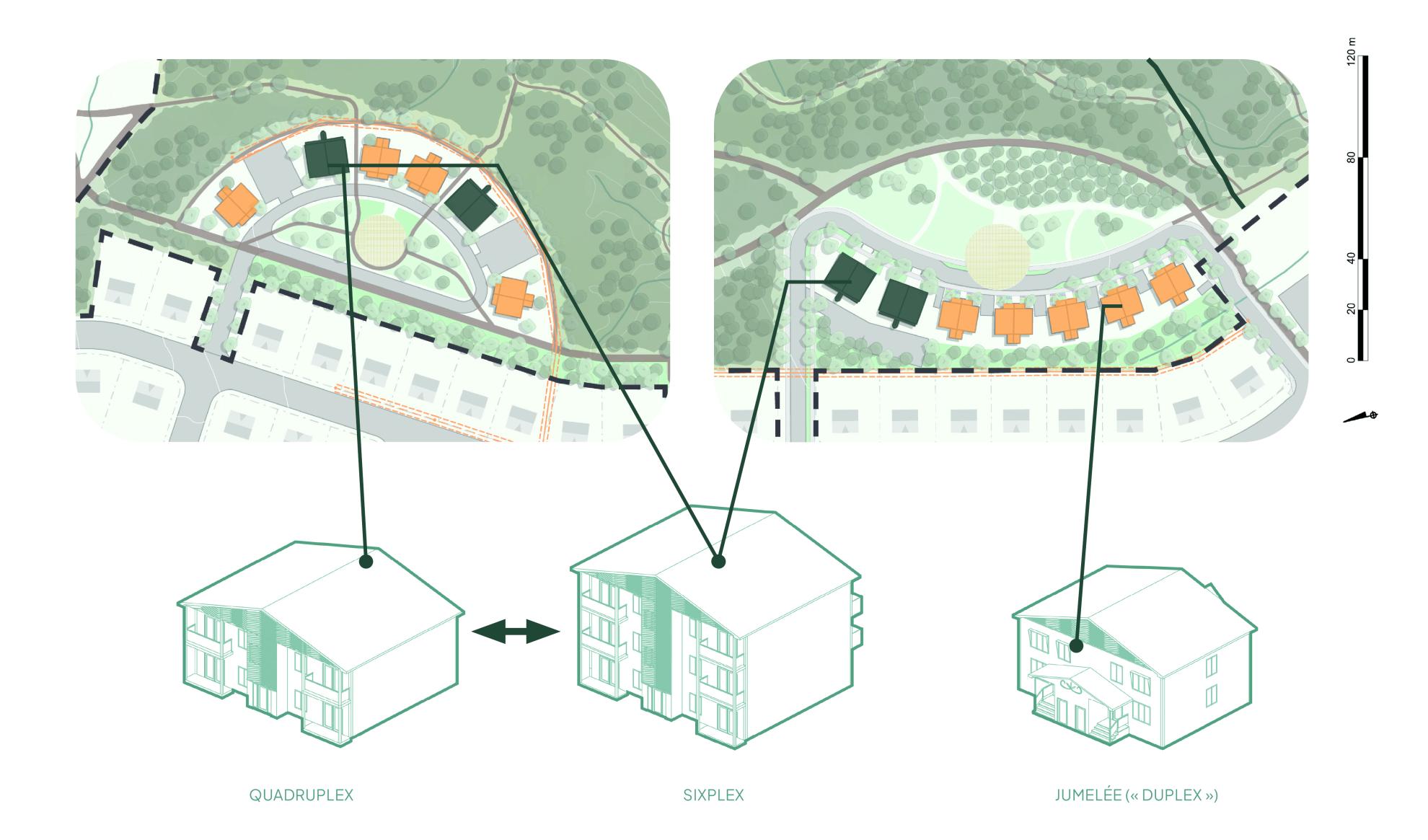
At the architectural scale, housing typologies have been rethought to better meet Innu lifestyles while avoiding urban sprawl, including a workshop module dedicated to crafts and cultural practices.
Designed as a pilot project, the rooted district of Kauatshinakanashkasht is a guide intended to serve as a model for the next phases of community development.
Collaboration
Urban planner : Atelier urbain
Architect : EVOQ
Landscape architecture : 2Architectures
Other : Consultations O'yenhra'
Photo credit