




Share to
Entre Lac et Forêt
By : LOCUS architecture+design

GRANDS PRIX DU DESIGN 18th edition
Discipline : Interior Design
Categories : Residence / Cottage & Country House : Grand Winner
Categories : Residence / Residential Space 1,600 - 5,400 sq.ft. (150 - 500 sq.m.) : Gold certification
Perched on a rocky cape overlooking a lake in Sainte-Anne-des-Lacs, Quebec, this 3,600-square-foot single-family house is located at the highest point of a densely wooded four-acre site in the Laurentians, about 65 km north of Montreal. The area is home to vast stretches of boreal forest ecosystems and is renowned for its stunning lakes, splendid fall colors, and alpine ski resorts.
Situated in an area of breathtaking natural beauty, this decidedly contemporary residence was designed for its owners to retreat from the hustle and bustle of urban life and immerse themselves in the tranquility of the countryside. To create the impression of living in the canopy of the surrounding forest, which is primarily composed of black spruces, balsam firs, and white birches, the building's ground floor is elevated above ground level and features large windows that offer uninterrupted views in all directions.
During the planning and construction process, considerable efforts were made to site the house and erect it in a way that preserves its natural setting, including two large wetlands and wild trails created by local wildlife (deer, wild turkeys, and a multitude of chipmunks, to name a few). The building's siting proved to be one of the project's main challenges, negotiating between the density of the forest, the site's unique topography, the proximity of the shoreline, and the integration of the building into the landscape.
The building features a dark-colored upper volume resting on an exposed concrete base and is characterized by a majestic entrance portal, large bay windows, and two entirely glazed cantilevers - the living room and the library - extending towards the lake and surrounding trees. The 10-meter-wide by 27-meter-long house also features two double cantilevers at each end of its length, allowing the entire building, despite its scale, to rest delicately on the site.
From a chromatic point of view, the wood-clad main volume integrates the building into the lush landscape in late spring and summer, serves as a subtle backdrop to the exuberant fall colors, and contrasts with the clear blue sky and snowy whiteness in winter.
The concrete base was meticulously crafted and features a silence at the junction with the wooden volume, giving the impression that the two elements are not in contact. The base also extends into the landscape with a retaining wall that frames the main entrance while concealing the garage door and features an embedded number eighteen - a nod to the house's civic address.
In its length, the building is divided into two sections by the portal and the interior staircase, clearly defining the separation between living areas and bedrooms. This interstitial space also celebrates the main entrance to the house by leading visitors to the main floor via a grand concrete staircase that culminates on a landing with a three-meter-wide by three-meter-high glazed opening that reveals the first view of the lake through the house.
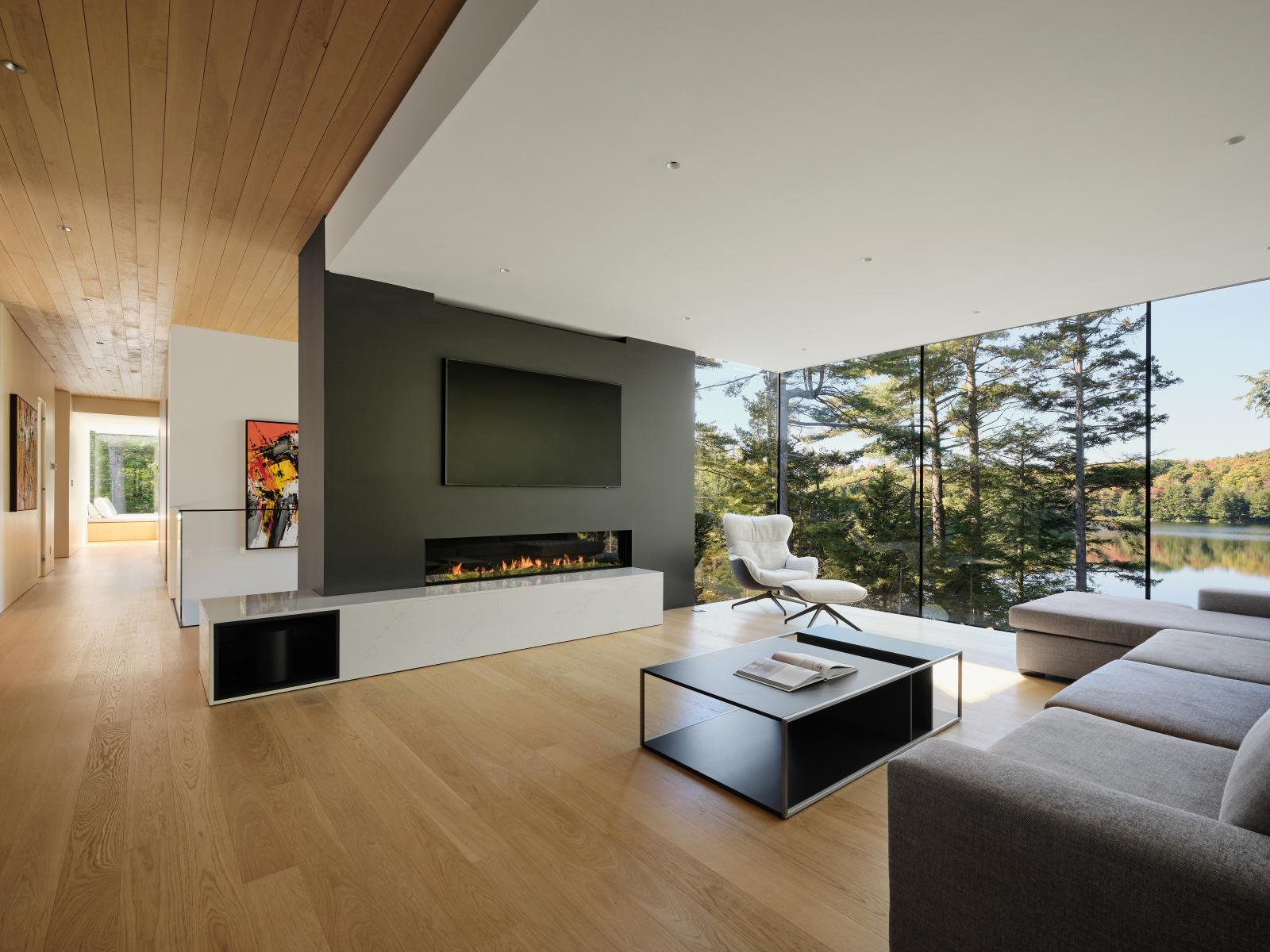
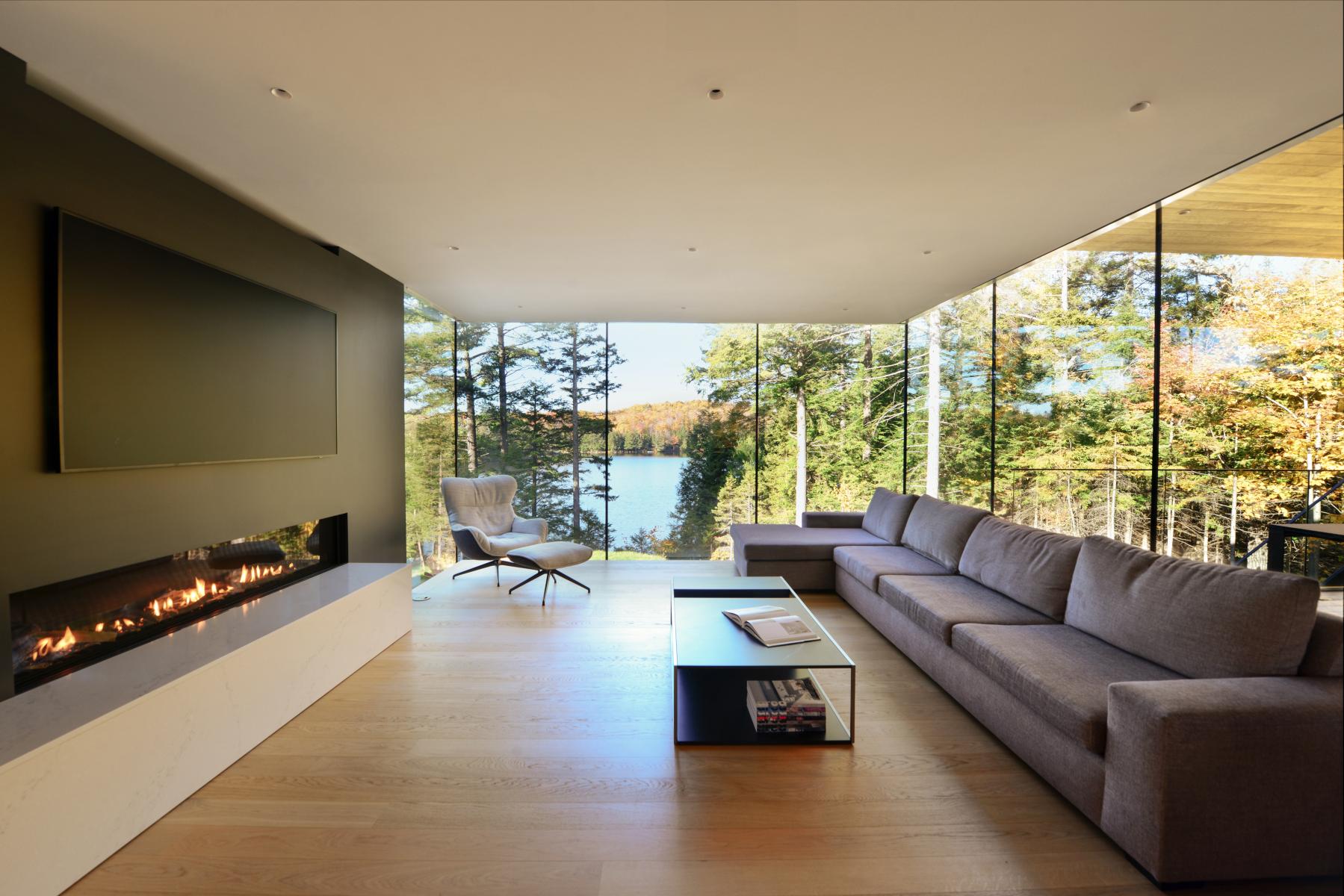
Upon entering the house, residents are greeted by fully glazed living spaces from left to right and from floor to ceiling, giving both the sensation of being in the canopy of the surrounding forest and offering expansive views of the horizon. In fact, strategic structural planning allows the living room windows to extend above the ceiling and below the floor level, without vertical frames or mullions. Additionally, efforts have been made to eliminate all visible structural elements on the perimeter of the building on the lake side, to lighten the perception of the building envelope and strengthen the connection with the natural environment. The overall effect is the disappearance of the boundary line between the interior and exterior.
The west-facing living room, which extends two meters from the upper volume towards the lake, is fully glazed on three sides and literally transports visitors out of the house to hover over the landscape. At the cantilever's end, the floor drops to create a bench where one can sit and dangle their legs while watching the sun disappear behind the hills across the lake. The living room also has a lower ceiling than the rest of the living spaces, lengthening the views and compressing the space to create a cozy spot to sit by the large fireplace and watch the snowfall outside in winter.
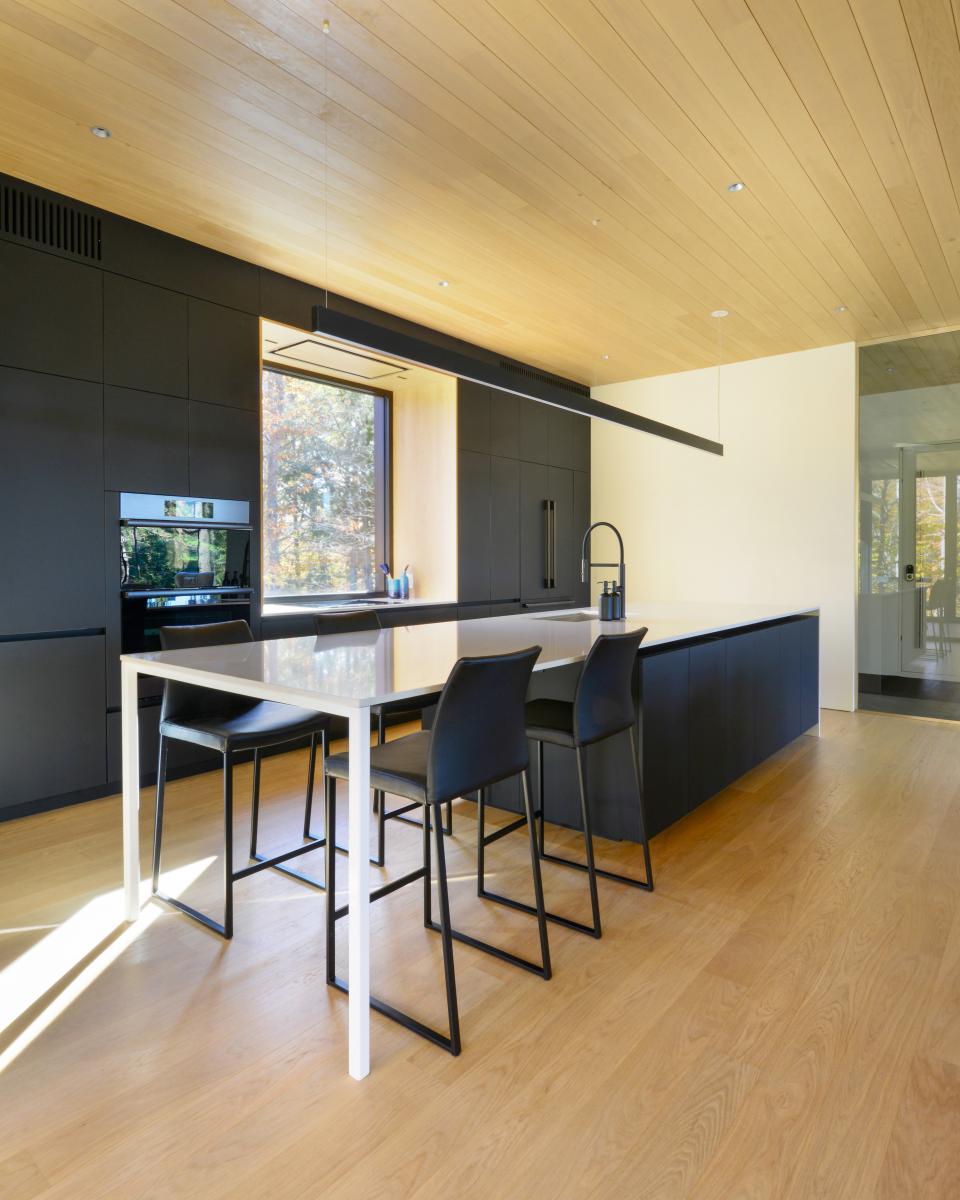
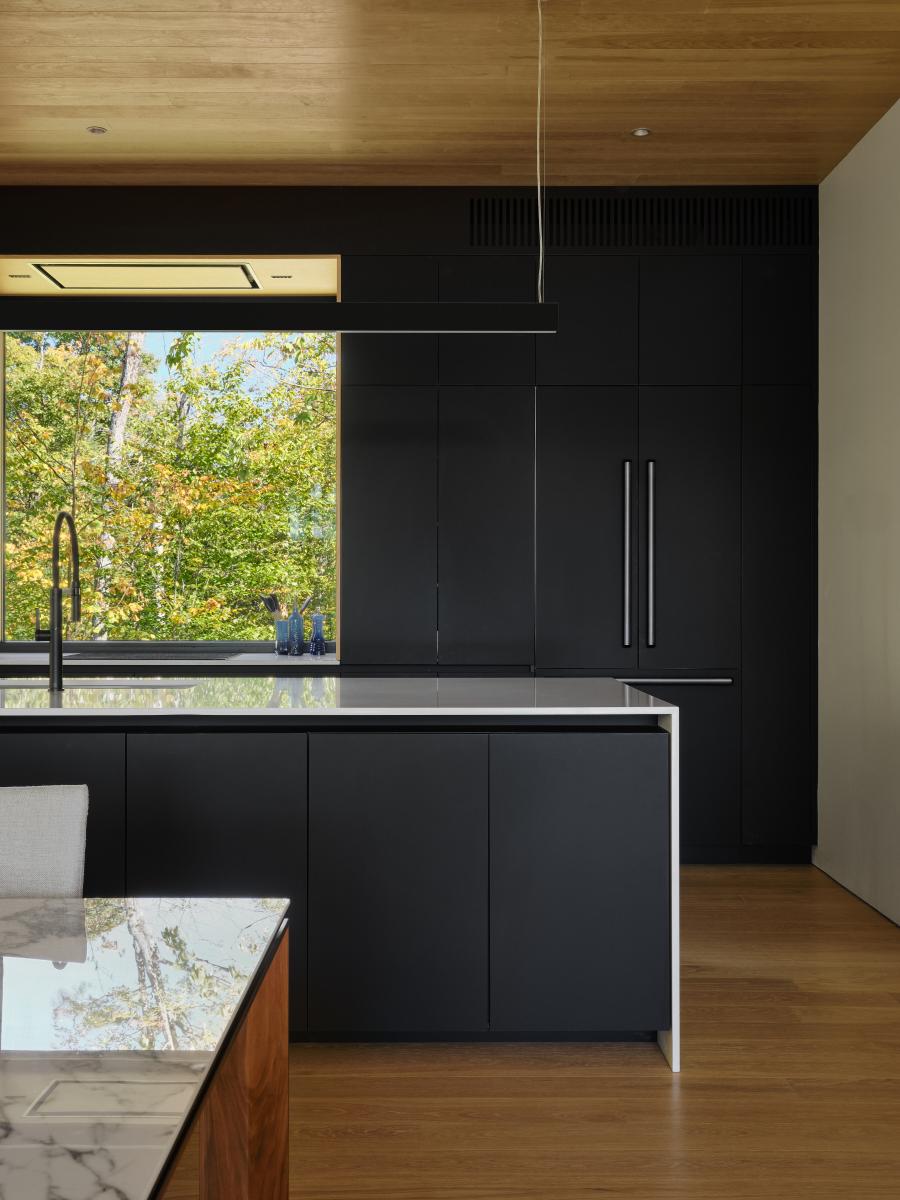
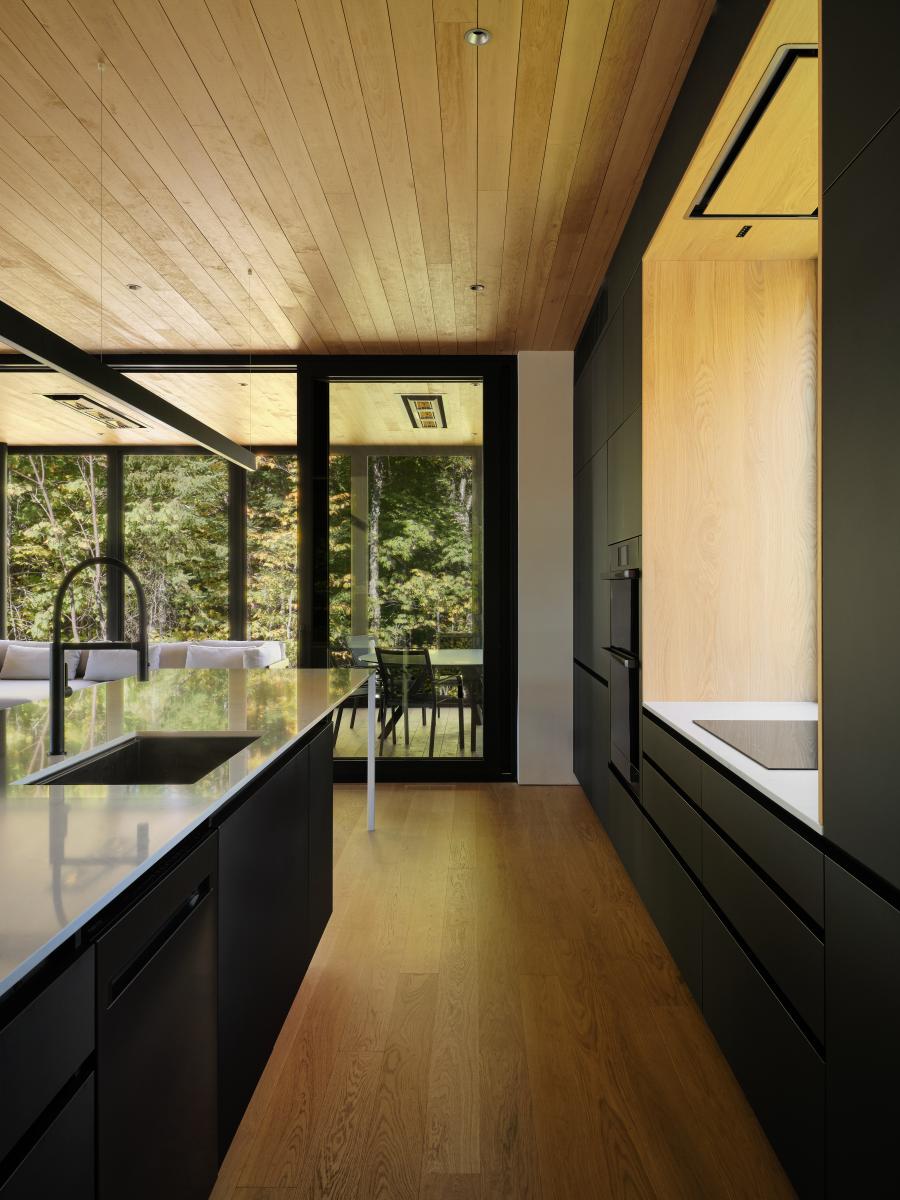
The kitchen is generously sized to take its place in the open, interconnected living spaces. It is flooded with natural light and features a retractable cabinet for small appliances that conceals any unsightly clutter. The centerpiece is the large 1.80 meters by 1.80 meters window located behind the cooktop, offering breathtaking views of the surrounding greenery and the driveway leading to the house. This spectacular cooking environment also features a 1.2 meters by 4.3 meters island that provides a secondary dining space and is designed to give the impression that the lower cabinets float beneath the counter.
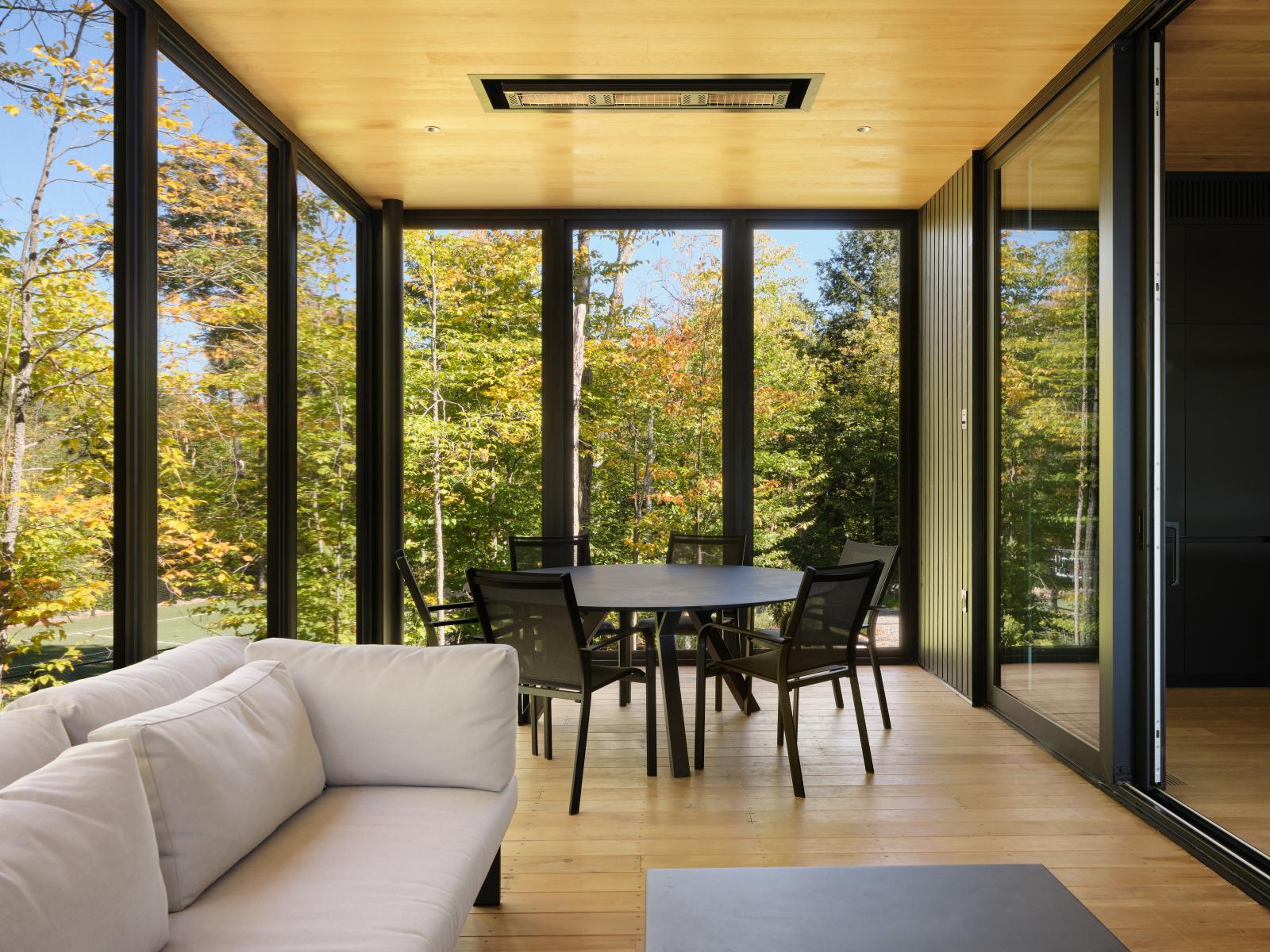
The kitchen and dining room are directly connected to the outdoors through large lift and slide doors leading to a large balcony facing the lake, as well as a cantilevered three-season room over twelve feet towards the forest. The screen room is oriented to receive sunlight early in the morning and late afternoon. It is equipped with embedded infrared heating in the soffit, allowing for the use of this outdoor space from early spring to late fall.
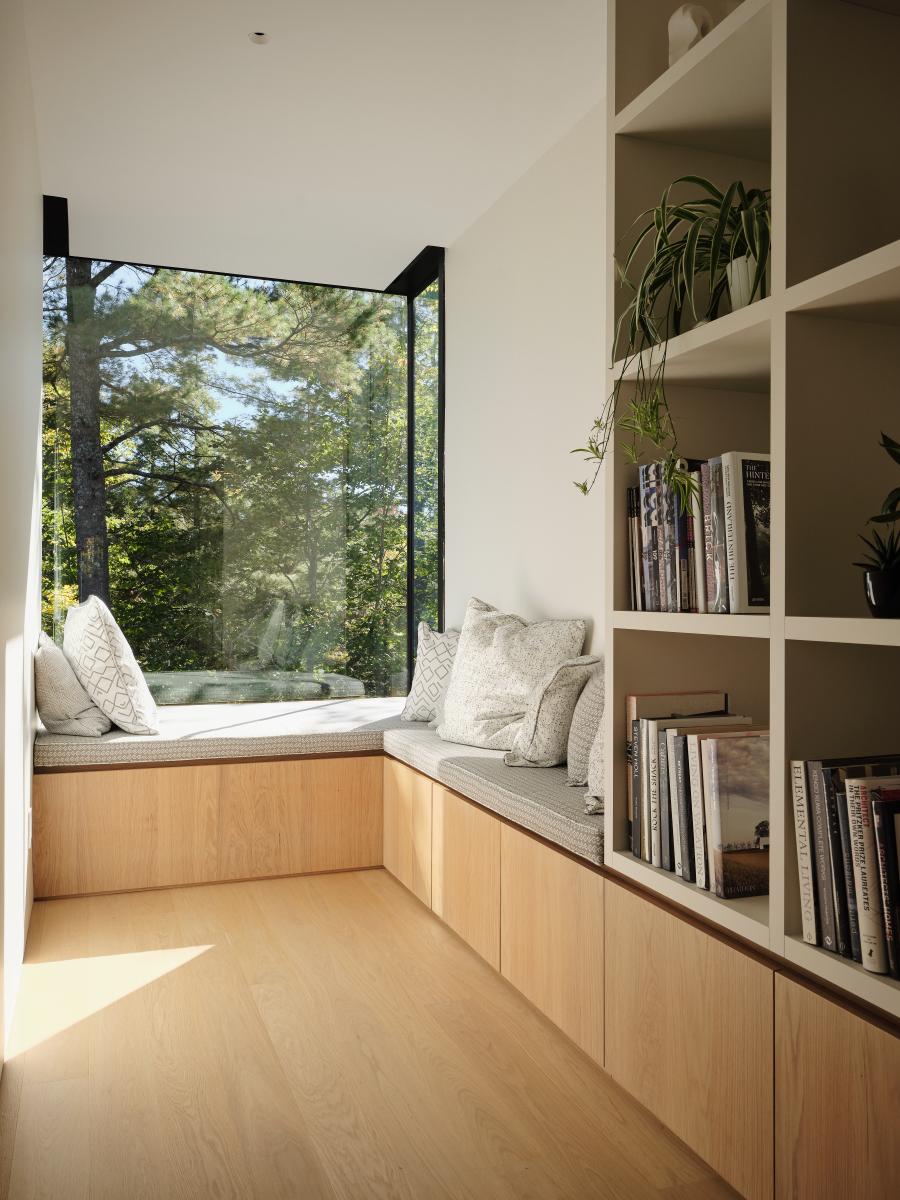
With a light pine-clad ceiling three meters high, an oversized corridor connects the living spaces to the main staircase, three bedrooms, two bathrooms, the powder room, and ends with a library that cantilevers from the main volume towards the tree canopy and enjoys sun all day long. Like the living room, the library is fully glazed on three sides and has a lowered ceiling to create an intimate reading and resting space with views of the lake.
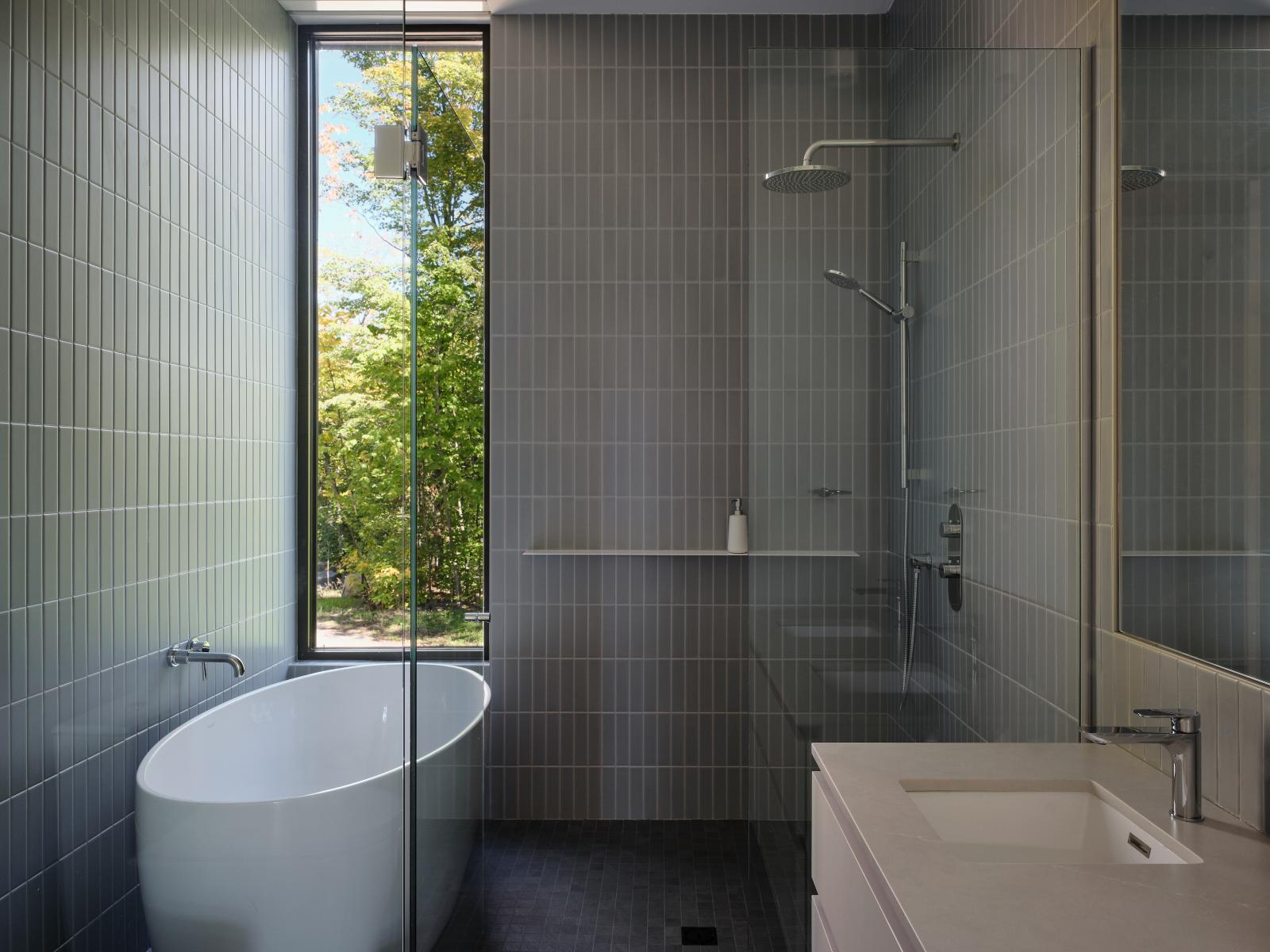
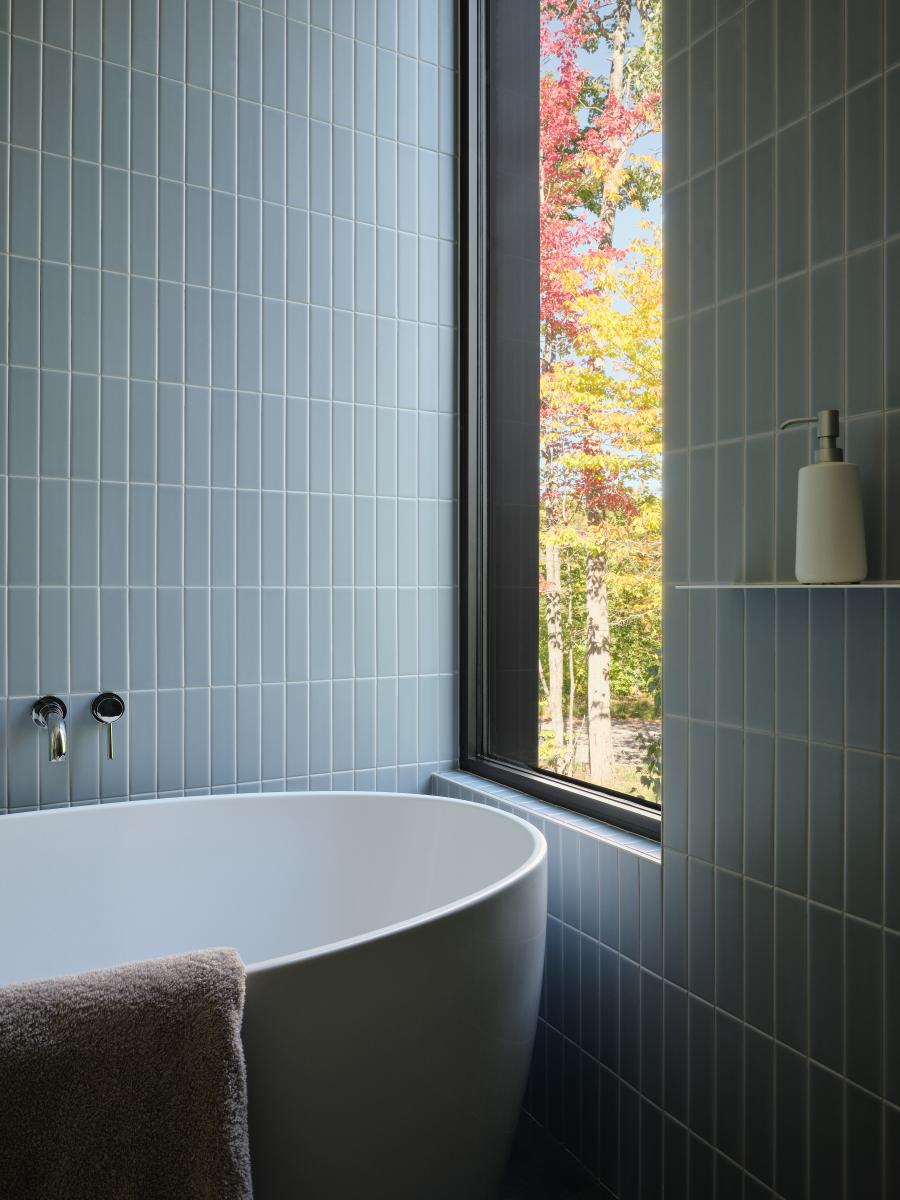
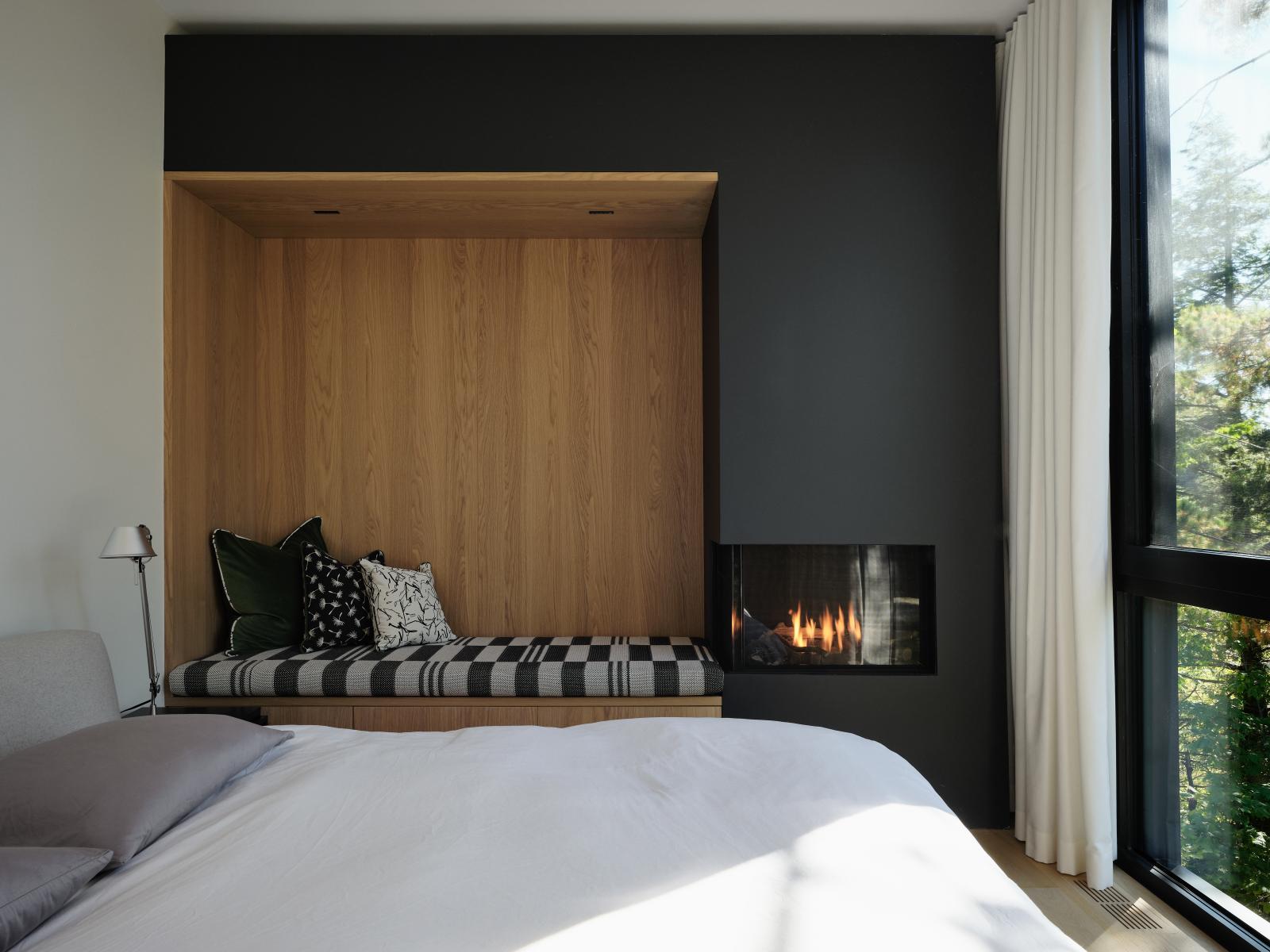
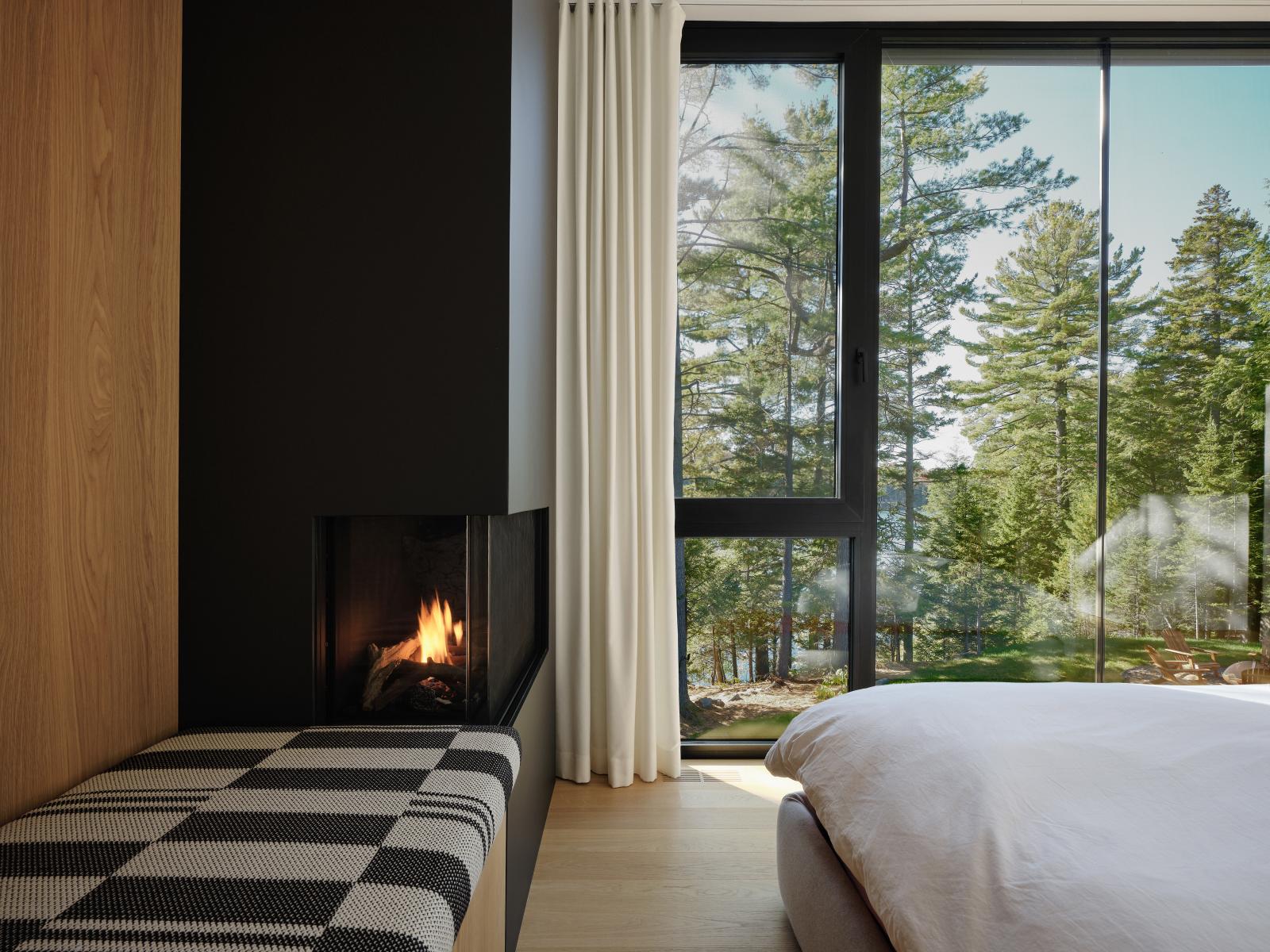
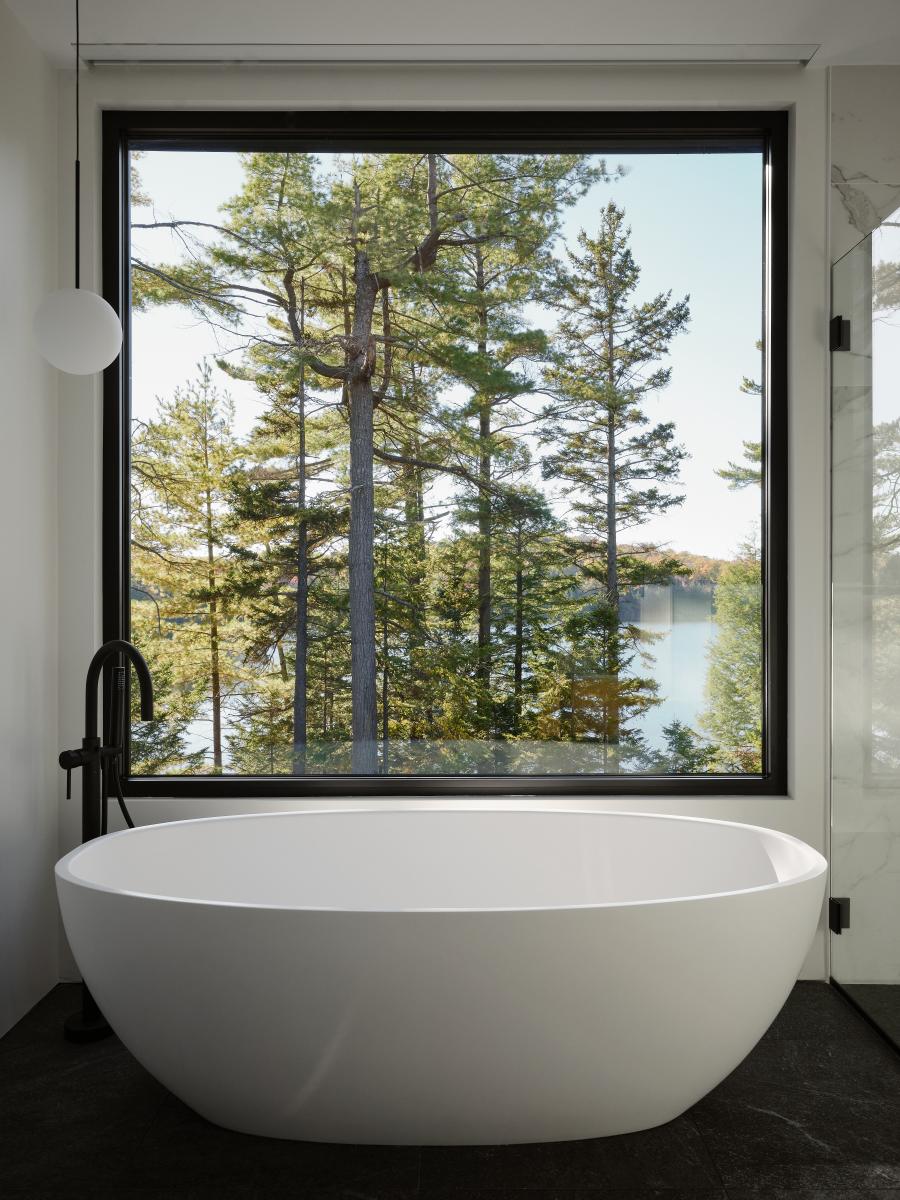
The master suite consists of a well-proportioned bedroom, featuring a large floor-to-ceiling window overlooking the lake, a reading nook with a corner fireplace, a walk-in closet, and the main bathroom. The latter is equipped with a freestanding bathtub placed under a 2.1 meters by 2.1 meters window for long relaxing baths with a majestic view.
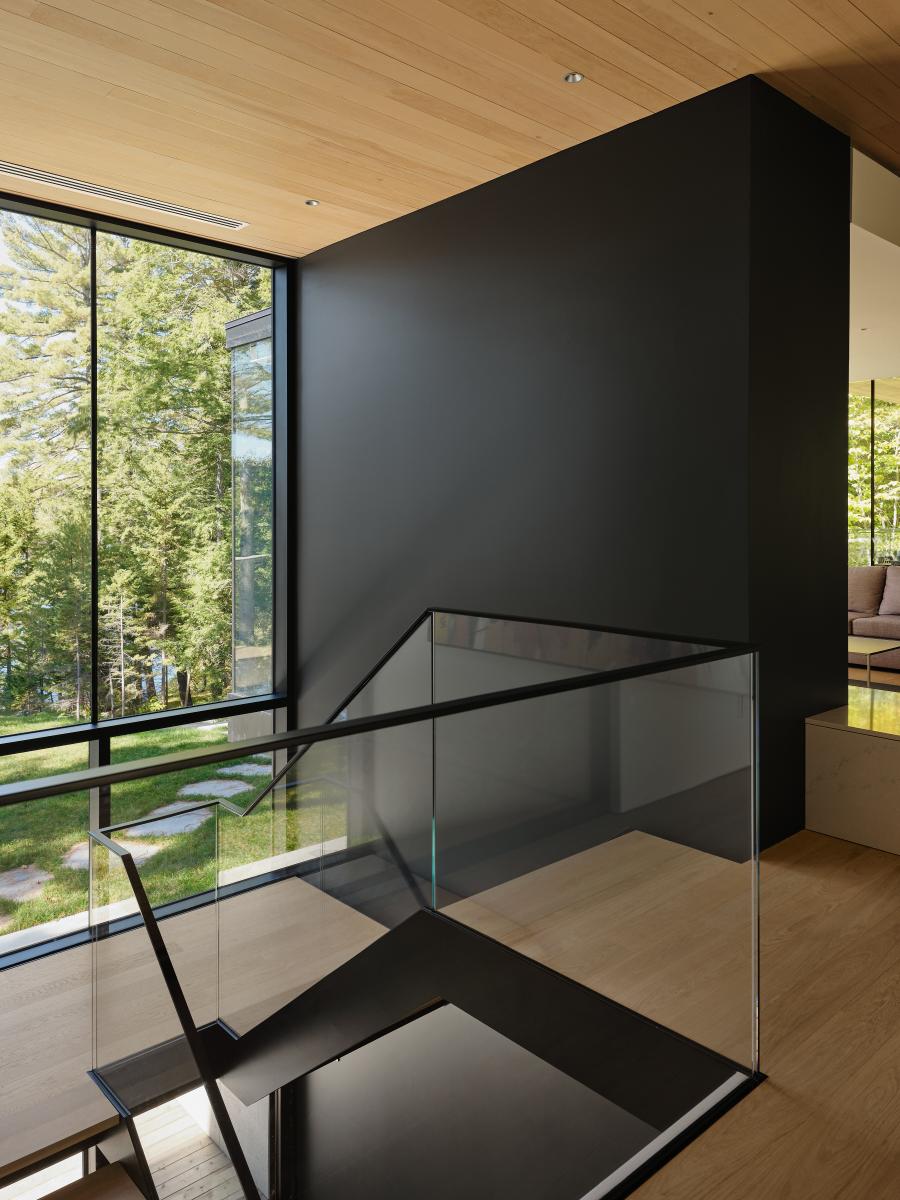
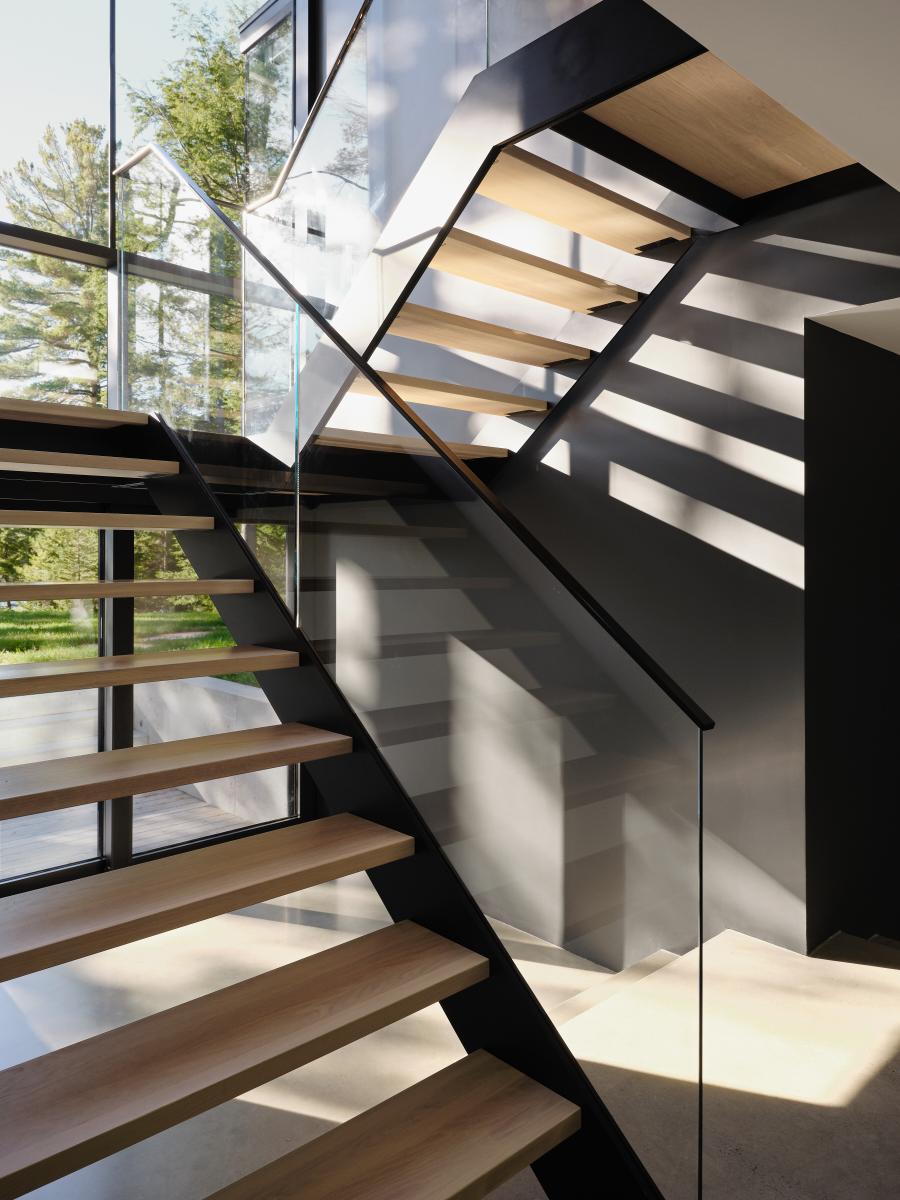
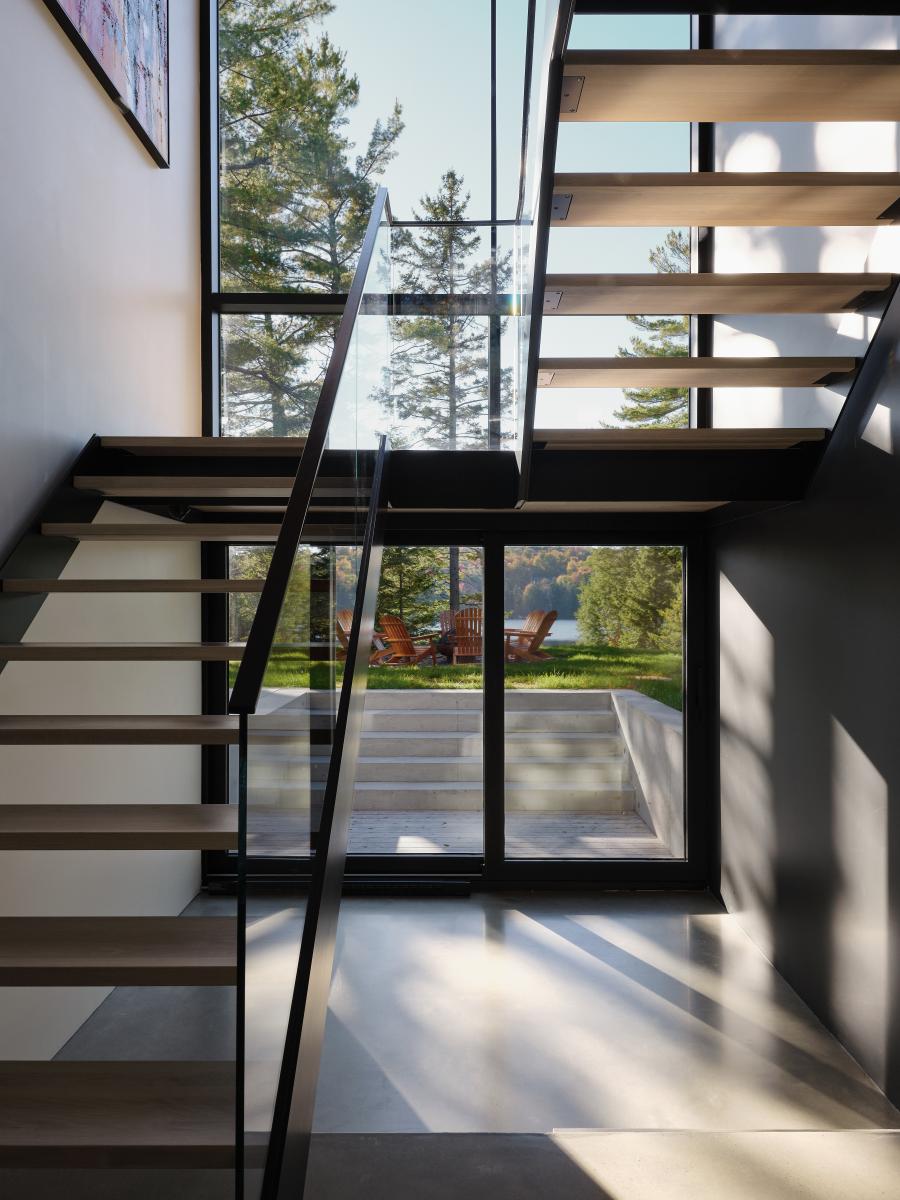
The basement is accessed by an open-tread staircase with a glass railing that allows light to penetrate deep into the basement through the fully glazed double-height portal that sections the house. In this spectacular space, even the simple task of ascending or descending the stairs is enhanced by a breathtaking view of the lake. The lower floor of the house includes a fourth bedroom, a guest bathroom, a family room with a large fireplace, access to the outdoor spa area and garage, as well as technical spaces for the house.
Although the site outside the building footprint was scarcely disturbed during construction, significant efforts were made to source local pavers and stones and replant indigenous trees and plants in the area during landscaping around the house.
Collaboration
Architect : LOCUS architecture + design
Landscaper : HETA
Engineering : Calculatec Inc.
General contractor : Construction SYMAT
Engineering : JSTP Experts-Conseils
Photo credit